
Why go
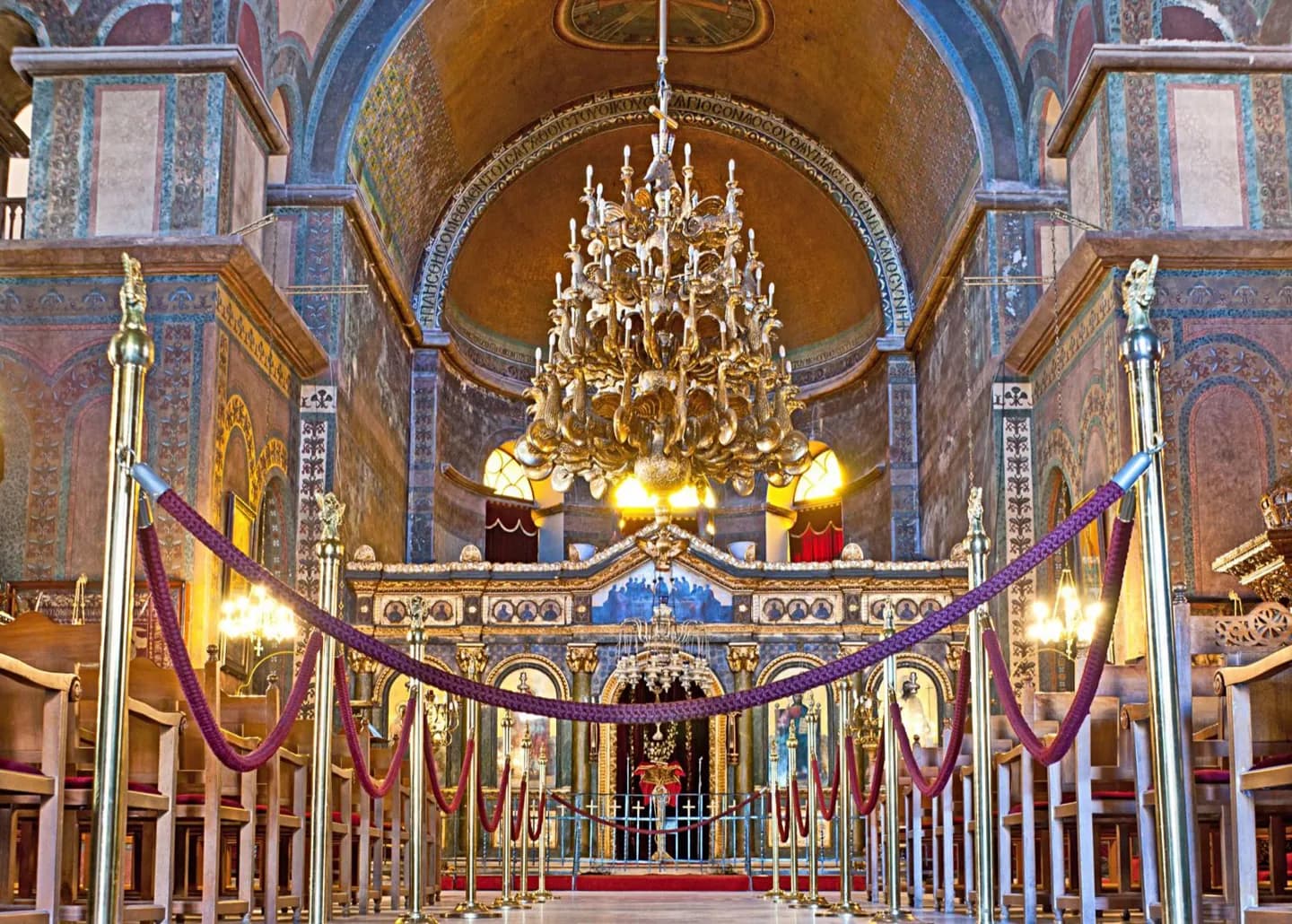
The dome draws the eye upward to a mosaic of Christ’s Ascension, while the cross-domed plan marks a shift from the long early basilica. Its scale and location make it a strong anchor for understanding Thessaloniki’s Byzantine monuments. It offers a clear contrast with the long nave of nearby Acheiropoietos.
What to look for
- The dome mosaic depicts the Ascension.
- The church combines a broad basilica with a central dome.
- Early capitals survive within the interior.
The full story
The present Hagia Sophia was built in the eighth century on a site used for Christian worship earlier. Its plan brings a dome into a broad basilica, an architectural form that sits between the city’s early long churches and later compact cross-in-square buildings. The dome mosaic shows the Ascension, with figures gathered around the rising Christ. The building later served as a mosque during Ottoman rule before becoming a church again in the twentieth century. The changes in use are part of its history, while the mosaic and spatial plan remain the strongest things to read on a visit. The dome was designed to hold the whole interior together visually, so the Ascension is best understood from the central space rather than as a detached artwork. Later damage and restoration changed parts of the building, but the main form remains legible. Its central setting also makes the contrast with the earlier Acheiropoietos easy to test in a single walk.
Useful to know
- Check locally before entering, as worship can affect visitor access.
- Compare its interior with the nearby Acheiropoietos basilica.
Your next visit
Estimated · Declared scenario and planning estimates; no live opening, weather, queue or booking service.
Outdoor visit · 30–45 min
World planning estimate; admission, opening, visit duration and access need checking.