
Why go
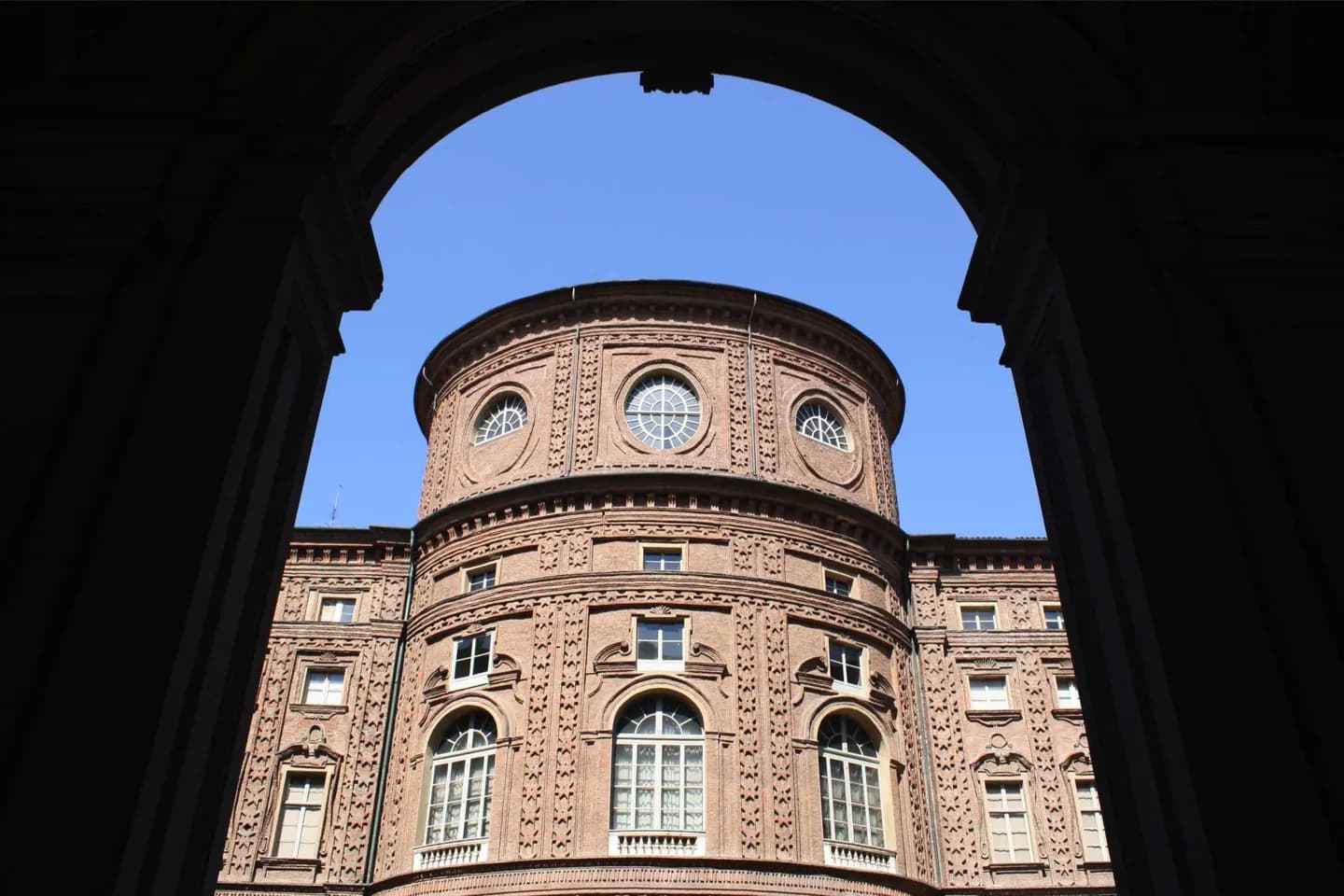
The curved terracotta front is worth seeing even from Piazza Carignano. Inside, the National Museum of the Risorgimento leads to the Subalpine Parliament chamber, while the former princely rooms tell a different domestic story. Treat those as separate visits with separate access.
What to look for
- Guarini’s terracotta facade curves in and out across Piazza Carignano.
- The Subalpine Parliament chamber belongs to the Risorgimento museum route.
- The Princes’ Apartments are a distinct palace visit.
The full story
Guarino Guarini designed Palazzo Carignano as a residence for a branch of the House of Savoy in the late seventeenth century. The undulating terracotta facade gives a private palace the movement of a Baroque stage set; it is most striking from Piazza Carignano. The building later acquired a national role. The future Victor Emmanuel II, first king of unified Italy, was born here, and the Subalpine Parliament met in the palace from 1848 to 1861. That chamber connects the aristocratic residence to the political process visitors encounter in the National Museum of the Risorgimento. The palace’s rooms do not form one interchangeable attraction, however. The museum and the Princes’ Apartments present different parts of its history and operate as separate visitor routes. Decide which story you want before crossing the threshold.
Useful to know
- Choose the museum route if the parliament chamber and unification history are your main interests.
- Check the separate entrance and current arrangements before visiting the Princes’ Apartments.
Your next visit
Estimated · Declared scenario and planning estimates; no live opening, weather, queue or booking service.
Outdoor visit · 30–45 min
World planning estimate; admission, opening, visit duration and access need checking.