
Why go
Lucca rewards a slow day on foot, and this route keeps its major sights within the walled center. Begin at the cathedral for its layered art and architecture, then take in the tree-topped Guinigi Tower before crossing to San Michele in Foro. The route turns north toward San Frediano, whose facade and interior offer a different chapter of the city’s religious history. Palazzo Pfanner is an optional final stop for visitors who want a garden and palace after the churches. If climbing the tower is unsuitable, its distinctive crown can still be appreciated from the surrounding streets. Leave space for wandering between stops.
The route, stop by stop
World itinerary estimate: 195–360 min
Times are planning estimates. Unknown visit durations start at an editable 30 minutes; access is checked separately.
- 01
Main stop · 55–70 min
Lucca Cathedral
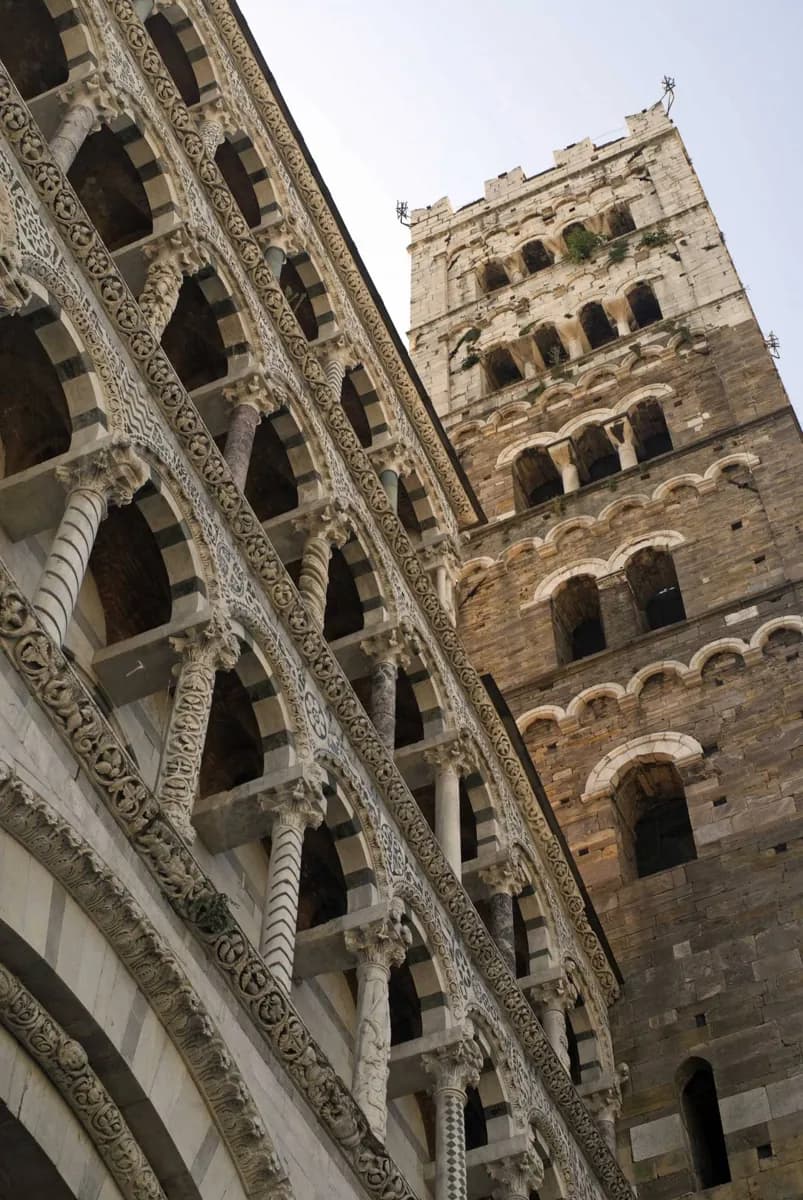
Lucca’s Cathedral of San Martino combines a richly layered marble front with the city’s revered Volto Santo and Ilaria del Carretto’s tomb. It merits time inside as well as a façade stop.
Explore Walk · 7 min · Estimated
02Main stop · 40–55 min
Guinigi Tower
The rooftop holm oaks make this medieval family tower unmistakable above Lucca. A stair climb leads to close views of the trees and the city’s roofs; confirm current entry before setting out.
ExploreWalk · 6 min · Estimated
03Main stop · 25–40 min
San Michele in Foro
This church rises over Lucca’s former Roman forum, with a soaring tiered façade that is rewarding even on a short stop. Inside are works by Luca della Robbia and Filippino Lippi.
ExploreWalk · 7 min · Estimated
04Main stop · 30–45 min
Basilica of San Frediano
A gold mosaic high on the façade marks this Romanesque basilica in northern Lucca. Inside, a carved baptismal font and the Santa Zita chapel repay a slower visit.
ExploreWalk · 3 min · Estimated
05Optional · 45–60 min
Palazzo Pfanner
Behind Lucca’s streets, Palazzo Pfanner opens onto a formal Baroque garden and furnished rooms. It suits visitors who want a small palace visit with both outdoor design and domestic history.
Explore