
Why go
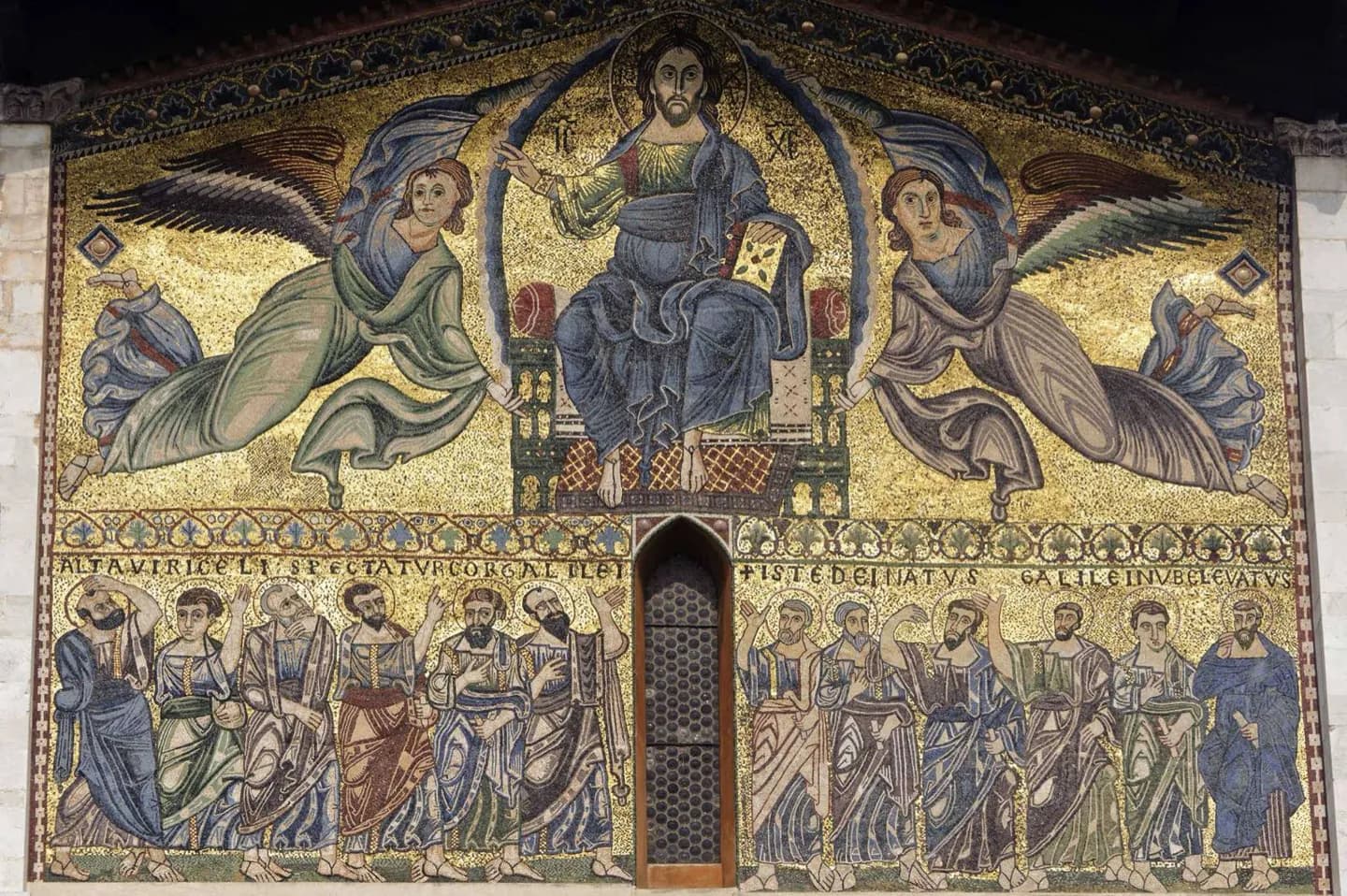
San Frediano carries some of Lucca’s oldest Christian associations and one of its most visible medieval artworks. See the façade mosaic from the square, then follow the interior’s chapels and font if services allow. The contrast between the mosaic and plain masonry is especially striking.
What to look for
- A large gold-ground mosaic of Christ’s Ascension fills the upper façade.
- The Romanesque baptismal font is carved with detailed scenes.
- The Santa Zita chapel reflects Lucca’s devotion to the local saint.
The full story
Frediano, an early bishop of Lucca, was buried at a church on this site, and the community later took his name. The present basilica gained its broad Romanesque form in the 12th century. Its façade was crowned in the following centuries by a gold-ground mosaic of Christ’s Ascension, with the apostles below. From the square, that bright image makes a strong contrast with the restrained stone wall beneath it. Inside, the plan recalls an early Christian basilica, while later chapels show how successive generations added to a place already central to local worship. The sculpted baptismal font rewards a close circuit, and the chapel of Santa Zita connects the building to a saint especially associated with Lucca. These layers make the church useful for understanding the city’s religious history: an early burial place, a medieval rebuilding and later devotional spaces share one building.
Useful to know
- Step back into the square to take in the full mosaic before entering.
- Confirm visiting times around religious celebrations.
- Check separate bell tower access if a rooftop view is part of the plan.
Your next visit
Estimated · Declared scenario and planning estimates; no live opening, weather, queue or booking service.
Outdoor visit · 30–45 min
World planning estimate; admission, opening, visit duration and access need checking.