
Why go
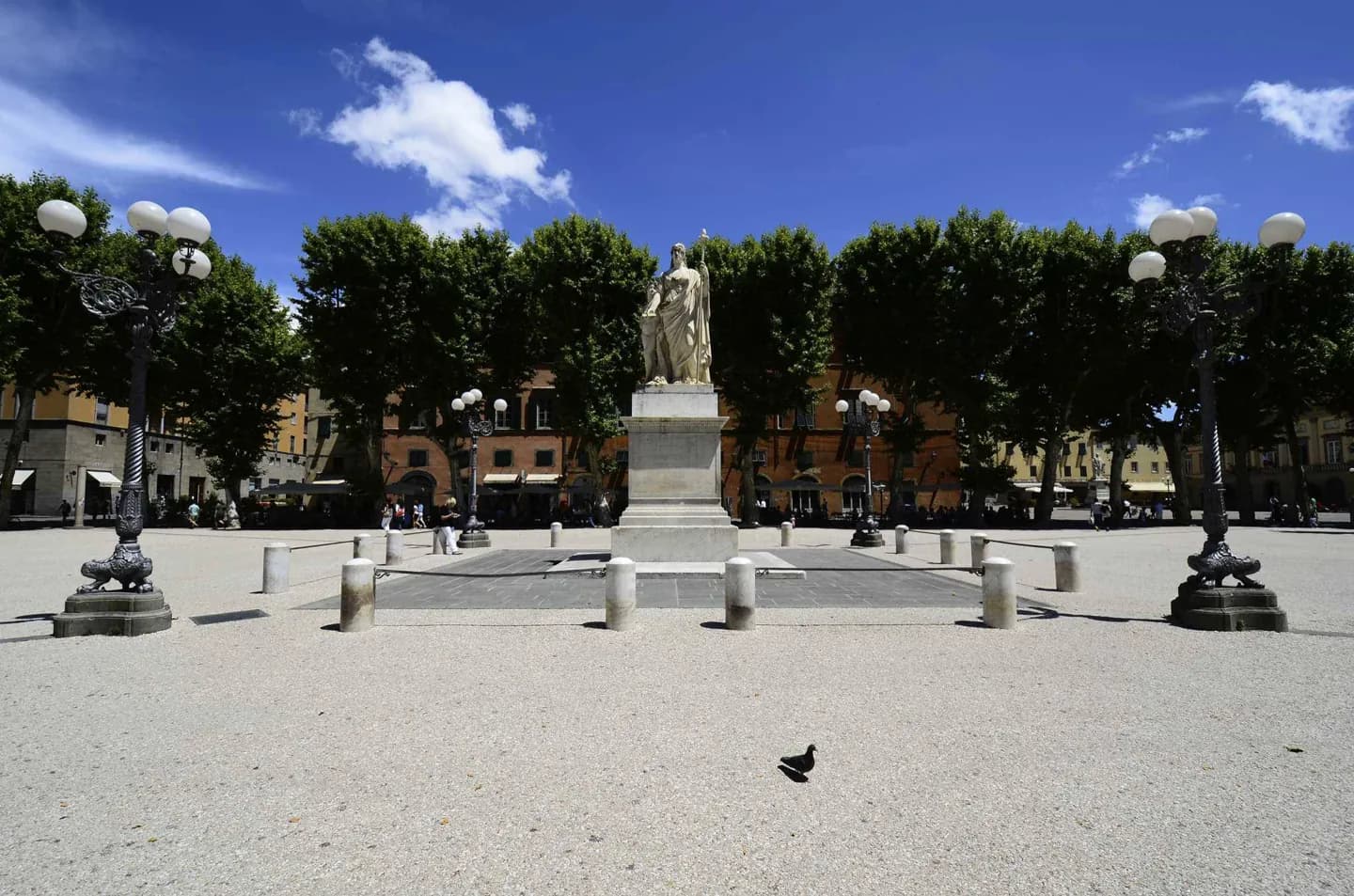
The palace charts Lucca’s shifts from fortified lordship to republican government and ducal residence. Walk its public-facing edge and courts to see that history in the building’s changing scale, without assuming the ceremonial rooms are open. The long frontage also anchors the scale of Piazza Napoleone.
What to look for
- The broad façade defines one side of Piazza Napoleone.
- Courtyards reveal successive building phases behind the main frontage.
- The neoclassical Passaggio delle Carrozze links the complex’s civic spaces.
The full story
The site once held the fortified residence of Castruccio Castracani. After the fortress was destroyed in the 14th century, later rulers and civic authorities reused and reshaped the ground. Paolo Guinigi occupied a restored stronghold early in the 15th century; after his fall, the complex evolved into Lucca’s public palace. Bartolomeo Ammannati’s late 16th-century work gave much of the present frontage its order, while an 18th-century wing extended it and Lorenzo Nottolini contributed later ducal details. Elisa Baciocchi used the palace during Lucca’s Napoleonic period, and government functions continued beyond Italian unification. The exterior makes these changes easier to grasp than a list of rulers: a former fortress site became a broad civic complex opening onto a planned square. Some rooms still serve official functions, so the architecture of the courts and frontage is the dependable part of a visit.
Useful to know
- Use Piazza Napoleone as the starting point for an exterior circuit.
- Check current events or official access information before planning an interior visit.
Your next visit
Estimated · Declared scenario and planning estimates; no live opening, weather, queue or booking service.
Outdoor visit · 30–45 min
World planning estimate; admission, opening, visit duration and access need checking.