
Why go
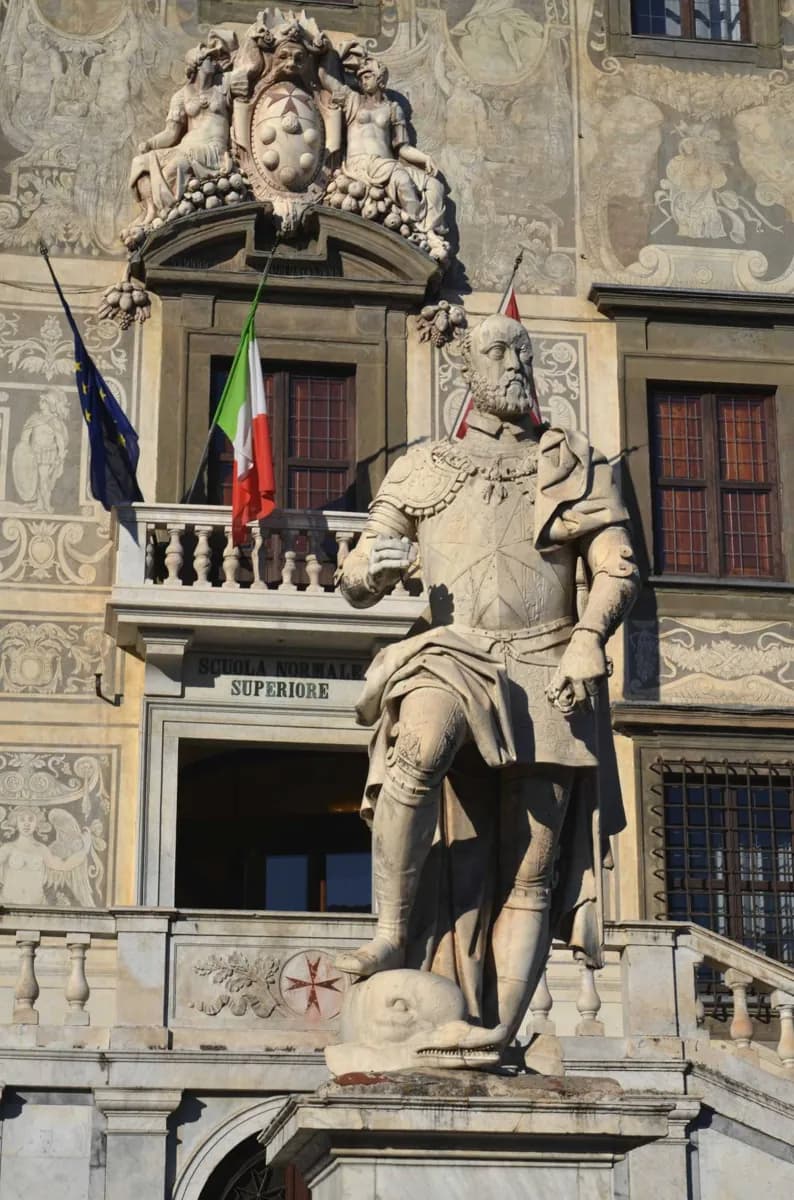
Spend time on the exterior: the sgraffito decoration, made by scratching through layers of plaster, celebrates the order's civic, military and religious virtues. Busts of Tuscan grand dukes and the arms of the Medici and the Knights complete the message. The building now serves the Scuola Normale Superiore, so its later academic life sits behind a Renaissance front.
What to look for
- Vasari's sgraffito covers the façade with figures and ornamental patterns.
- Busts of Tuscan grand dukes line the upper façade.
- The broad staircase faces the Cosimo I monument across the square.
The full story
Palazzo della Carovana began as the Palace of the Elders, a building of Pisa's medieval civic government. In the 1560s Giorgio Vasari transformed it for the Knights of St Stephen under Medici rule. That reuse matters: the new order occupied the old political centre rather than starting somewhere else. Vasari's sgraffito façade was conceived as a program of civic, military and religious virtues, with marble emblems and later busts of the grand dukes reinforcing the message. The name Carovana recalls the period of training undertaken by the order's initiates. The double staircase was remade in the nineteenth century, and later additions accommodated the Scuola Normale Superiore. From the square you can read several phases at once: medieval civic foundations, a Renaissance statement of Medici authority, and a working academic institution. The exterior is therefore the essential visit; access to rooms depends on the school's guided tour program.
Useful to know
- Study the façade from across Piazza dei Cavalieri to take in its full design.
- Check published tour dates and book through the square's official project for interior visits.
Your next visit
Estimated · Declared scenario and planning estimates; no live opening, weather, queue or booking service.
Outdoor visit · 30–45 min
World planning estimate; admission, opening, visit duration and access need checking.