
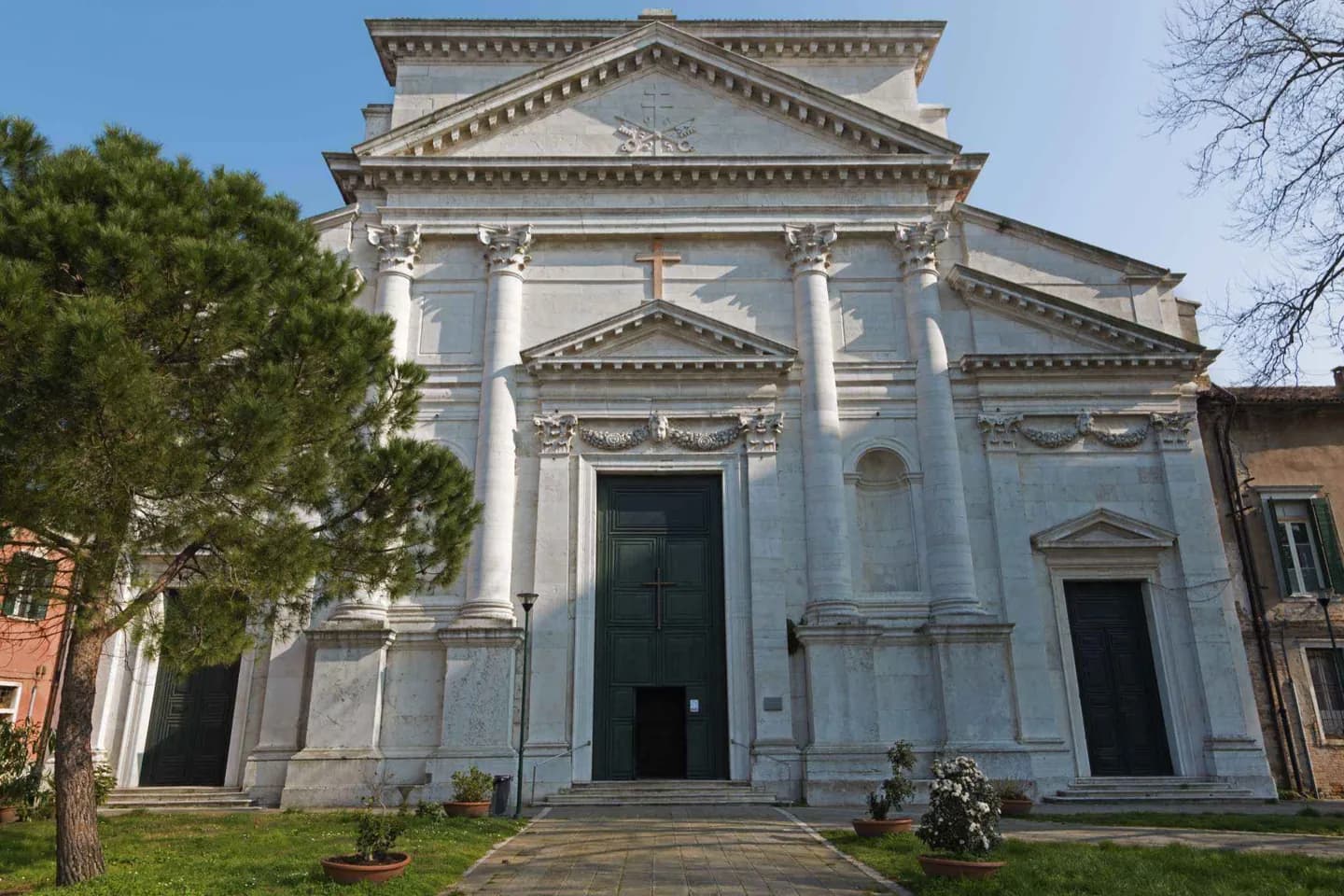
Why go
Its position on Olivolo shows that Venice's cathedral did not always occupy the political centre at San Marco. The church and pale stone campanile preserve that alternative focus. Architectural work associated with Codussi, Palladio and later builders adds another reason to extend a Castello walk to this setting.
What to look for
- The campanile is built in white Istrian stone.
- A large dome rises above the church crossing.
- The church stands on the small island of Olivolo at Castello's eastern edge.
The full story
San Pietro became the seat of Venice's patriarch while St Mark's remained the doge's church. The two institutions occupied different parts of the city, keeping ecclesiastical authority separate from the Republic's central ceremonial setting. St Mark's later became the cathedral, changing San Pietro's role. The building's history includes investment by successive patriarchs. Codussi rebuilt the campanile in Istrian stone, and Palladio received an early Venetian commission to redesign the church. The patron's death delayed that project, and a later architect implemented a modified, less ambitious version of the proposal. The result should not be treated as a completely executed Palladio design. Longhena added the Vendramin Chapel and high altar, bringing Baroque work into the older setting. Later damage and restoration added further layers. The church's present appearance therefore records both its former institutional importance and the changes that followed the transfer of the cathedral seat.
Useful to know
- Make this the eastern focus of a Castello walk when the former cathedral's history interests you.
- Check church visit information before planning around Longhena's interior work.
Your next visit
Estimated · Declared scenario and planning estimates; no live opening, weather, queue or booking service.
Outdoor visit · 20–30 min
World planning estimate; admission, opening, visit duration and access need checking.