
Why go
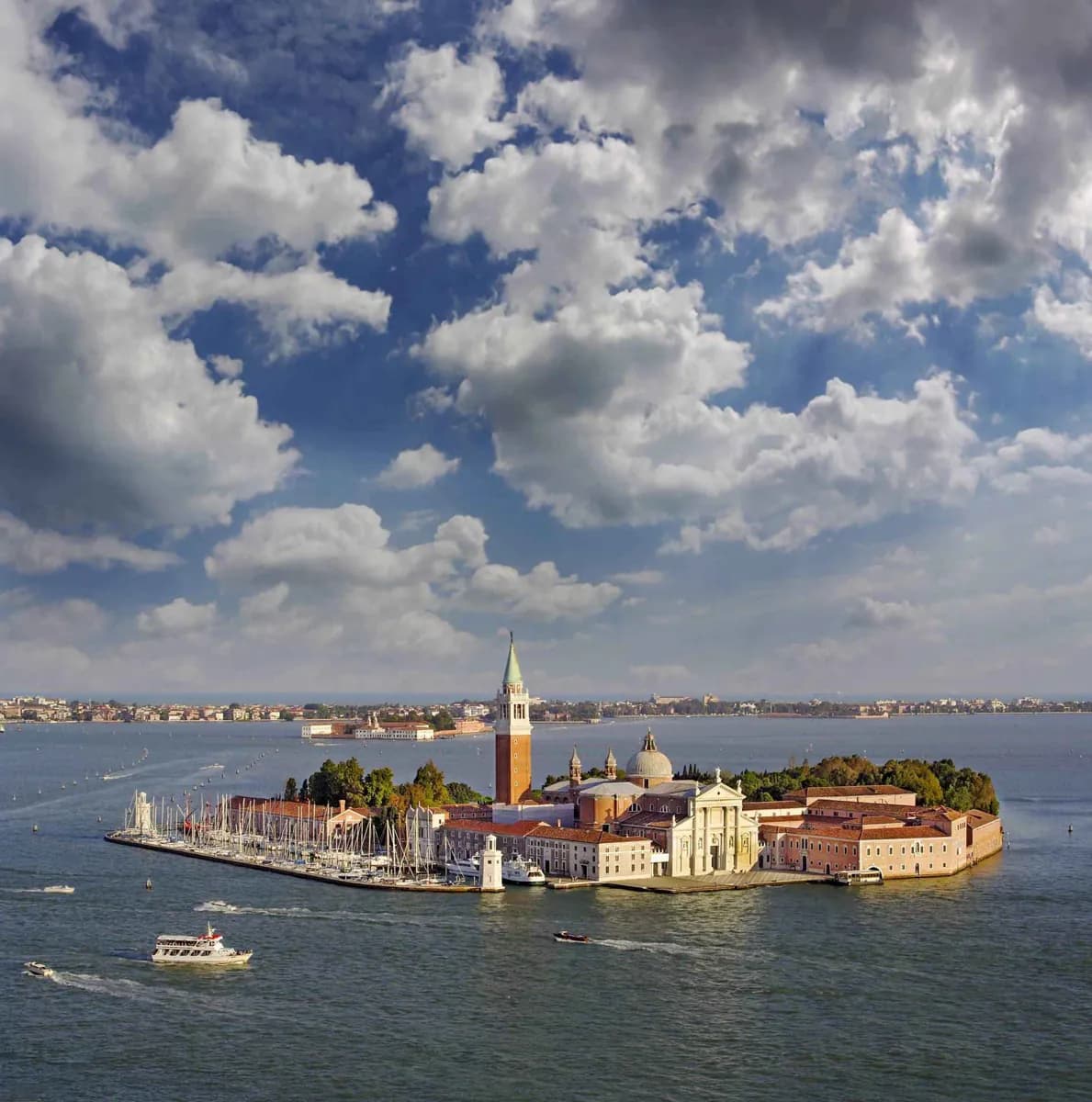
The island combines a clear architectural landmark with the history of a Benedictine community later adapted for cultural use. Looking back across the San Marco Basin reverses the familiar waterfront view. Its compact island setting also makes the relationship between church, monastery, harbor and open water easier to understand as a group.
What to look for
- Palladio’s church forms the island’s principal architectural landmark.
- The waterfront faces the San Marco Basin.
- The former monastery forms part of the island’s cultural complex.
The full story
A Benedictine monastery was established on San Giorgio Maggiore in 982 after Giovanni Morosini obtained the island from the doge. Draining marshy ground made room for construction, an early example of religious settlement reshaping the lagoon environment. Palladio's church, begun in 1566, later supplied the island's best-known architectural identity. The building belongs to a much older monastic setting, so the island's history extends beyond the Renaissance façade familiar from views across the basin. After the Republic fell, monastic life was disrupted and the island acquired port and military uses. A new harbor was built in the early nineteenth century, and artillery occupied the site. Later cultural activity, including the Cini Foundation, gave the former monastery another purpose. Those successive uses help explain the island as a whole: a religious community, maritime infrastructure and modern cultural institutions have each shaped this small, separate piece of Venice.
Useful to know
- Check boat connections and the return journey before choosing the island outing.
- Plan access to the church and other cultural spaces separately from viewing the island waterfront.
Your next visit
Estimated · Declared scenario and planning estimates; no live opening, weather, queue or booking service.
Outdoor visit · 60–90 min
World planning estimate; admission, opening, visit duration and access need checking.