
Why go
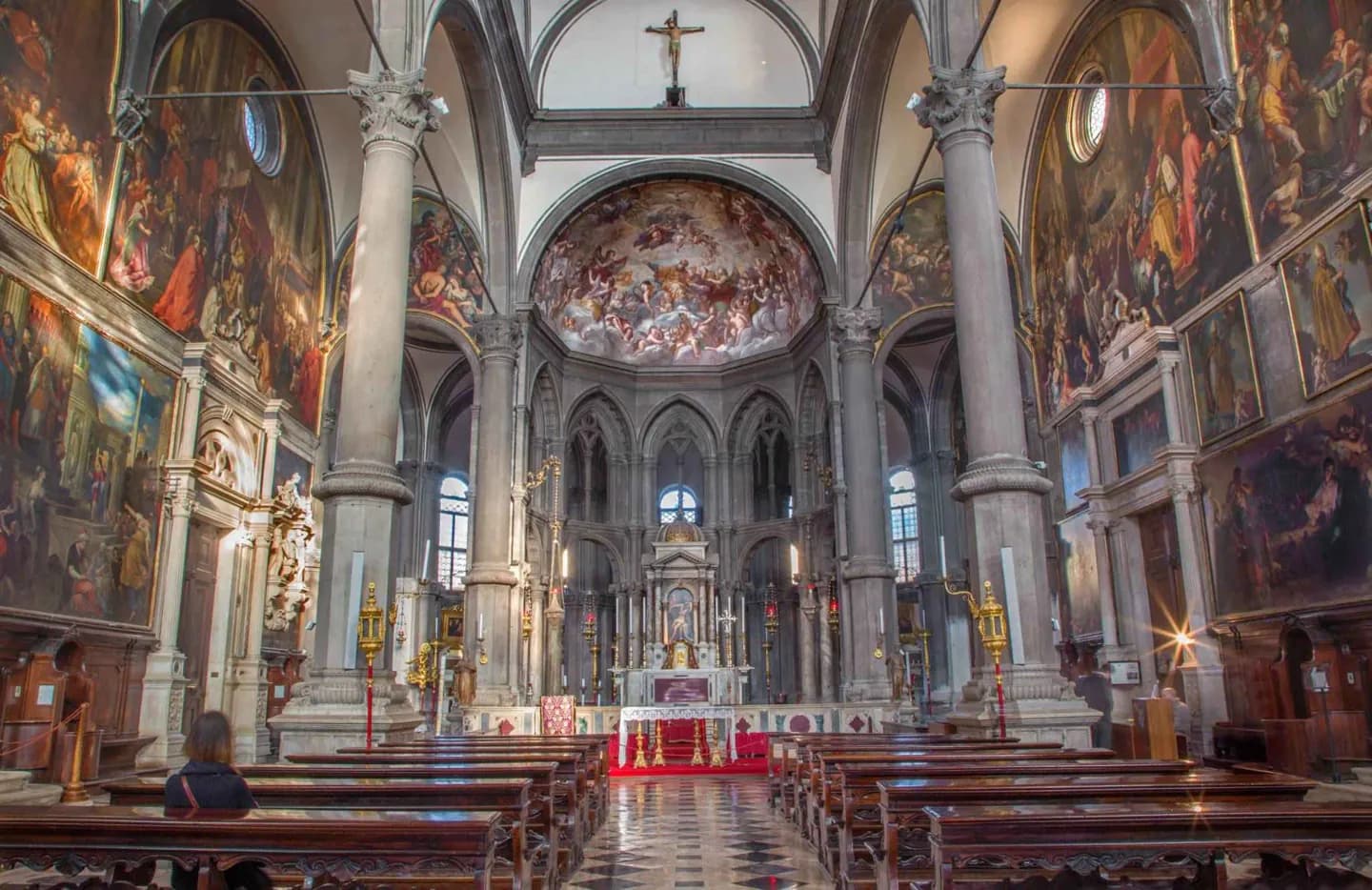
The building rewards looking at both art and structure. Tall Gothic windows light the passage around the apse, while the façade's upper levels introduce Renaissance forms. Bellini's San Zaccaria Altarpiece gives the interior a focused artistic anchor, so this is more than a stop for another church exterior.
What to look for
- Giovanni Bellini's San Zaccaria Altarpiece is an interior focus.
- Tall Gothic windows light the ambulatory around the apse.
- Arched windows and columns shape the Renaissance upper façade.
The full story
San Zaccaria belonged to a Benedictine convent closely connected with Venice's ruling families. Its nuns often came from noble households, and the doge's court visited the monastery at Easter. This relationship gave a monastic institution a place in the Republic's public ceremonies, including the presentation of the doge's distinctive cap. The site also accumulated relics and burials, linking religious devotion with the memory of Venetian rulers. Earlier buildings did not simply vanish beneath the present church: remains of the older church survive beside it. That layered history helps explain why the complex is more than a single Renaissance project. The present church itself took shape through a transition in architectural taste. Antonio Gambello began in a Gothic manner; Mauro Codussi completed upper portions using Renaissance forms. Their successive contributions are legible in the building, making the façade a record of change rather than a design that followed one style from beginning to end.
Useful to know
- Add San Zaccaria to a walk between San Marco and the nearby waterfront.
- Compare the lower and upper façade before turning to Bellini's painting inside.
Your next visit
Estimated · Declared scenario and planning estimates; no live opening, weather, queue or booking service.
Indoor visit · 30–45 min
World planning estimate; admission, opening, visit duration and access need checking.