
Why go
From the viewing level, San Marco can be understood as a group rather than a series of separate façades. At ground level, the tower's spare brickwork contrasts with the basilica's decoration. Its rebuilding also makes it an unusually clear example of Venice choosing to restore a familiar silhouette after disaster.
What to look for
- The belfry sits above the long, square brick shaft.
- A gilded Archangel Gabriel crowns the pyramidal spire.
- The upper cube carries the lion of St Mark and a figure representing Venice.
The full story
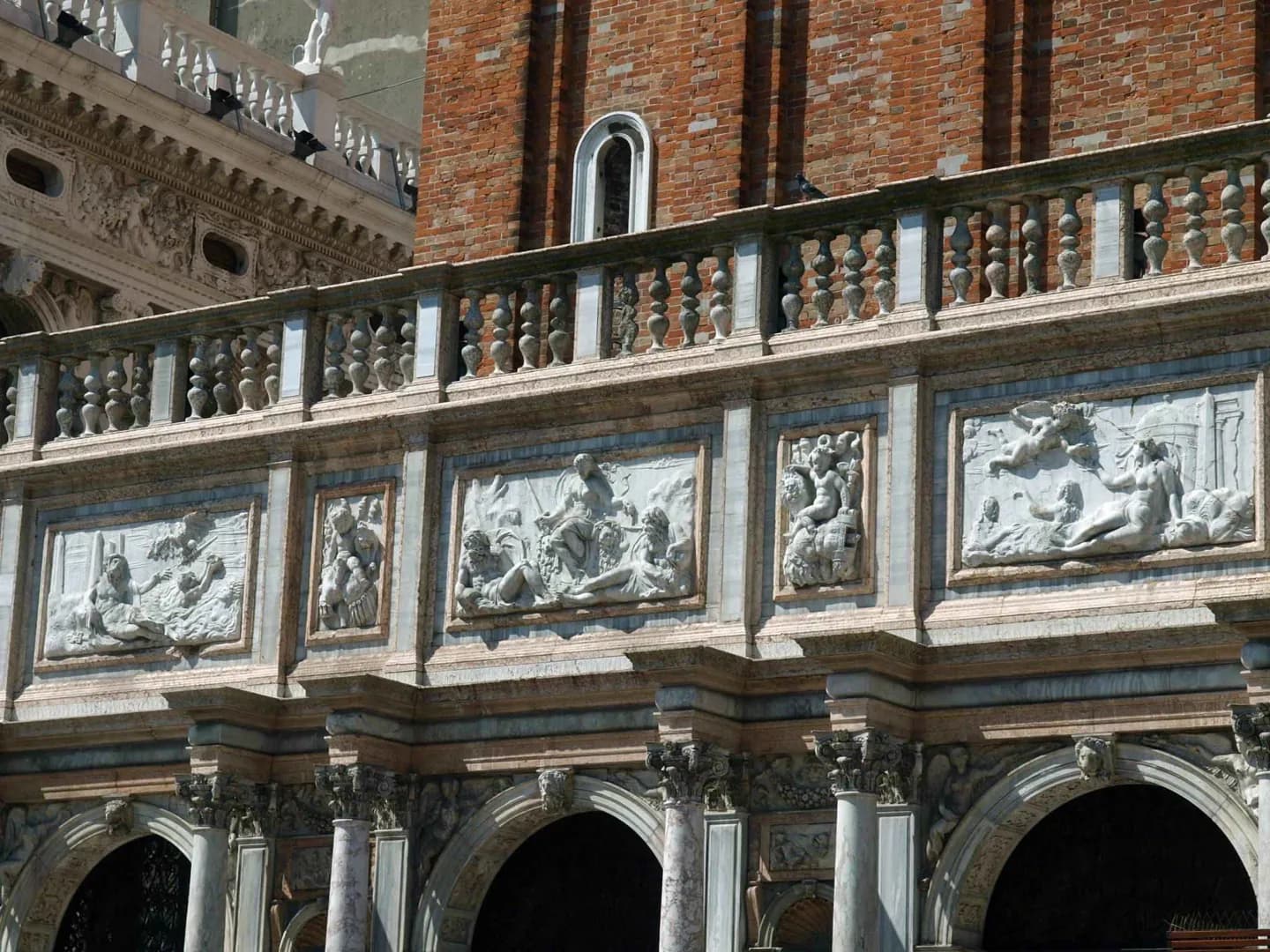
The Campanile began as a watchtower or lighthouse beside a dock that occupied part of today's Piazzetta. Its tall, detached form belongs to that relationship with the waterfront as well as to its later role as the basilica's bell tower. Successive repairs after lightning, fire and earthquake shaped the summit into the form Venice came to recognise. The structure standing today is a reconstruction. The earlier tower collapsed, destroying Sansovino's loggetta at its base and damaging a corner of the Biblioteca Marciana. Rebuilding restored the established profile rather than replacing it with a new design; the loggetta was reconstructed too. That history changes the apparent age of the scene. The tower looks like a continuous survivor of the Republic, yet its familiar shape also records a modern decision about how the city should remember and repair its monuments.
Useful to know
- Use the tower visit after exploring the square so the elevated view relates to buildings already seen.
- Check the official tower information before setting out; its visiting timetable changes with the season.
Your next visit
Estimated · Declared scenario and planning estimates; no live opening, weather, queue or booking service.
Outdoor visit · 30–45 min
World planning estimate; admission, opening, visit duration and access need checking.