
Why go
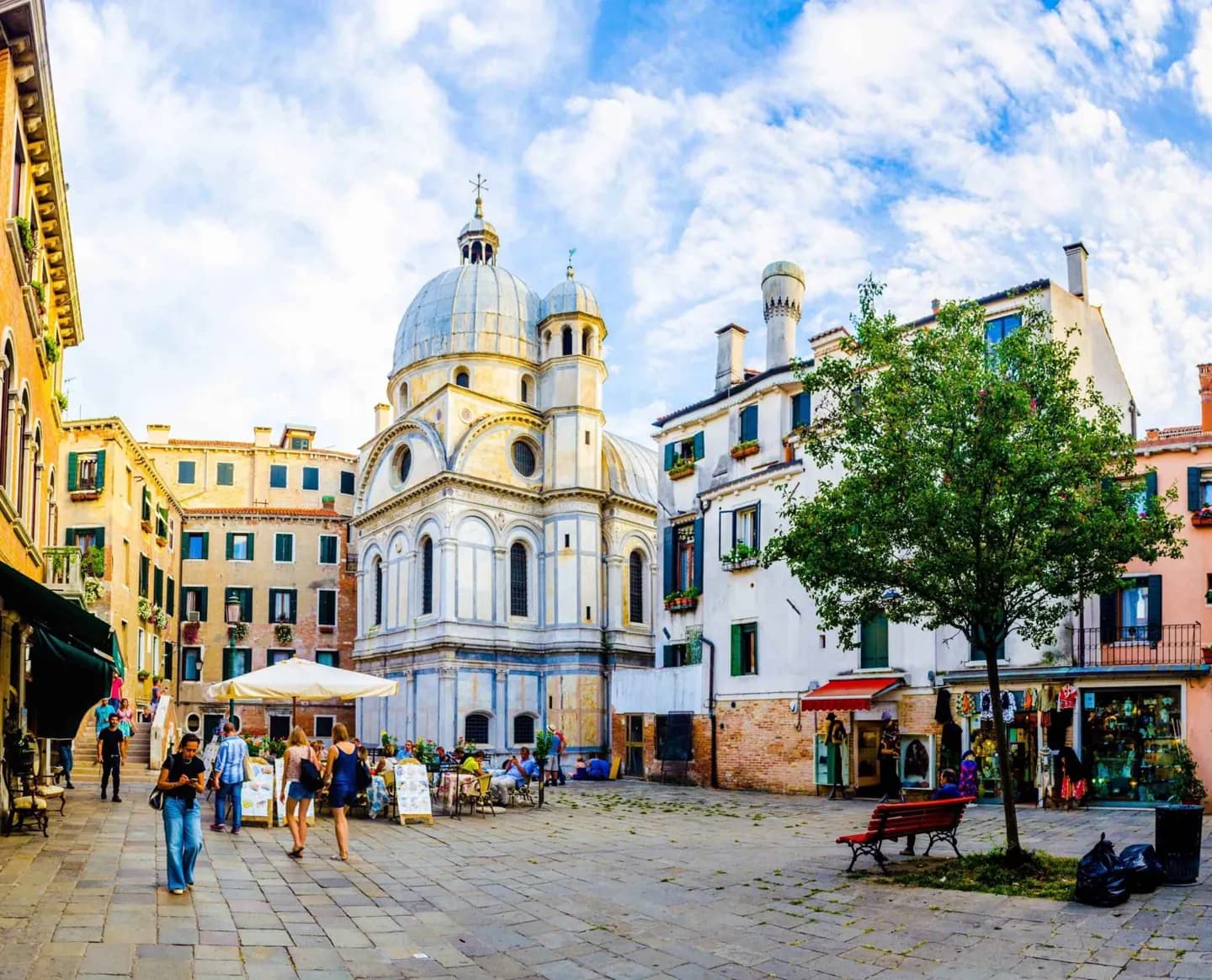
The appeal is the coherence of the building rather than a long sequence of chapels. Marble patterns, an ornamental stair and a vaulted ceiling create a tightly composed interior. Its small scale makes the relationship between structure and decoration easier to follow than in Venice's larger churches.
What to look for
- Coloured marble and a shallow colonnade pattern the exterior walls.
- A semicircular pediment crowns the façade.
- Painted prophets fill the coffers of the vaulted ceiling.
The full story
Pietro Lombardo designed the church to house an image of the Virgin regarded as miraculous. That purpose explains the strong emphasis on the raised altar: the single nave directs attention toward the image rather than dispersing it through many separate spaces. The ornamental marble stair, set between two pulpits, gives this ascent a central role in the interior. A convent for nuns of St Clare was added to the project, with an enclosed walkway connecting it to the church gallery. The walkway no longer survives, but the association explains how a small devotional church also belonged to a larger religious community. The marble has required painstaking care. Salts threatened the cladding, and a major restoration removed and cleaned the stone in distilled water before returning it to the building. The finish seen today is therefore also the result of conservation work responding to damage within the material, not simply a surface that has endured untouched.
Useful to know
- Study the exterior marble before entering to follow the material through the building.
- Expect steps up to the main altar; inspect the stair as part of the interior composition.
Your next visit
Estimated · Declared scenario and planning estimates; no live opening, weather, queue or booking service.
Indoor visit · 30–45 min
World planning estimate; admission, opening, visit duration and access need checking.