
Why go
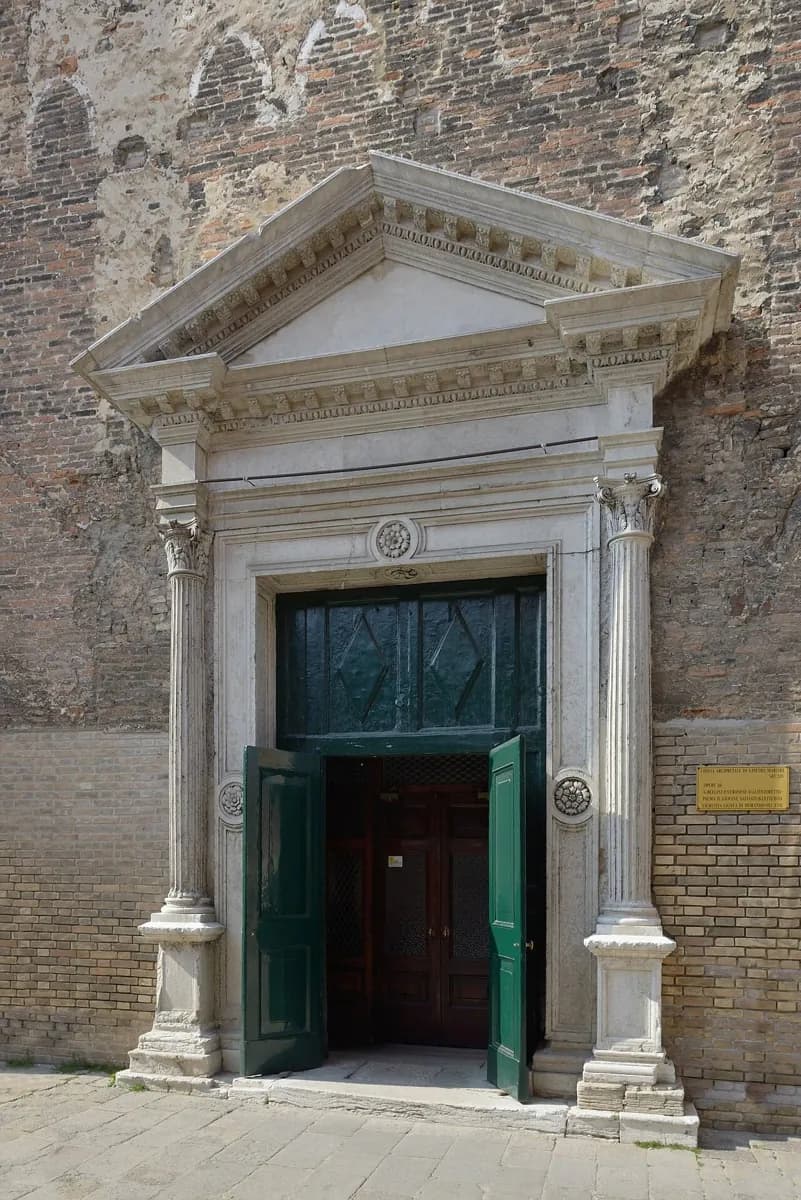
The church gives a glass-focused walk another artistic direction. Its plain brick frontage contrasts with the objects in the shops, while Bellini paintings and a chapel associated with a glassmaker connect sacred art to the island's community. The interior's history also reflects the movement of artworks between Murano's religious institutions.
What to look for
- A large rose window rises above the brick façade's portal.
- Renaissance arcades form a portico along the church's side.
- The interior has a wooden ceiling above rows of large columns.
The full story
San Pietro Martire began with a Dominican convent and was originally dedicated to John the Baptist. Fire destroyed the earlier building, and reconstruction produced the church's later form. Suppression after the Republic's fall interrupted its religious use before it reopened. The collection includes work brought from other Murano churches. Bellini's Barbarigo Altarpiece and a St Jerome by Veronese came from Santa Maria degli Angeli, linking the present interior with institutions whose contents were redistributed. A painting seen here can therefore carry a history beyond this building's own commissions. The Ballarin Chapel adds a more local connection. It commemorates a Murano glassmaker, bringing the craft community into a sacred setting. That association is useful during an island visit: glassmaking shaped not only workshops and trade but also how individuals were remembered within religious buildings.
Useful to know
- Combine the exterior with Murano's canal walk rather than making a separate island trip for the church.
- Check visit information if Bellini's paintings are the main reason for stopping.
Your next visit
Estimated · Declared scenario and planning estimates; no live opening, weather, queue or booking service.
Outdoor visit · 15–20 min
World planning estimate; admission, opening, visit duration and access need checking.