
Why go
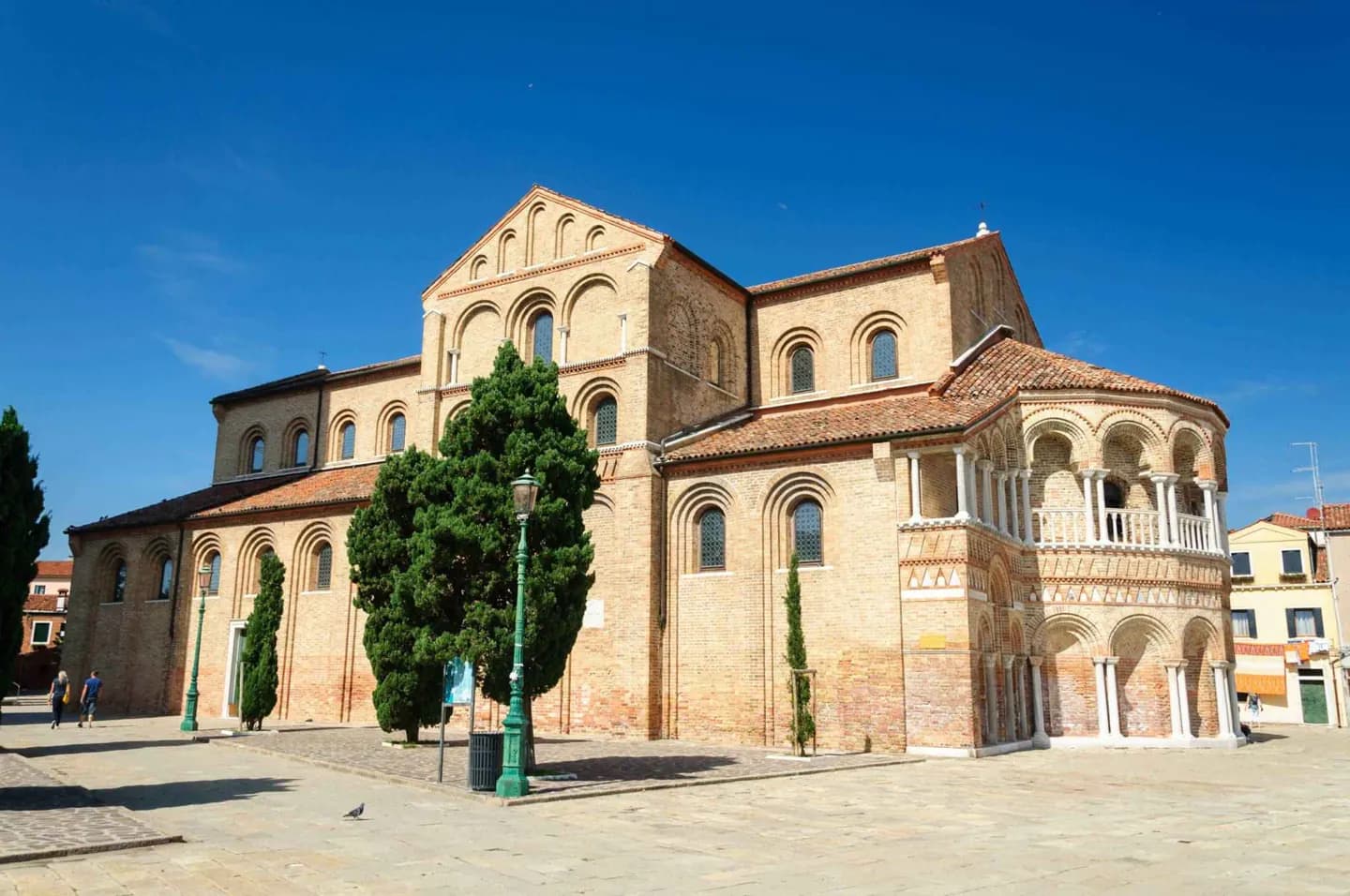
The exterior rewards walking around the building rather than stopping only at its entrance. Dark brick and the colonnaded east side face the canal, while the interior pavement uses coloured stone and animal imagery. The church gives Murano a religious and architectural history distinct from its furnaces and shops.
What to look for
- The colonnaded east end faces a canal.
- The brick bell tower stands separately from the church.
- The mosaic floor includes cocks carrying a fox.
The full story
The church's long history includes successive rebuilding and a close association with the relics of St Donatus. A tradition links the arrival of the relics with rivalry between local parishes, showing how sacred possessions could establish a church's prestige within the island community. The pavement brings another form of meaning into the building. Its coloured stone patterns include animals arranged in striking scenes, turning the floor into something to read rather than simply cross. The medieval work adds a different material craft to an island usually approached through glass. Large bones behind the altar became attached to the legend of a dragon killed by St Donatus. The story belongs to the church's devotional tradition, not to a verified identification of the bones as a dragon. Keeping that distinction allows the objects to illuminate how legends and relics shaped religious understanding without presenting the legend as natural history.
Useful to know
- Walk around to the canal-facing east end before concentrating on the main entrance.
- Check church visit information before making the mosaic floor the centre of your Murano plan.
Your next visit
Estimated · Declared scenario and planning estimates; no live opening, weather, queue or booking service.
Outdoor visit · 15–25 min
World planning estimate; admission, opening, visit duration and access need checking.