
Why go
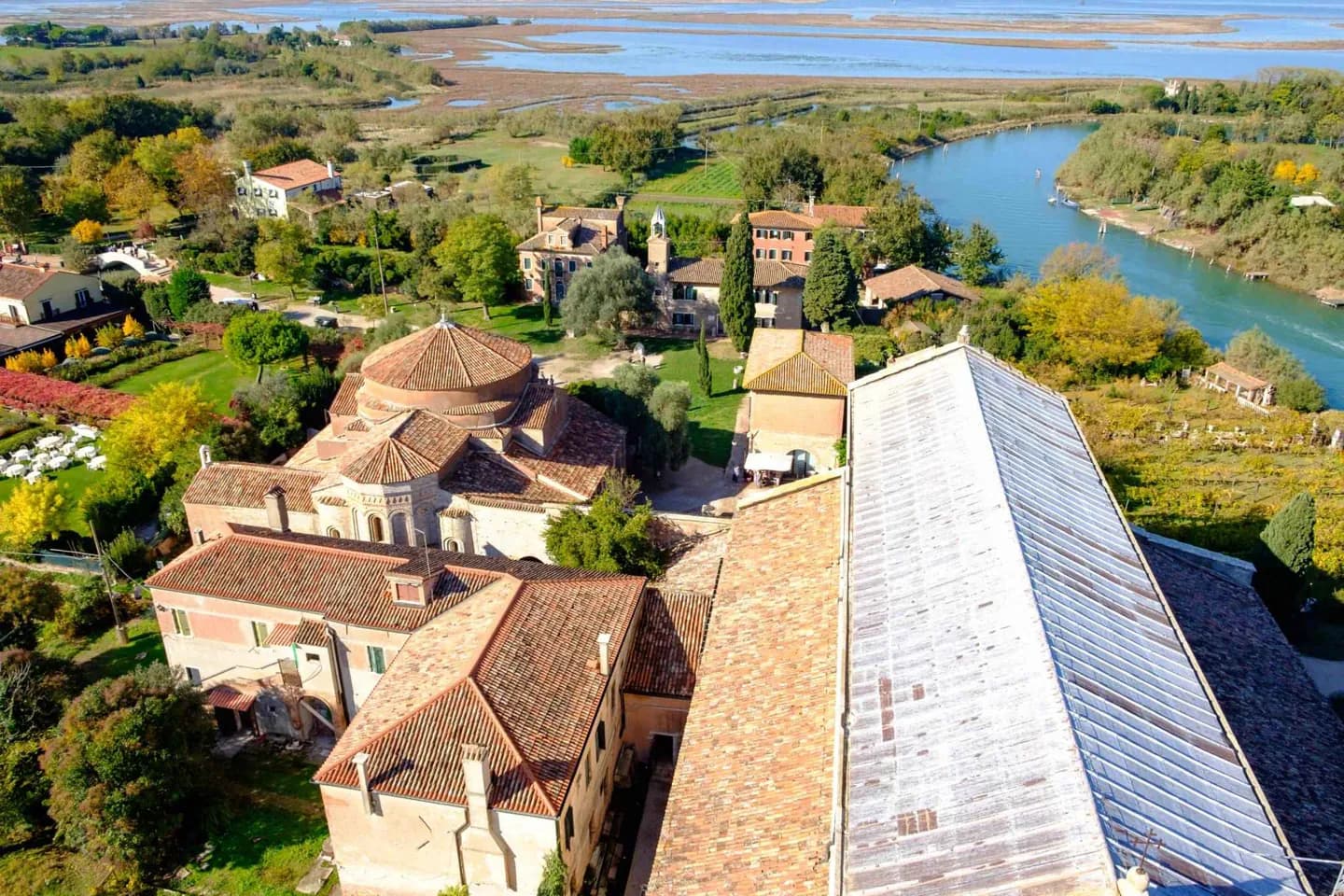
The island helps explain Venice before San Marco became the dominant centre. Its religious and civic buildings survive from a settlement once important in trade and church administration. The contrast between those substantial remains and the open setting is the main reason to give Torcello time of its own.
What to look for
- Santa Fosca has a Greek-cross plan and surrounding portico.
- The cathedral and former civic palaces form the historic focus.
- The Ponte del Diavolo adds a stone bridge to the island walk.
The full story
Torcello grew as people moved from the mainland into the lagoon during periods of insecurity. The bishop of Altino brought an ecclesiastical centre to the island, and relics of St Heliodorus helped establish its religious identity. Its connections with Byzantium and its role in salt production supported a settlement that once carried far more political and commercial weight than today's appearance suggests. The surviving cathedral and civic palaces belong to that importance. They are not simply monuments placed in a rural landscape; they are remnants of a larger inhabited and governed centre. The museum can help connect those buildings with the lagoon and nearby Altino. Some objects have acquired more dramatic names than their history warrants. The ancient stone chair called Attila's Throne is not associated with the Hun ruler; it is more plausibly connected with a bishop or local official. Torcello rewards separating such legends from the substantial history still visible in its buildings.
Useful to know
- Choose cathedral art or the museum as the main indoor addition to the island walk.
- Confirm water connections before combining Torcello with Burano, and leave time for each landing.
- Use fair weather for an outing centred on the island's open setting.
Your next visit
Estimated · Declared scenario and planning estimates; no live opening, weather, queue or booking service.
Outdoor visit · 90–150 min
World planning estimate; admission, opening, visit duration and access need checking.