
Why go
This is the clearest place to read Yangon's layered cityscape on foot. The gilded Sule Pagoda sits within a grid of broad named roads and narrower numbered streets; nearby, City Hall and the former High Court show very different civic styles. Continue towards Pansodan Street and Strand Road to compare colonial facades with the shops and daily movement around them.
What to look for
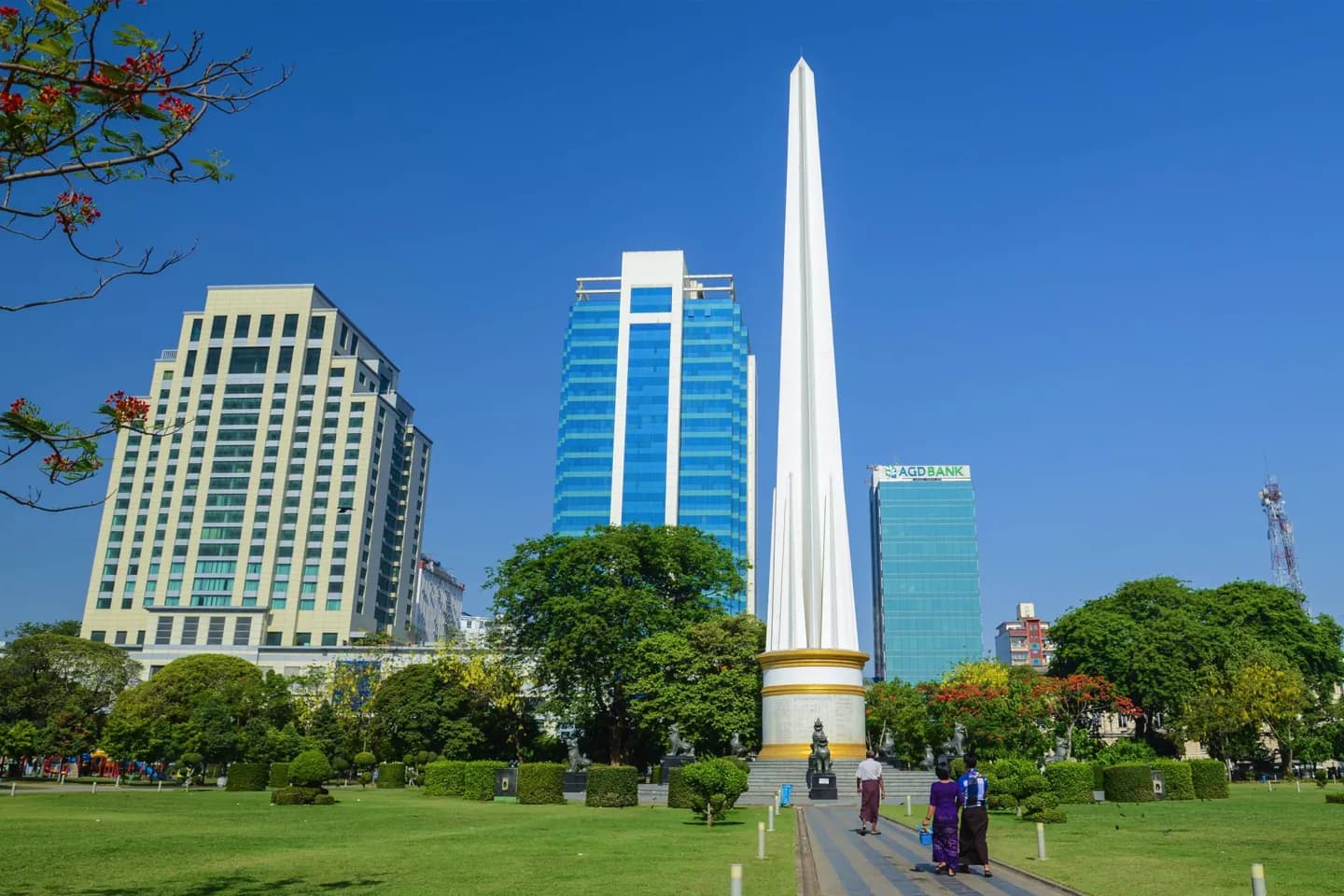
- Sule Pagoda beside Maha Bandula Park
- Yangon City Hall and the former High Court facing the downtown streets
- Historic facades along Pansodan Street and Strand Road
The full story
Yangon's downtown grid took shape after the British occupation of Lower Myanmar in the mid-nineteenth century. Its broad east–west roads and alternating wide, medium and narrow north–south streets still make the plan legible on foot. Named roads such as Strand Road and Maha Bandula Road cross numbered side streets, while older mixed-use buildings bring homes and shops into the same blocks. Around Sule Pagoda, civic buildings show how the city changed during the colonial period and after it: the red-brick former High Court stands near Yangon City Hall, whose tiered roofs draw on Burmese forms. The Strand Hotel adds another chapter along the river-facing road. These are separate places with different uses today, so the value of a downtown walk is in comparing their exteriors and the streets between them rather than assuming each building is open to visitors.
Useful to know
- Treat downtown as a walking area, not a single venue or entrance.
- Build a short walk around Sule Pagoda and Maha Bandula Park, then extend it towards Pansodan Street and Strand Road.
- Check each building or pagoda separately before planning to go inside.
Your next visit
Estimated · Declared scenario and planning estimates; no live opening, weather, queue or booking service.
Outdoor visit · 30–45 min
World planning estimate; admission, opening, visit duration and access need checking.