
Why go
Enter to replace the district's street noise with a vast Gothic interior shaped by centuries of worship and civic life. The wooden roof, grave floor and links to Sweelinck and Rembrandt make the building unusually rich in visible memory. Few Amsterdam interiors hold so many public and private histories together.
What to look for
- Look up at the broad medieval wooden vault above the nave.
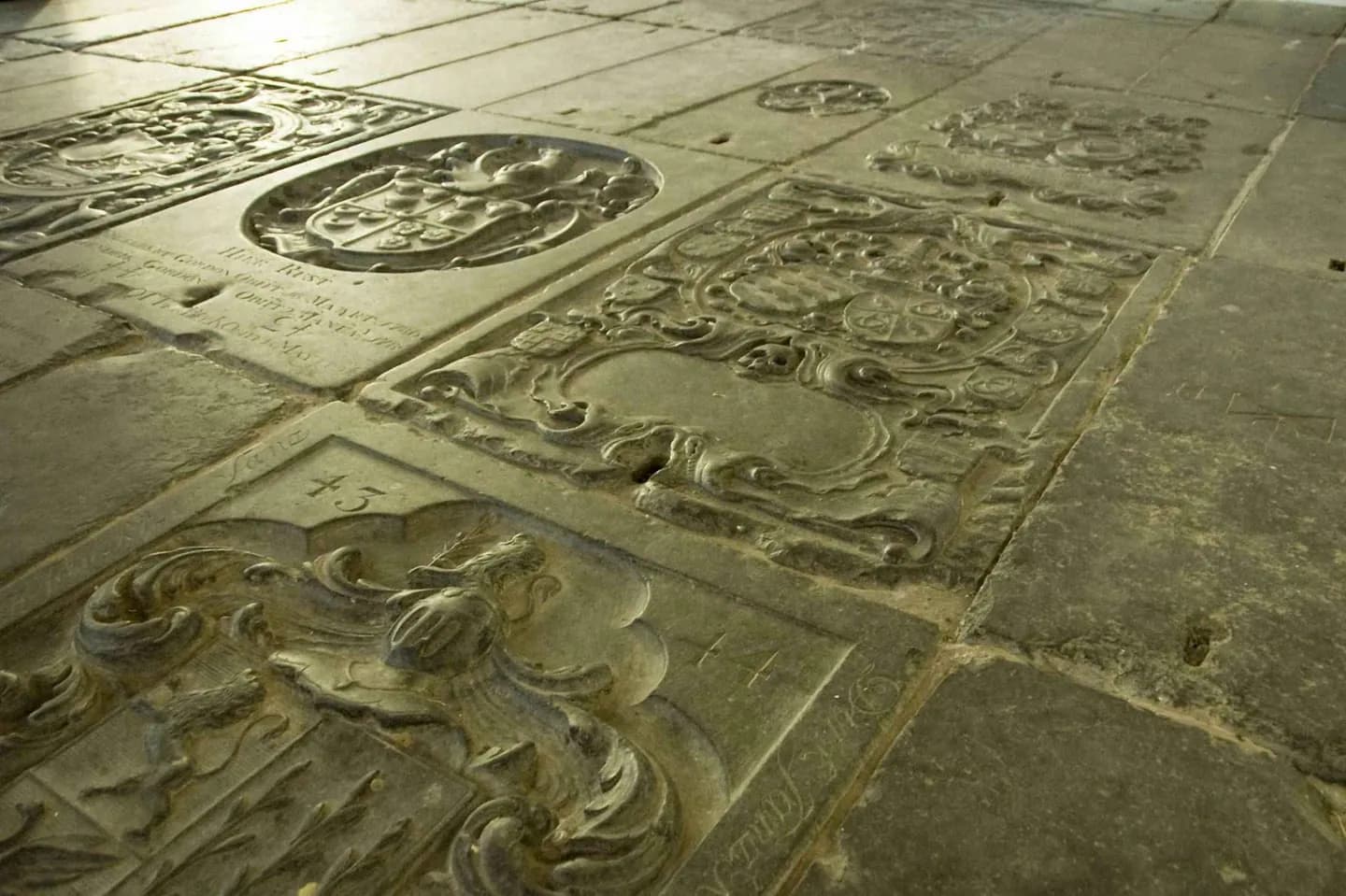
- Read the floor as a field of graves, including the burial place of Saskia van Uylenburgh.
- Find references to organist Jan Pieterszoon Sweelinck, who worked and was buried here.
The full story
A wooden chapel stood here by the early thirteenth century, and the stone church was consecrated in 1306. Successive generations enlarged it with aisles, choir passages and transepts, producing the spacious Gothic form visible today. The Reformation of 1578 changed the Roman Catholic church into a Calvinist one and removed much of its earlier art. Oude Kerk also served civic purposes: people traded and met inside, marriage records were kept here, and important city documents were stored in an iron-clad chest. Jan Pieterszoon Sweelinck began playing the church organ as a teenager, built an international reputation as a composer and was buried here. Rembrandt knew the building, and his wife Saskia van Uylenburgh was buried in the church in 1642. These traces turn the interior into a record of Amsterdam's religious, civic and artistic life rather than a single-period monument.
Useful to know
- Check the church programme before visiting because cultural use can affect access.
- Allow time to look down at grave slabs as well as up at the roof.
- Pair the interior with a circuit of Oudekerksplein to understand its dense urban setting.
Your next visit
Estimated · Declared scenario and planning estimates; no live opening, weather, queue or booking service.
Outdoor visit · 30–45 min
World planning estimate; admission, opening, visit duration and access need checking.