
Why go
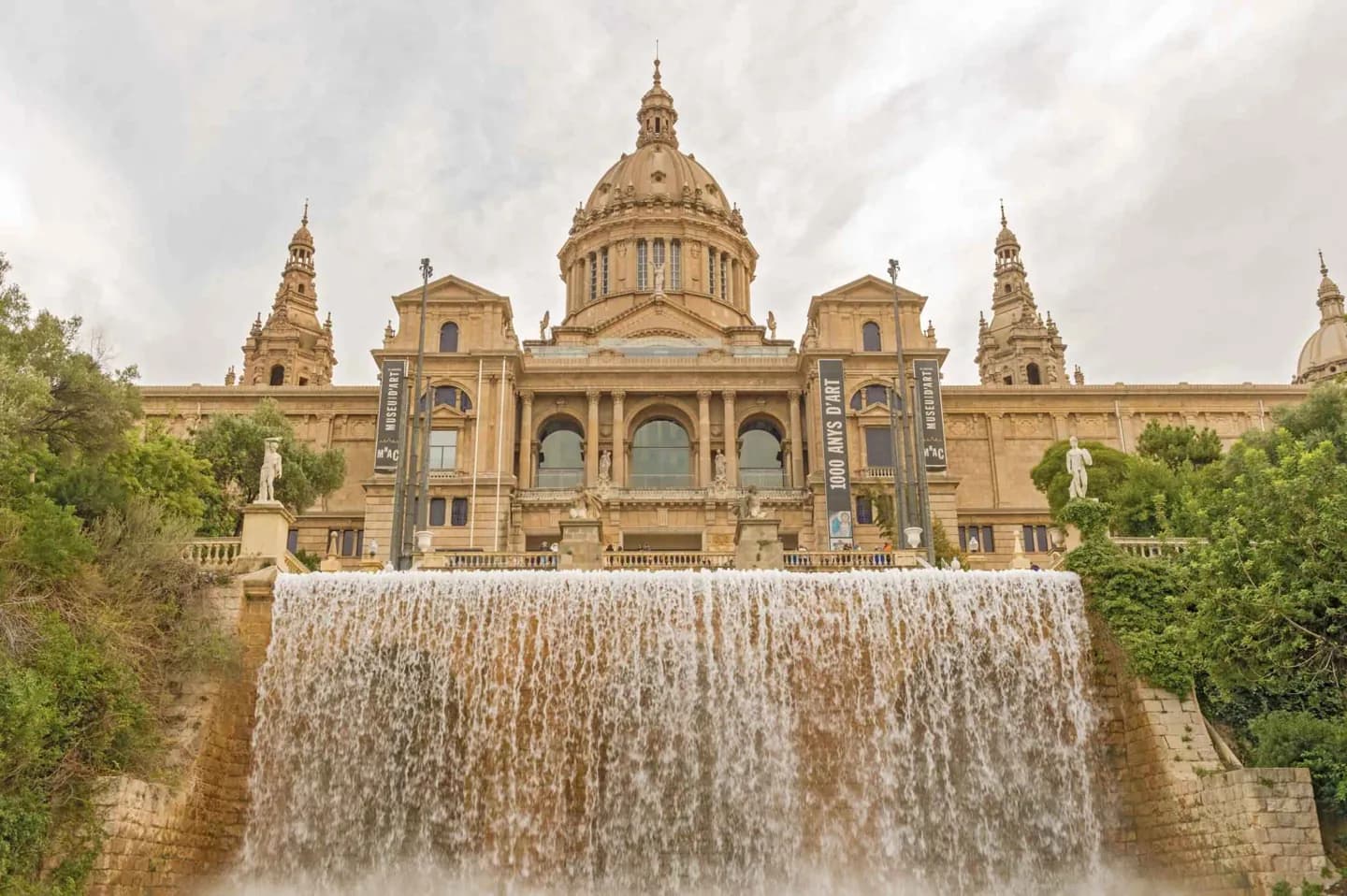
The palace is the visual endpoint of Montjuïc’s 1929 exhibition approach. Its dome, broad façade and stairways make sense from below, while the building’s halls and terraces offer a different visit within MNAC. Keep the architecture stop distinct from time spent with the art collection.
What to look for
- The central dome crowns the façade seen from Avinguda de la Reina Maria Cristina.
- The Oval Hall and Dome Hall reveal the scale of the exhibition building.
- The building’s terraces offer views back across Barcelona.
The full story
Palau Nacional was built as the main building of Barcelona’s 1929 International Exposition. From Plaça d’Espanya, the avenue, fountains and stairways direct the eye uphill to its dome. That staged approach is still the best way to understand its scale. The building later became the home of Catalonia’s national art museum, so its role changed from exposition showpiece to a place for sustained looking at art. Renovations adapted the large interiors for the collection. The Oval Hall and Dome Hall belong to the palace itself, while the galleries are the museum experience inside it. Seeing both the façade from below and the halls within makes the distinction clear. A quick exterior stop and a museum visit require very different amounts of time, even though they share the same building.
Useful to know
- View the façade from the approach below before climbing toward the building.
- Check MNAC’s access options before planning interior halls or terraces; the exterior is visible from the public approach.
Your next visit
Estimated · Declared scenario and planning estimates; no live opening, weather, queue or booking service.
Outdoor visit · 30–45 min
World planning estimate; admission, opening, visit duration and access need checking.