
Why go
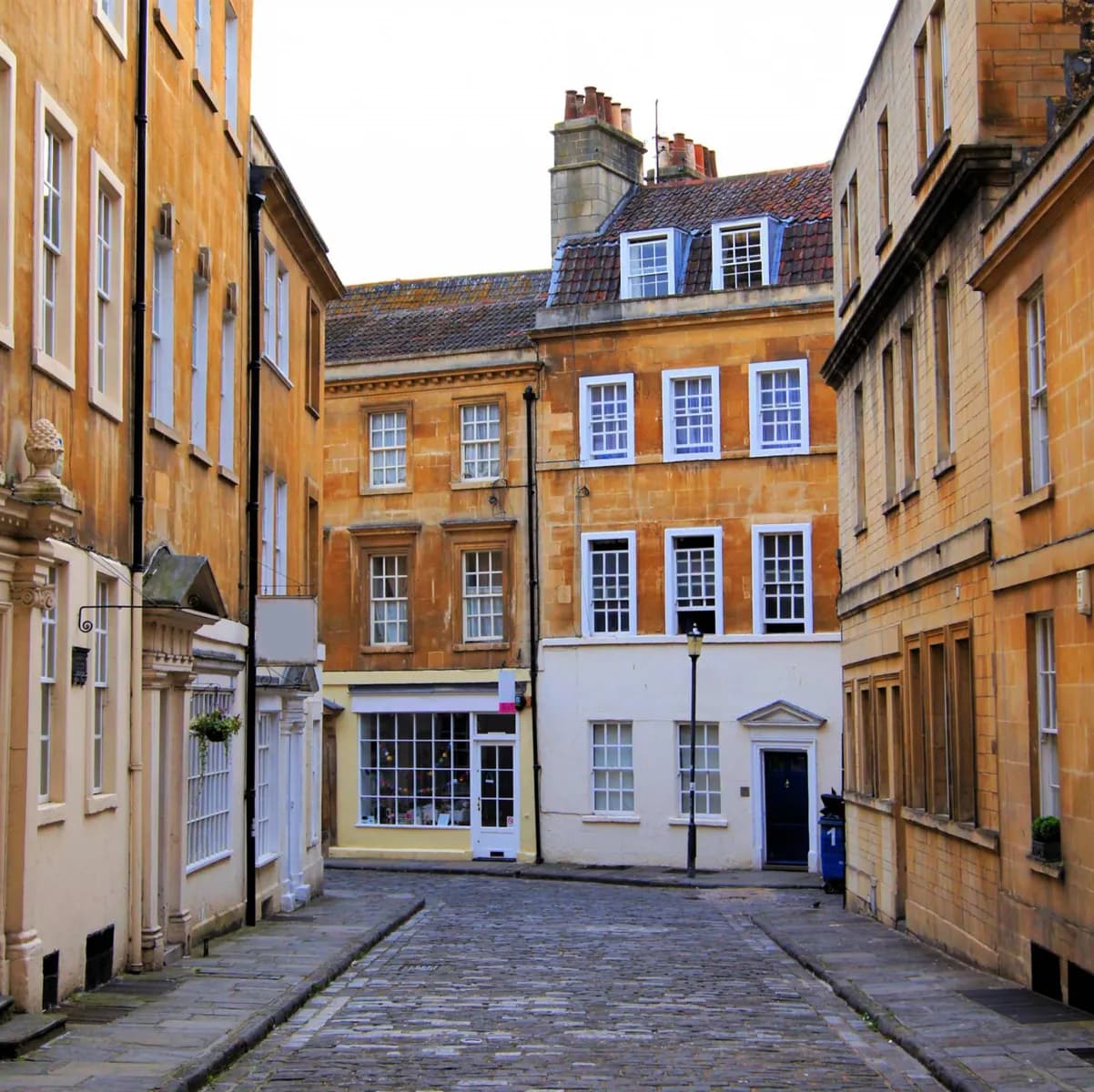
Thomas Baldwin laid out this short street in 1791, giving the approach to Bath’s bathing quarter a formal, matched appearance. Its Ionic columns and repeated façades are easy to take in on foot, while the Cross Bath shows how the city’s thermal water shaped the street’s purpose.
What to look for
- Ionic colonnades give the short street a matched Georgian rhythm.
- The Cross Bath sits at the end of the street.
- Look up at the pedimented windows and mansard roofs.
The full story
Bath Street was laid out by Thomas Baldwin in 1791 as part of the setting for Bath’s thermal springs. Its earlier name, Cross Bath Street, pointed directly to the smaller bath at one end. The columns and repeated windows make the street feel formally planned rather than pieced together building by building. Look at the two-storey fronts and mansard roofs as you walk; their shared proportions matter as much as any single doorway. The Cross Bath carries the older bathing tradition into this Georgian setting, while the nearby Thermae Bath Spa shows its modern continuation. That relationship makes the street more than a pretty passage. It is a short link between different periods of Bath’s spa history, visible within a few steps.
Useful to know
- Walk the full length before visiting the Cross Bath or Thermae Bath Spa; the street itself takes only a short pause.
Your next visit
Estimated · Declared scenario and planning estimates; no live opening, weather, queue or booking service.
Outdoor visit · 15–25 min
World planning estimate; admission, opening, visit duration and access need checking.