
Why go
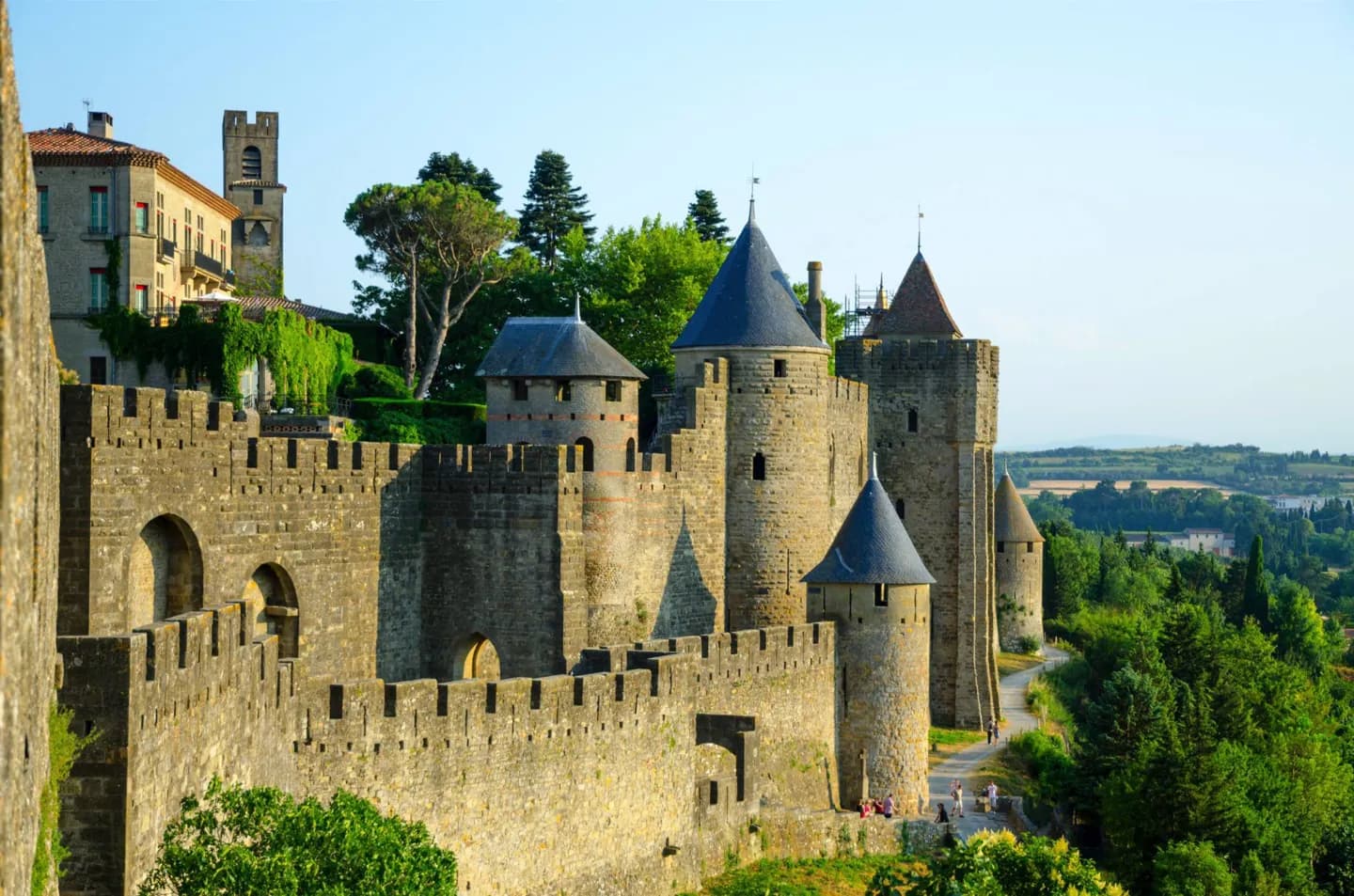
The Cité rewards a slow circuit rather than a single photograph. From Porte Narbonnaise and Porte d’Aude, the walls and towers reveal how the fortified town was layered; views across the Aude place it opposite the lower town. Its streets and the Château Comtal are separate visits.
What to look for
- Two rings of defensive walls and their many towers
- Porte Narbonnaise and Porte d’Aude, the main gate approaches
- Views across the Aude toward the lower town
The full story
The Cité began as a fortified settlement in the Roman period and later stood on a frontier between the French kingdom and the Crown of Aragon. Its imposing appearance is also a story of preservation. In the nineteenth century, a proposal to demolish the fortifications met opposition from local advocates, including Jean-Pierre Cros-Mayrevieille and Prosper Mérimée. Restoration followed under Eugène Viollet-le-Duc and his successors. As you look at the towers and wall lines, remember that the site combines medieval defenses with substantial nineteenth-century restoration. That layered history helps explain why a walk around the walls is more revealing than treating the Cité as an untouched medieval scene. Viollet-le-Duc’s choices drew criticism even in his lifetime, so the visible fortifications also reflect nineteenth-century ideas about how a medieval stronghold should look.
Useful to know
- Walk through the public streets first, then decide whether to add the separately ticketed Château Comtal and inner ramparts.
- Use both main gate approaches to see different sides of the fortifications.
Your next visit
Estimated · Declared scenario and planning estimates; no live opening, weather, queue or booking service.
Outdoor visit · 30–45 min
World planning estimate; admission, opening, visit duration and access need checking.