
Why go
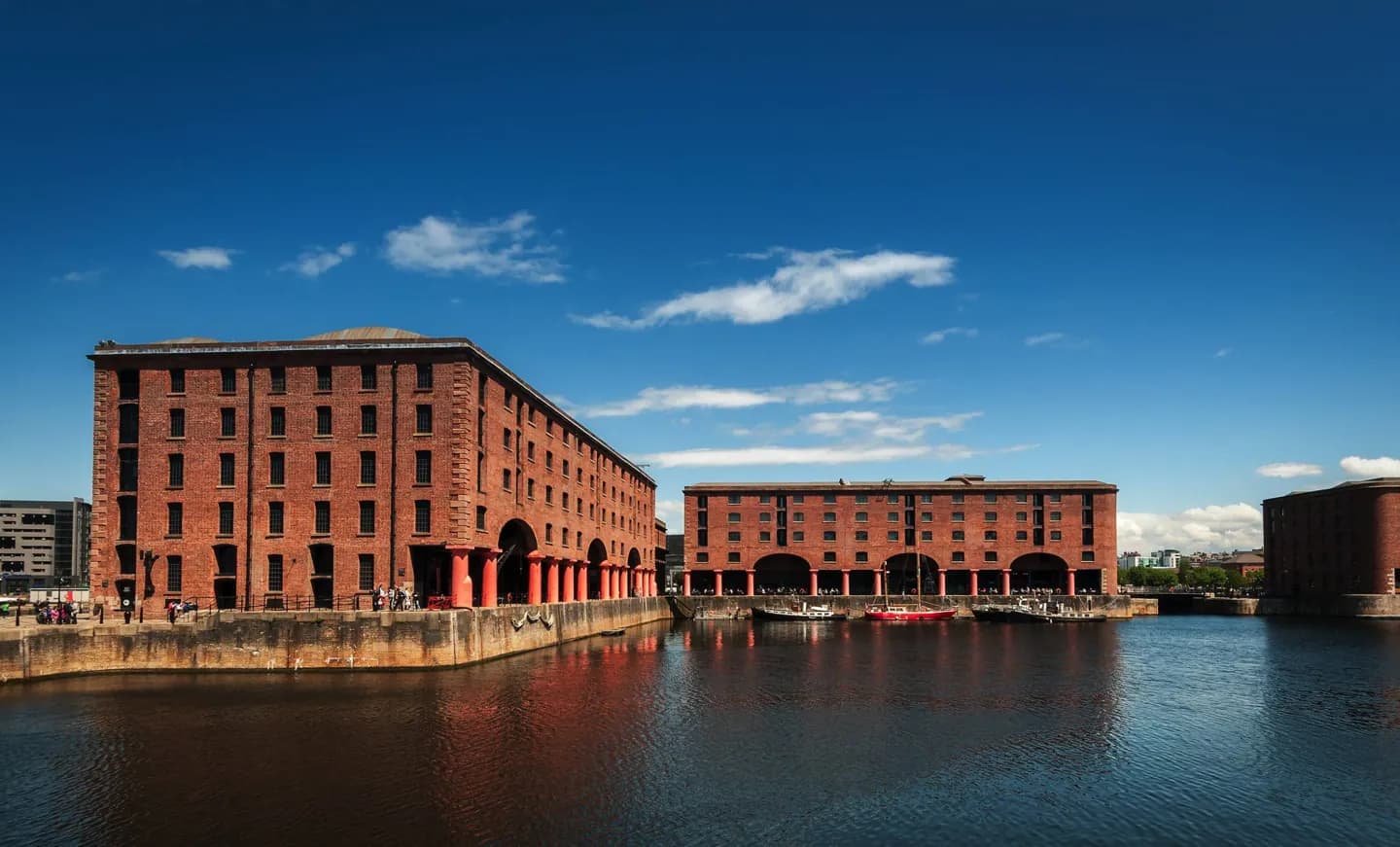
Walk the inner quay to see how ships once met the warehouse doors directly, then look back across the water at the continuous brick and iron frontages. The dock is a compact way to connect the city’s trading past with its reused waterfront buildings, even if you do not enter an attraction.
What to look for
- Follow the inner quay beside the former loading warehouses.
- Look along the warehouse colonnades and their cast-iron supports.
- Compare the enclosed basin with the open Mersey waterfront nearby.
The full story
Royal Albert Dock opened in 1846 as an ambitious combined dock and warehouse complex. Its design let cargo move between ships and storage at the quay, and its brick, stone and cast-iron construction reduced reliance on timber. The goods handled here linked Liverpool to a vast trading network; that prosperity also belongs to a wider port history shaped by empire and the trade in enslaved people. As shipping changed, larger docks became more useful and Albert Dock lost its original role. It closed in 1972, then reopened after a programme of restoration in the 1980s. The useful trace of that cycle is visible without entering a building: the enclosed water, repeated warehouse openings and sheltered colonnades still show the shape of the working dock, while their new uses show how the waterfront was remade.
Useful to know
- Circle the basin before choosing a separately operated venue.
- Combine the dock walk with Pier Head for two different waterfront settings.
- Check individual venue arrangements before planning an indoor stop.
Your next visit
Estimated · Declared scenario and planning estimates; no live opening, weather, queue or booking service.
Outdoor visit · 30–45 min
World planning estimate; admission, opening, visit duration and access need checking.