
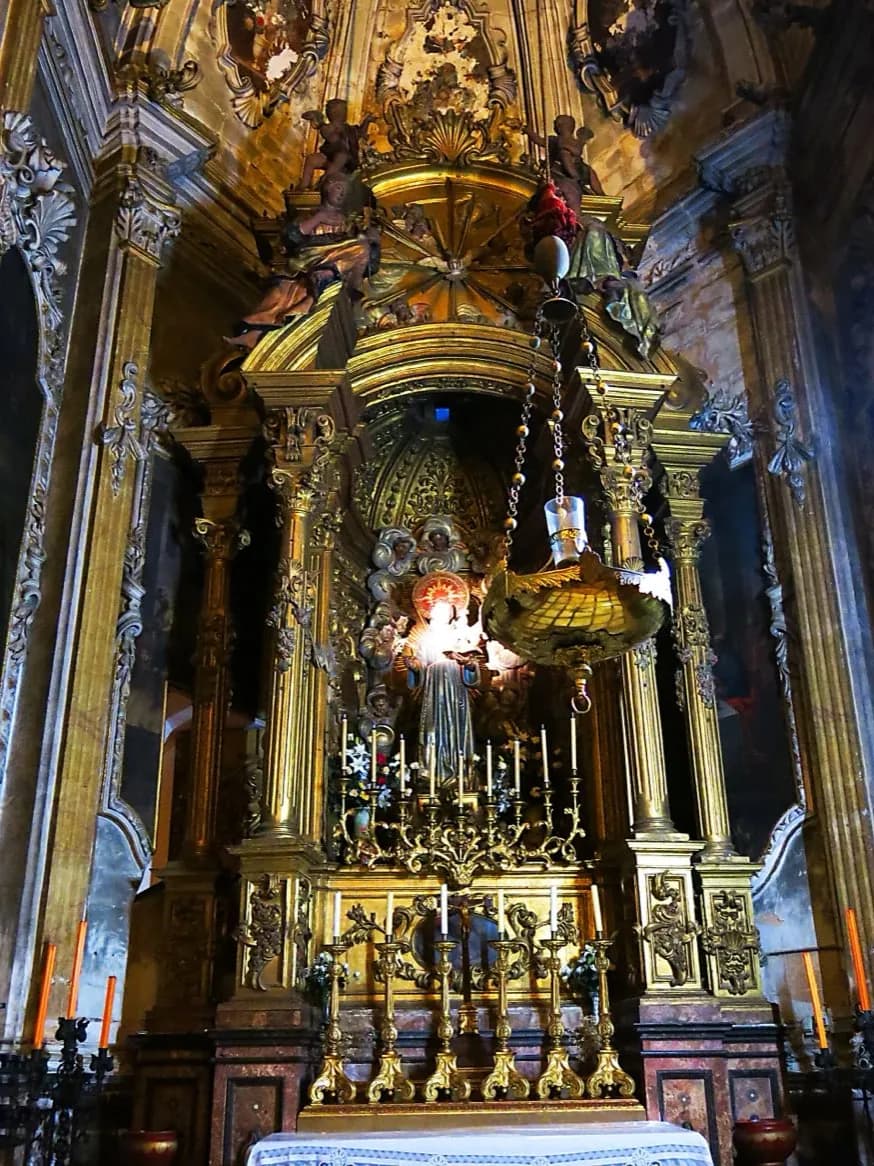
Why go
The Franciscan complex developed from the thirteenth century onward; its church holds the tomb of Ramon Llull, while the cloister offers a quieter architectural sequence. The visit connects the ornate portal, quiet cloister and Llull’s tomb. Choose it for a chronological reading of Mallorca, allowing each surviving layer to inform the next.
What to look for
- The ornate portal.
- Quiet cloister and llull’s tomb.
The full story
The Franciscan complex developed from the thirteenth century onward; its church holds the tomb of Ramon Llull, while the cloister offers a quieter architectural sequence. Today, Basilica of Sant Francesc is best understood through the ornate portal, quiet cloister and Llull’s tomb. The wider Basilica of Sant Francesc context is a Gothic church and cloister tied to Ramon Llull and medieval Palma. Read the oldest surviving fabric first, then identify the additions made under later rulers or owners. Reused stone, altered rooms and shifts in decoration are evidence of continuity rather than visual noise. A final circuit helps place each phase in order and shows why the site remained useful long after its first construction. Before leaving Basilica of Sant Francesc, set its arrival image—the ornate portal—against its closing image: a Gothic church and cloister tied to Ramon Llull and medieval Palma.
Useful to know
- Dress for an active religious site.
- Verify visitor access outside services and ceremonies.
Your next visit
Estimated · Declared scenario and planning estimates; no live opening, weather, queue or booking service.
Indoor visit · 22–45 min
World planning estimate; admission, opening, visit duration and access need checking.