
Why go
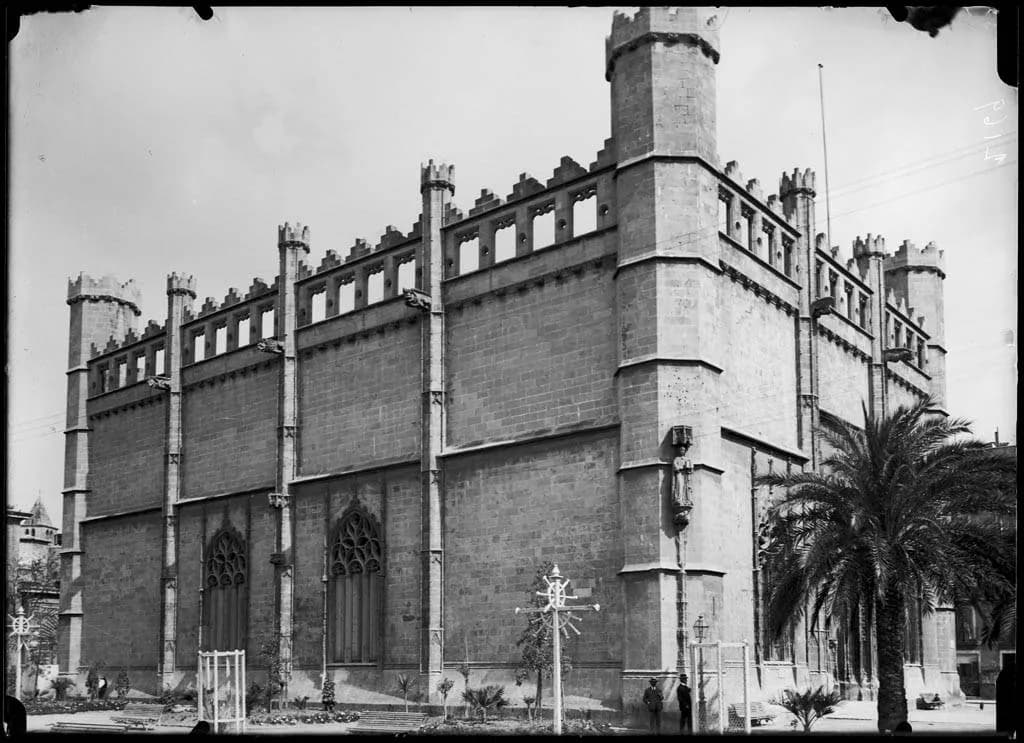
Guillem Sagrera designed this fifteenth-century merchants’ exchange as a unified Gothic hall whose slender spiral columns rise directly into the ribbed vaults. The visit connects spiral columns, palm-like vaulting and a sculpted waterfront exterior. It earns time through the relationship between design, movement and the experience of the surrounding space.
What to look for
- Spiral columns.
- Palm-like vaulting and a sculpted waterfront exterior.
The full story
Guillem Sagrera designed this fifteenth-century merchants’ exchange as a unified Gothic hall whose slender spiral columns rise directly into the ribbed vaults. Today, La Llotja is best understood through spiral columns, palm-like vaulting and a sculpted waterfront exterior. The wider La Llotja context is a compact masterpiece of late Gothic civic architecture built for Palma’s merchants. Follow the plan rather than hunting for a single façade. Entrances, stairs, courtyards and main rooms reveal how people were meant to move through the building. Materials and proportions become clearer in that order, showing how practical needs and visual ambition were resolved within one architectural composition. Before leaving La Llotja, set its arrival image—spiral columns—against its closing image: a compact masterpiece of late Gothic civic architecture built for Palma’s merchants.
Useful to know
- Check whether the hall is open; the exterior still rewards a stop.
- Combine it with Es Baluard and the Born.
Your next visit
Estimated · Declared scenario and planning estimates; no live opening, weather, queue or booking service.
Indoor visit · 30–60 min
World planning estimate; admission, opening, visit duration and access need checking.