
Why go
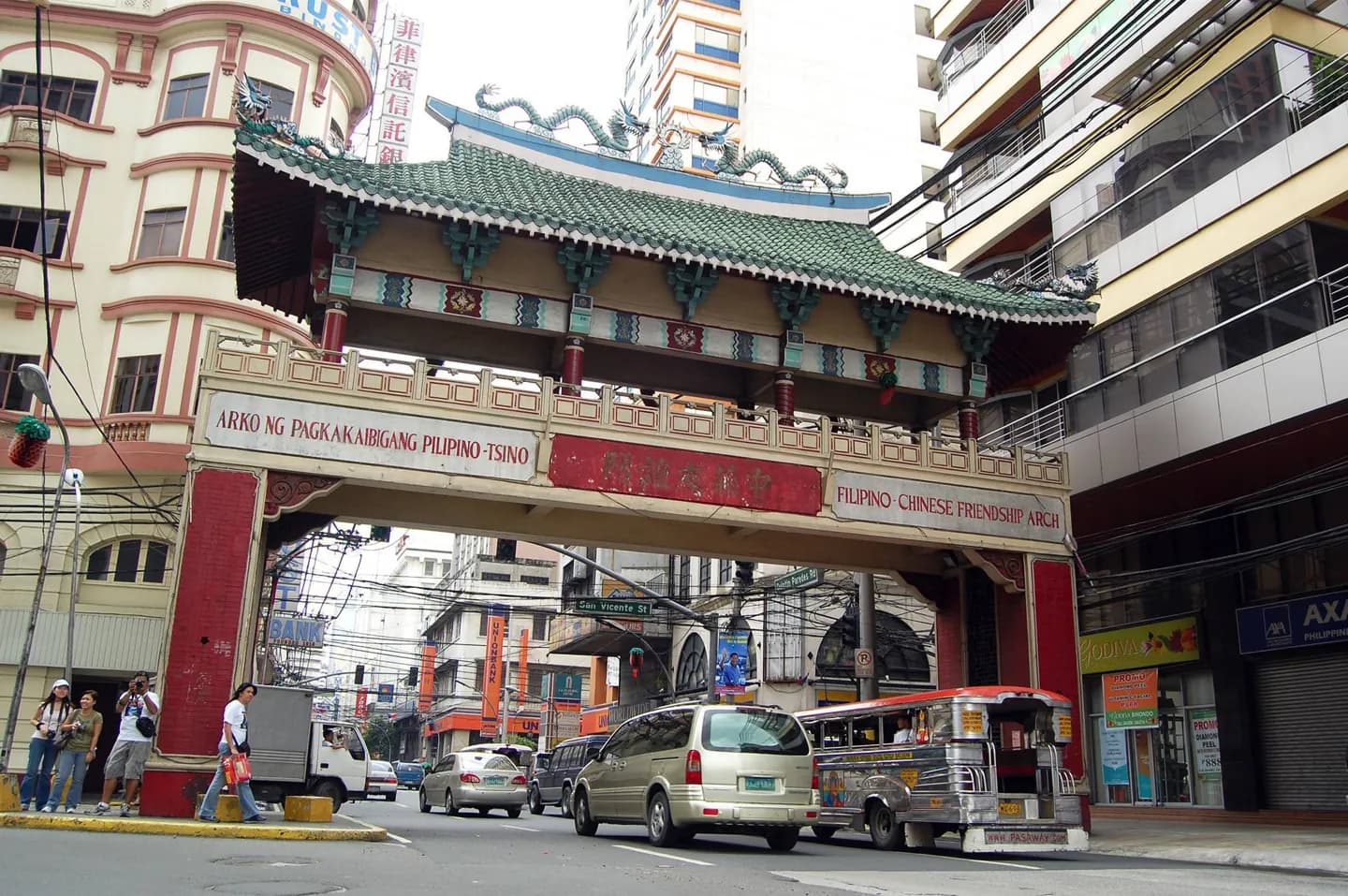
Binondo brings Chinese-Filipino food culture and Manila's colonial history into the same walk. The district was established as a Chinese settlement under Spanish rule, and its church and plaza remain useful anchors among the commercial streets. Continue toward Escolta to compare older trading streets with the business architecture that followed.
What to look for
- Use Binondo Church and Plaza San Lorenzo Ruiz as a clear starting pair.
- Notice the mix of food businesses and everyday trade along the district's streets.
- Follow Escolta for a change from Chinatown's street life to early commercial architecture.
The full story
Binondo grew across the Pasig River from Intramuros, the Spanish walled city. Colonial authorities established a settlement here for Chinese migrants in the late sixteenth century. The position kept the communities close enough to trade while setting them apart administratively. Over generations, Chinese residents, Filipino families and Catholic institutions shaped the neighborhood together. Binondo Church and Plaza San Lorenzo Ruiz still make that history visible within a working commercial district. Nearby streets carry the story through food and trade, while Escolta reflects a later era of banks and department stores. Walking between these anchors shows how migration, worship and commerce came to occupy the same compact part of Manila. The district is best understood through these relationships, rather than through one building alone.
Useful to know
- Choose a few named streets or stops before you go; the district has no single entrance.
- Check individual food and heritage venues separately if any are essential to your visit.
- Keep time for an unhurried walk between the church, plaza and Escolta.
Your next visit
Estimated · Declared scenario and planning estimates; no live opening, weather, queue or booking service.
Outdoor visit · 30–45 min
World planning estimate; admission, opening, visit duration and access need checking.