
Why go
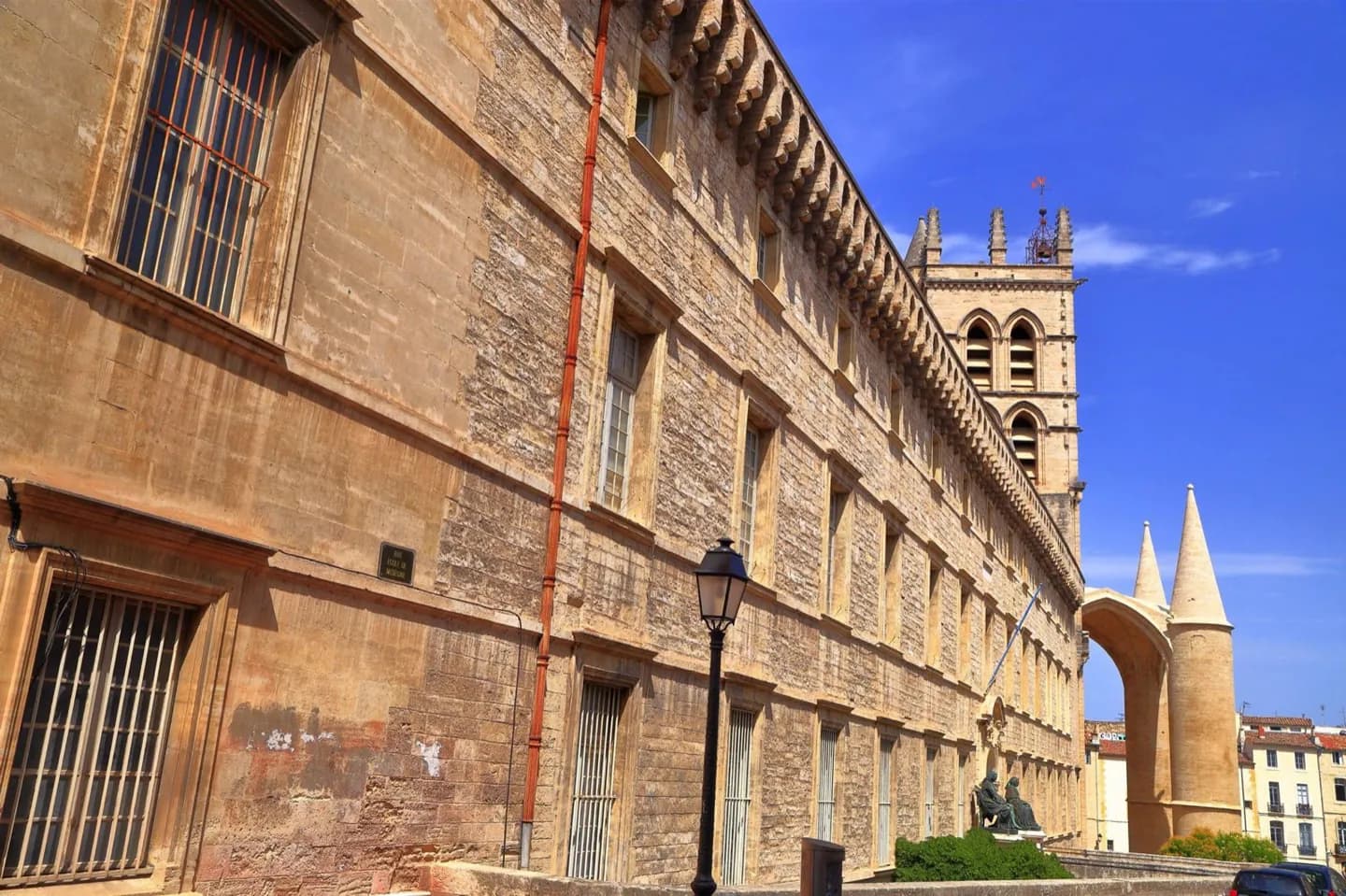
The broad cylindrical supports of the porch make the entrance unlike a delicate Gothic doorway. Inside, a work by Sébastien Bourdon adds another layer to the visit. The cathedral also sits close to Montpellier’s historic medical quarter and botanical garden.
What to look for
- The monumental porch rests on two cylindrical supports.
- The exterior shows the robust forms of southern Gothic architecture.
- A painting by Sébastien Bourdon can be seen inside when the cathedral is open.
The full story
Saint-Pierre began as the chapel of a fourteenth-century monastery college founded under Pope Urban V. It became Montpellier’s cathedral in 1536, when the episcopal seat moved from Maguelone. The building suffered serious damage during the Wars of Religion, and later alterations changed parts of its interior. Its entrance still carries a strong medieval impression: two thick cylindrical supports hold up a porch that feels almost defensive. That form helps explain the cathedral’s fortified appearance, unusual beside the narrow streets around it. A visit therefore works on two scales. From outside, the porch and Gothic mass are the immediate draw. Inside, later art and changes to the church show that this was a working religious building adapted over centuries. This contrast is especially clear on the approach from the neighbouring lanes.
Useful to know
- Look at the porch from outside even if the building is closed.
- Check worship and visitor access before planning an interior visit.
- Combine it with the nearby Jardin des Plantes.
Your next visit
Estimated · Declared scenario and planning estimates; no live opening, weather, queue or booking service.
Outdoor visit · 30–45 min
World planning estimate; admission, opening, visit duration and access need checking.