
Why go
Nuremberg's railway museum traces how trains changed travel and work in Germany, with the scale shifting from real rolling stock to intricate miniature layouts. That contrast makes it a strong stop for rail enthusiasts and families: you can look closely at the engineering, then see how a whole network operates in model form.
What to look for
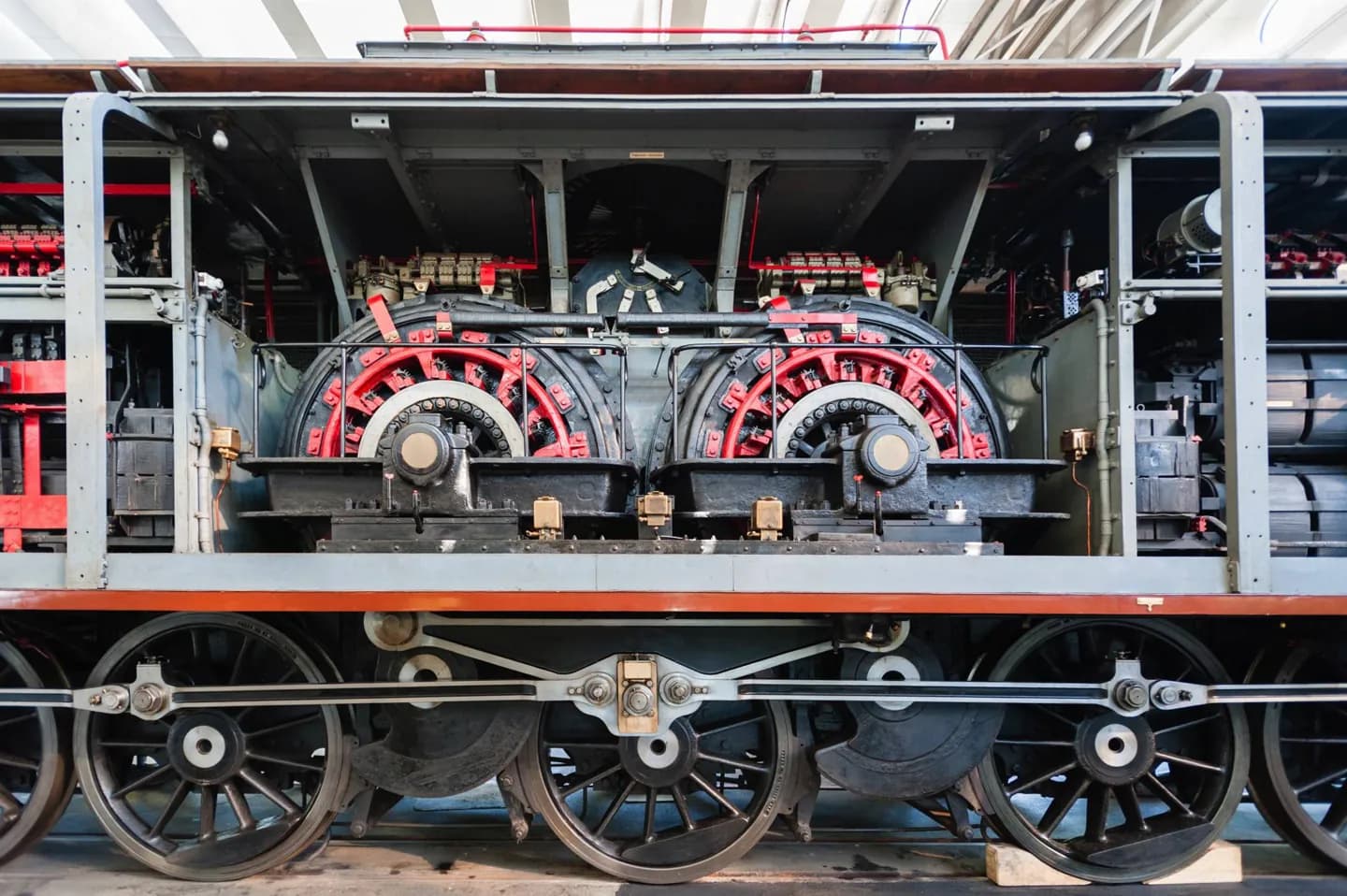
- Full-size railway vehicles set the scale for the history told inside the DB Museum.
- The model railway shows railway operations in miniature.
- KIBALA gives children a railway area of their own.
The full story
The museum grew out of a royal Bavarian railway museum founded in 1899. That origin gives the displays a longer view than a collection of famous locomotives alone: they show how railways became a system of vehicles, signals and operating practices. The model collection began with work by apprentices of the Royal Bavarian State Railways, adding another layer to that history. The Nuremberg building dates from 1925, and the institution is now presented as DB Museum Nürnberg. Look at the full-size vehicles first to grasp the weight and size of railway travel, then use the models to follow the smaller decisions that keep trains moving through a network. The historic name Nuremberg Transport Museum also reflects the building's association with the Museum of Communications. For this visit, the DB Museum's railway collections are the clearest starting point.
Useful to know
- Start with the main railway displays, then turn to the model railway or KIBALA according to your group's interests.
- Check the museum's current information before making the outdoor collection a main reason for the visit.
Your next visit
Estimated · Declared scenario and planning estimates; no live opening, weather, queue or booking service.
Outdoor visit · 30–45 min
World planning estimate; admission, opening, visit duration and access need checking.