
Why go
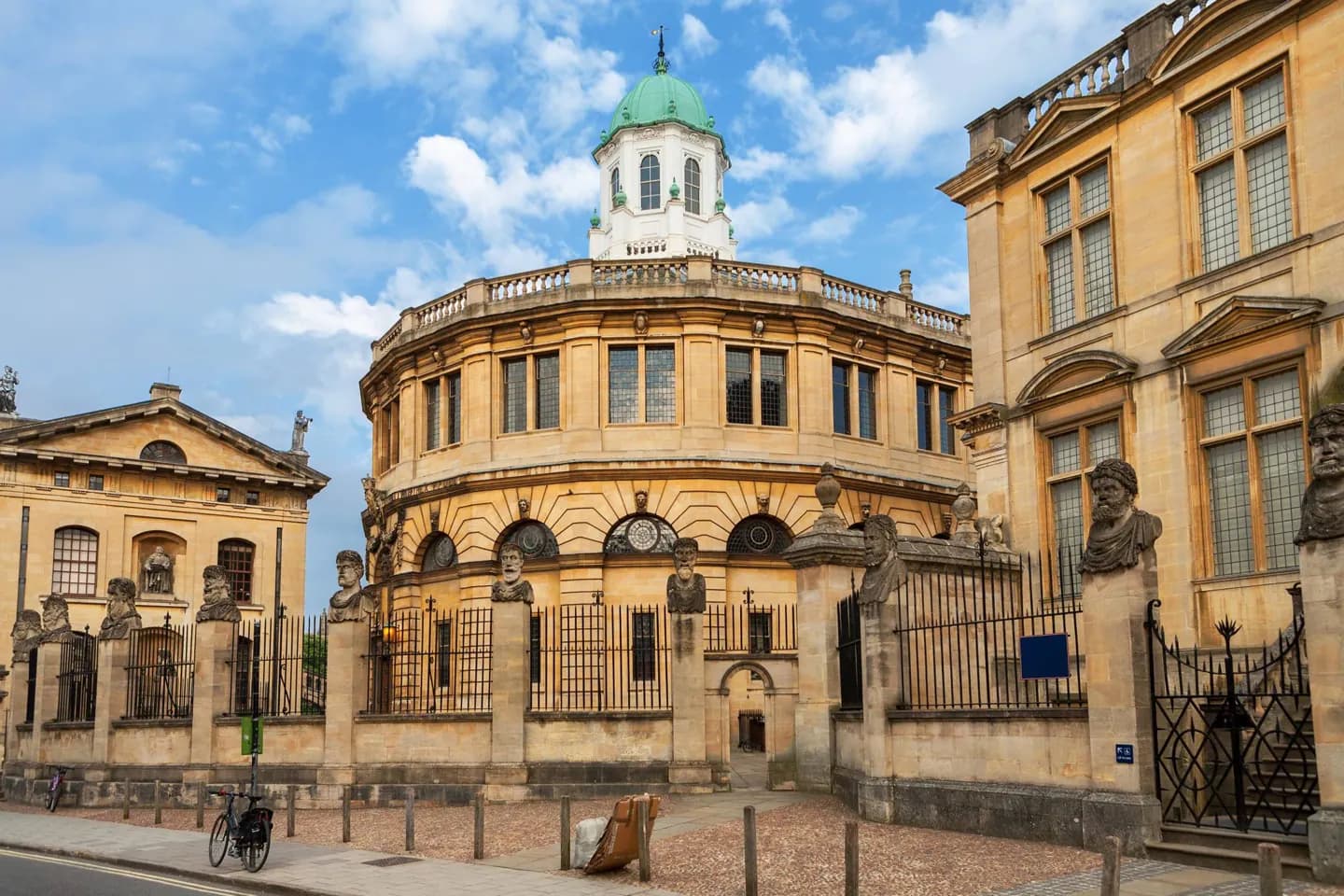
This is a place to see how the university stages its public rituals. Wren's D-shaped auditorium, ambitious roof and elevated view make it distinct from Oxford's college chapels and museums. A concert or ceremony offers a different experience from a daytime visitor ticket, so check the current programme before choosing.
What to look for
- The D-shaped auditorium reflects Wren's interest in ancient theatres.
- The wide roof span shows how Wren covered a space designed for ceremonies.
- The cupola gives a raised view over Oxford when that visit option is available.
The full story
Built between 1664 and 1669, the Sheldonian gave the University of Oxford a dedicated place for degree ceremonies. Christopher Wren designed it early in his architectural career, with funding from Gilbert Sheldon, after whom the building is named. The D-shaped plan drew on classical theatre rather than the Gothic forms common elsewhere in Oxford. Wren faced a practical problem: the auditorium needed a permanent roof across a span too wide for ordinary straight timbers. His solution used a framework of shorter pieces to cover the space without a forest of supporting columns below. That engineering decision is central to what visitors experience inside: a broad, open room in which an audience can face university proceedings together. The building remains a ceremonial venue, while concerts and lectures give it a life beyond graduations. Its cupola, when open to visitors, changes the view from the theatre's interior to the surrounding university streets and rooftops.
Useful to know
- Check the day's visitor options; university ceremonies can restrict access.
- Book a listed concert or event separately if you want to experience the theatre in use.
Your next visit
Estimated · Declared scenario and planning estimates; no live opening, weather, queue or booking service.
Outdoor visit · 30–45 min
World planning estimate; admission, opening, visit duration and access need checking.