
Why go
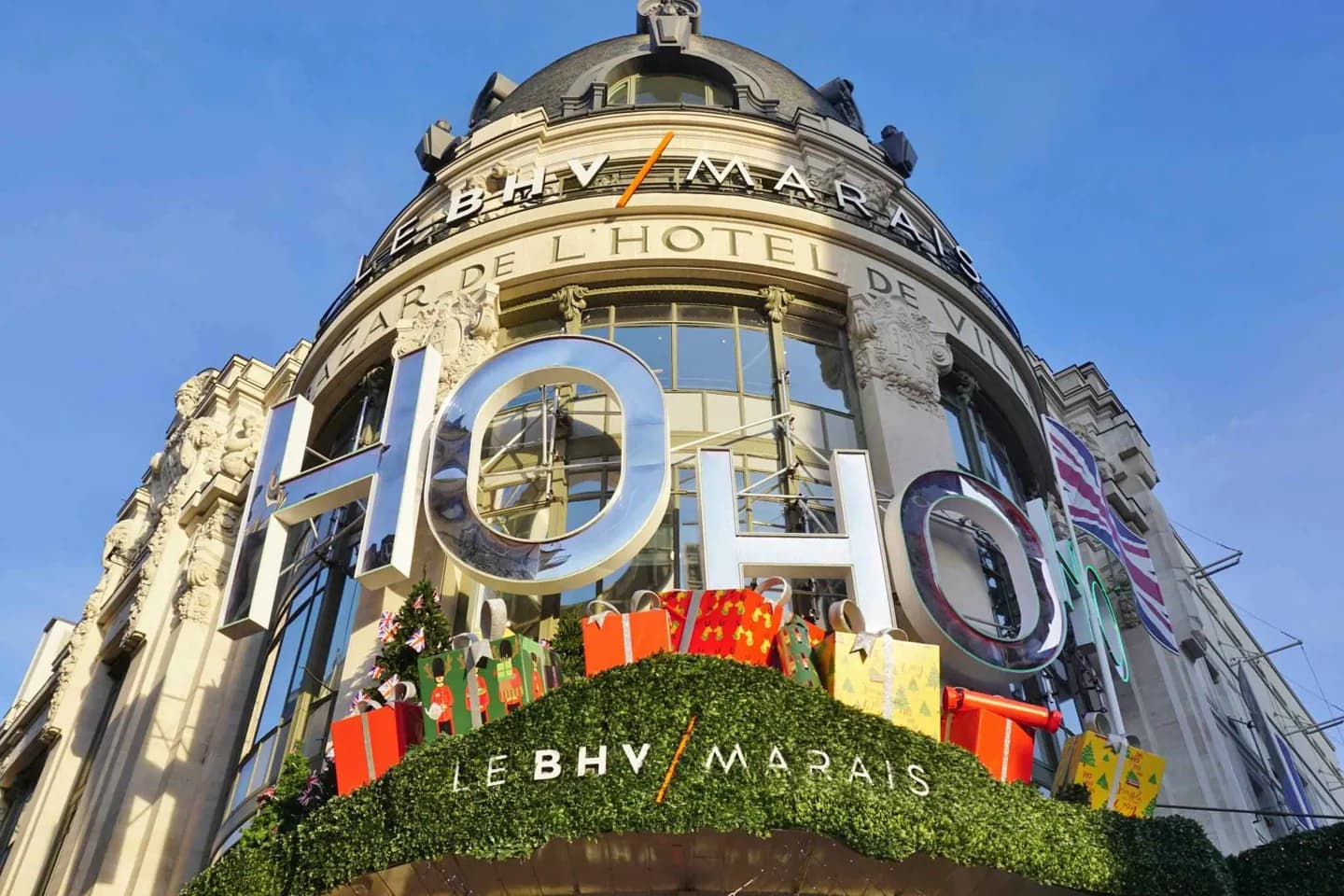
BHV offers a different reading of central Paris from monuments and museums. It grew from a neighbourhood bazaar into a major department store while retaining a reputation for home improvement and practical goods. The prominent rotunda and layered retail floors make it useful for understanding the commercial life around Hôtel de Ville.
What to look for
- The corner rotunda marks the flagship building on Rue de Rivoli.
- Home, design and hardware departments continue the store’s practical-goods tradition.
- Its façade forms a commercial counterpart to the Hôtel de Ville across the street.
The full story
Xavier Ruel began selling goods in this neighbourhood in the 1850s and expanded a small shop near the Hôtel de Ville into the Bazar de l’Hôtel de Ville. By the late nineteenth century, the business employed hundreds of people and took part in the new department-store culture of fixed prices, promotions and mass advertising. The building evolved with the company. Renovations in the early twentieth century and Auguste Roy’s 1913 work produced the recognizable rotunda. BHV became especially associated with household equipment, tools and do-it-yourself supplies, a practical emphasis that distinguished it from fashion-led rivals. The flagship has since broadened its offer and adopted the BHV Marais name, but its location and home-oriented identity still connect it with the history of everyday retail in central Paris.
Useful to know
- Check the official daily schedule before visiting because retail hours can change.
- Use this as a shopping stop rather than an architectural interior visit; departments and services may shift.
Your next visit
Estimated · Declared scenario and planning estimates; no live opening, weather, queue or booking service.
Outdoor visit · 30–45 min
World planning estimate; admission, opening, visit duration and access need checking.