
Why go
Pictures of streets, portraits, furniture and archaeological finds connect Paris's changing appearance with the people who lived here. The appeal lies in moving between scales: a city's upheavals sit alongside household objects and scenes of ordinary work. It gives a Marais walk a longer perspective than the surviving facades alone can provide.
What to look for
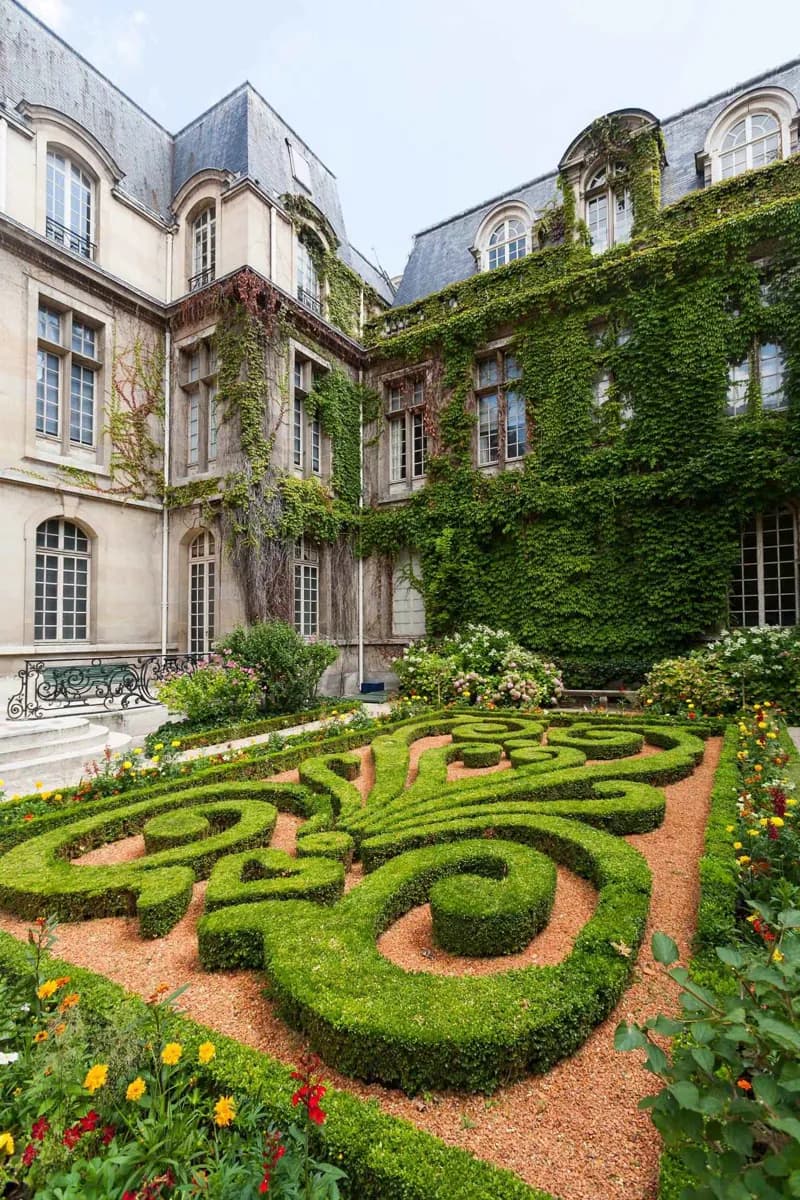
- The Hôtel Carnavalet and Hôtel Le Peletier de Saint-Fargeau form the museum's two-mansion setting.
- Paintings of Paris streets and monuments record how the city changed over several centuries.
- Furniture, signs and archaeological objects bring daily life into the city's historical narrative.
The full story
Carnavalet became a museum while Paris itself was undergoing a major transformation. On Baron Haussmann's advice, the city bought the Hôtel Carnavalet in 1866; it opened to the public in 1880. The institution therefore emerged during the same century that reshaped so much of the capital's street plan. Its images of older streets preserve a way of seeing Paris that surviving buildings cannot fully supply. The collections grew beyond the first mansion, and the neighbouring Hôtel Le Peletier de Saint-Fargeau opened as part of the museum in 1989. Within those buildings, history extends beyond rulers and monuments. Portraits, scenes of daily life across social classes and images of revolutions show how private lives and public conflict contributed to the city. Reading those objects together makes Paris a changing society rather than simply a sequence of architectural styles.
Useful to know
- Follow a period that interests you, then use street views and household objects to connect its events to daily life.
- Pair the museum with a Marais walk to compare the historic mansion setting with the surrounding streets.
Your next visit
Estimated · Declared scenario and planning estimates; no live opening, weather, queue or booking service.
Indoor visit · 30–45 min
World planning estimate; admission, opening, visit duration and access need checking.