
Why go
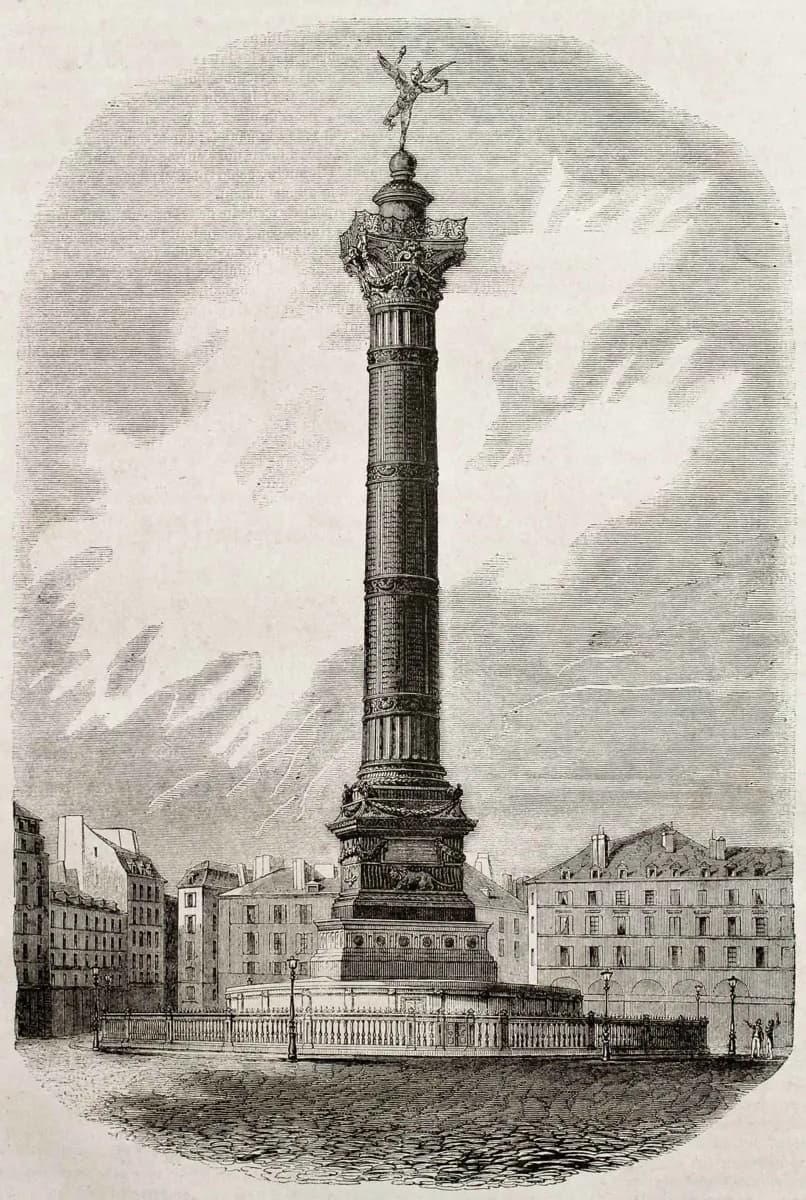
The square is most useful as a point of orientation and historical contrast. The fortress that gave it its name once marked the edge between aristocratic Le Marais and the working faubourg Saint-Antoine. Today the place connects that revolutionary memory with the Opéra Bastille and routes toward the canal, so it rewards a pause before moving on.
What to look for
- The square reads as a busy junction between Le Marais, the canal and eastern Paris.
- Opéra Bastille provides a modern architectural edge to the square.
- Routes toward Canal Saint-Martin begin from the former fortress area.
The full story
The Bastille began as a fourteenth-century defensive fortress under Charles V. By the seventeenth century it had become a state prison, and its role in arrests made by royal order turned it into a lasting symbol of arbitrary power. In July 1789, crowds looking for arms and gunpowder confronted the fortress after days of rising tension in Paris. The storming of the Bastille made the site inseparable from the French Revolution, even though the prison held only a small number of inmates at the time. The square now has no fortress to inspect, which is why its setting matters: Le Marais lies on one side, the former working faubourg Saint-Antoine on the other, and the modern Opéra Bastille faces the place. Read it as a threshold in the city rather than a monument alone.
Useful to know
- Use the square as a transition between Le Marais, the canal and the opera district.
- Allow for temporary events when choosing a route across the public space.
Your next visit
Estimated · Declared scenario and planning estimates; no live opening, weather, queue or booking service.
Outdoor visit · 30–45 min
World planning estimate; admission, opening, visit duration and access need checking.