
Why go
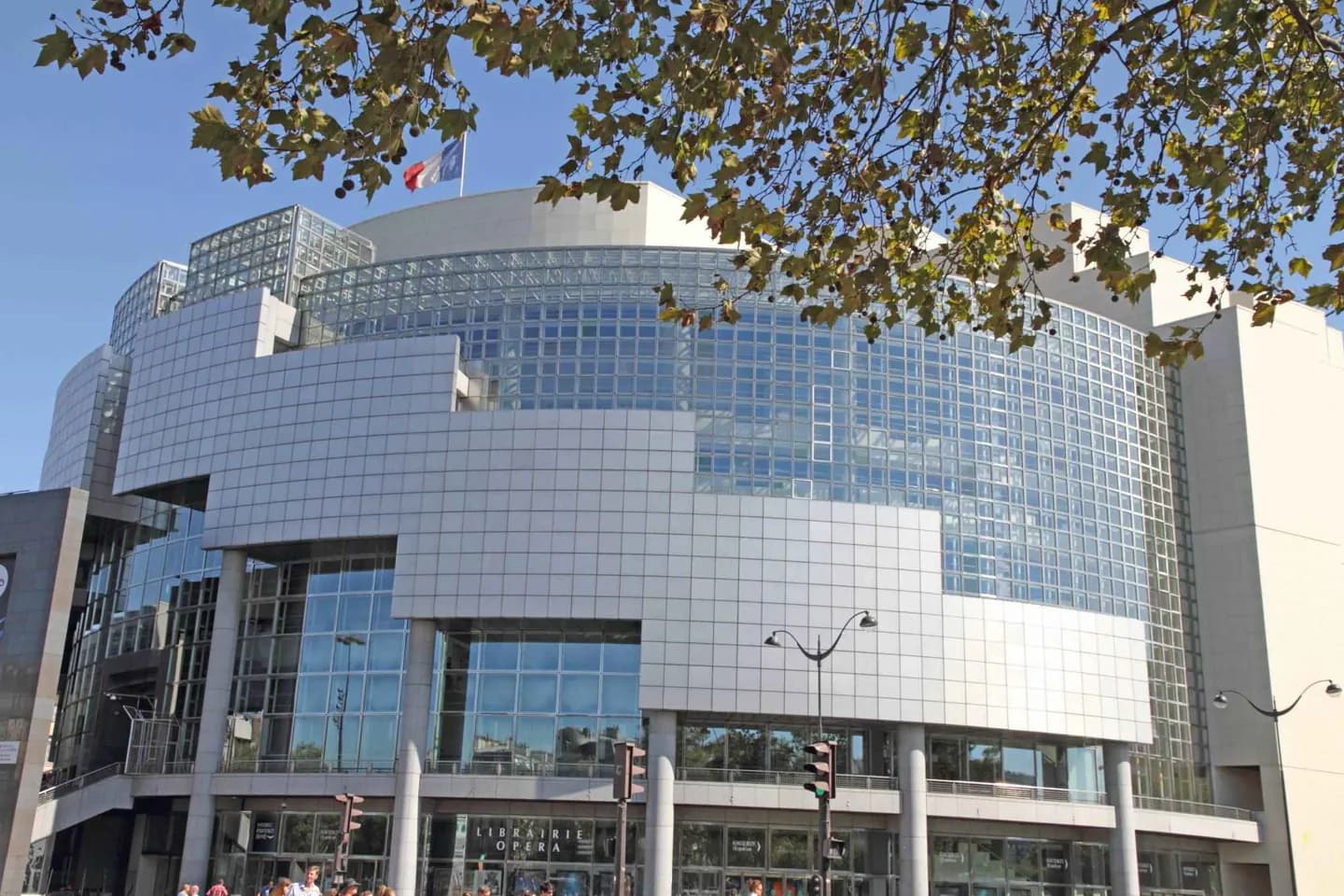
Carlos Ott's opera house gives Place de la Bastille a deliberately modern counterpoint to the Palais Garnier. It opened in 1989 after a long public project, using glass-walled foyers and an arena-style auditorium to make opera feel less enclosed by tradition. Visit for a performance or a guided tour when available, and treat the square as part of the experience.
What to look for
- Curved glass façades and broad foyers make the building’s modern design visible from the square.
- The foyers wrap around the auditorium behind the glass exterior.
- The opera house faces the busy Place de la Bastille, with routes toward the canal nearby.
The full story
Opéra Bastille grew from a long-running argument about whether Paris needed a larger, more modern opera house than the Palais Garnier could provide. The project returned under President François Mitterrand, who made it part of his Grands Travaux programme. An international competition chose Carlos Ott's design in 1983, and construction began after the old Bastille railway station was demolished. The theatre opened on 13 July 1989, the eve of the bicentenary of the storming of the Bastille. Its architecture makes the historical setting part of the point: the broad glass foyers look toward the city, while the auditorium uses an arena arrangement rather than the hierarchy of boxes associated with older opera houses. The building is therefore a useful stop for understanding how Paris placed a contemporary cultural institution on one of its most politically resonant squares.
Useful to know
- Check the selected date before relying on a backstage tour or auditorium access.
- Pair the visit with Place de la Bastille to see the contrast between the modern theatre and the revolutionary site.
Your next visit
Estimated · Declared scenario and planning estimates; no live opening, weather, queue or booking service.
Outdoor visit · 30–45 min
World planning estimate; admission, opening, visit duration and access need checking.