
Why go
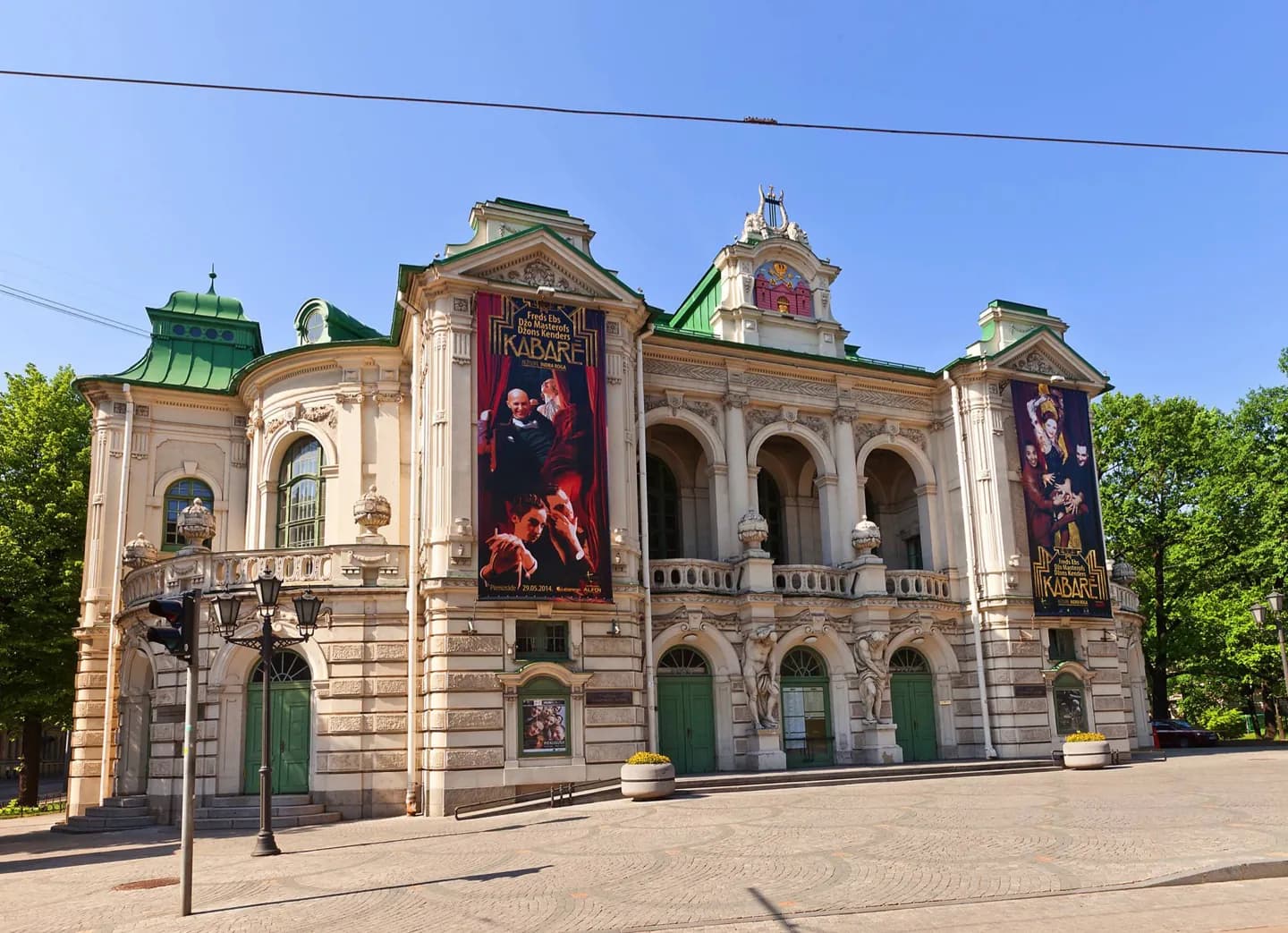
The theatre links a national political moment to an active cultural venue. Its early-twentieth-century architecture gives the declaration a physical setting, while a performance or scheduled tour offers a reason to enter rather than only view the exterior. The declaration gives a specific reason to pause at this working theatre.
What to look for
- Latvia’s independence was declared in the theatre on 18 November 1918.
- The building was designed by Augusts Reinbergs around the turn of the twentieth century.
- The theatre continues to host performances and scheduled tours.
The full story
The Latvian National Theatre building was designed by Augusts Reinbergs and erected between 1899 and 1902. It began as Riga’s second Russian theatre, then acquired a place in the story of Latvian independence. Latvian-language performances had appeared there by 1917. On 18 November 1918, Latvia’s independence was proclaimed in the building, turning a working stage into the setting of a defining political act. The national theatre company followed in 1919. Those dates explain why the building matters even to someone who is not attending a play: its façade marks a moment when cultural expression and statehood met. Today it remains a performance venue, so seeing the interior depends on a show or a separately listed tour. An exterior visit can be brief; a ticketed visit is the way to encounter the theatre as a living institution.
Useful to know
- Check for a performance or tour if you want to go inside.
- The exterior is the straightforward stop when no event suits your dates.
Your next visit
Estimated · Declared scenario and planning estimates; no live opening, weather, queue or booking service.
Outdoor visit · 30–45 min
World planning estimate; admission, opening, visit duration and access need checking.