
Why go
Jogyesa places contemporary Korean Buddhism within the dense civic center rather than on a remote mountain. The Daeungjeon hall, temple yard and venerable white pine reward a respectful short visit, while festival lanterns can transform the space at certain times.
What to look for
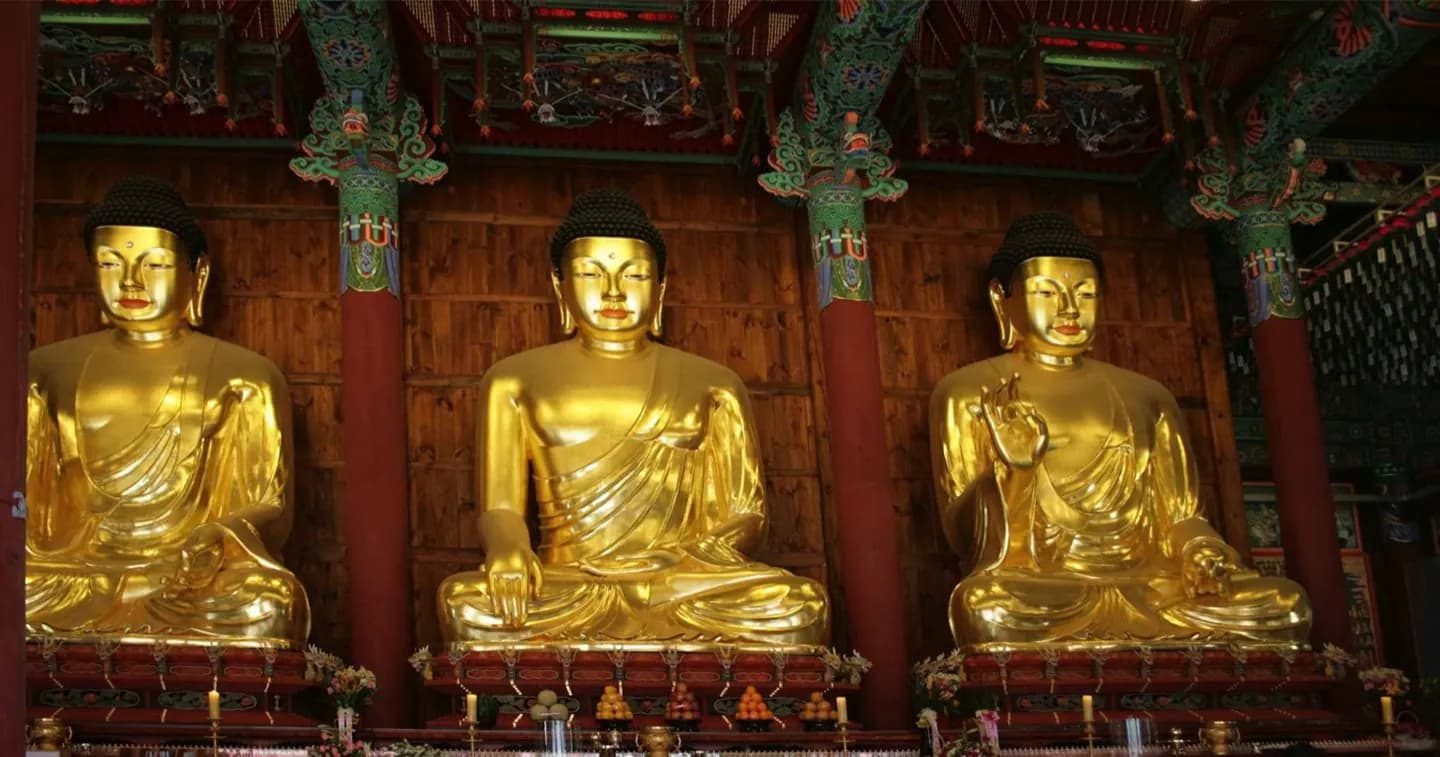
- Daeungjeon is the main focus of worship and the architectural center of the compound.
- An ancient white pine gives the compact temple yard an unusual natural landmark.
- Lantern displays reshape the courtyards around major Buddhist festivals.
The full story
Jogyesa is the chief temple of the Jogye Order, the largest tradition within Korean Buddhism, and plays a central role in the country's contemporary Seon practice. A temple was established in the early Joseon period, while the modern institution took shape in the twentieth century and received its present name in 1954. Its position in Jongno is part of the appeal. Instead of withdrawing from the city, the temple sits among offices, roads and major cultural sites, making the transition into its courtyard immediate. Daeungjeon serves as the main worship hall, so activity there should be read as living religious practice rather than a staged display. Around Buddhist festivals, lanterns can fill the grounds with color, but the essential character remains that of a working temple. Visitors gain most by watching how worship, architecture and daily movement share a small space, while allowing practitioners priority and respecting any access changes.
Useful to know
- Check current visitor guidance before going because worship and events can affect access.
- Keep voices low and do not block worshippers or ritual movement around Daeungjeon.
- Combine the temple with a central Jongno walk rather than treating it as an isolated excursion.
Your next visit
Estimated · Declared scenario and planning estimates; no live opening, weather, queue or booking service.
Outdoor visit · 10–15 min
Public-space walk and exterior observation only; no interior, garden, tower or ticketed admission included. Durations and walking are estimates. Check temporary restrictions and park or market opening times.
Outdoor visit · 30–45 min
World planning estimate; admission, opening, visit duration and access need checking.