
Why go
Mudéjar plasterwork and tile patterns concentrate around the Palace of Pedro I. Gardens link fountains, orange trees and pavilions added across several royal periods. At Royal Alcázar of Seville, compare both closely. Royal Alcázar of Seville rewards a slower circuit.
What to look for
- Mudéjar plasterwork and tile patterns concentrate around the Palace of Pedro I.
- Gardens link fountains, orange trees and pavilions added across several royal periods.
The full story
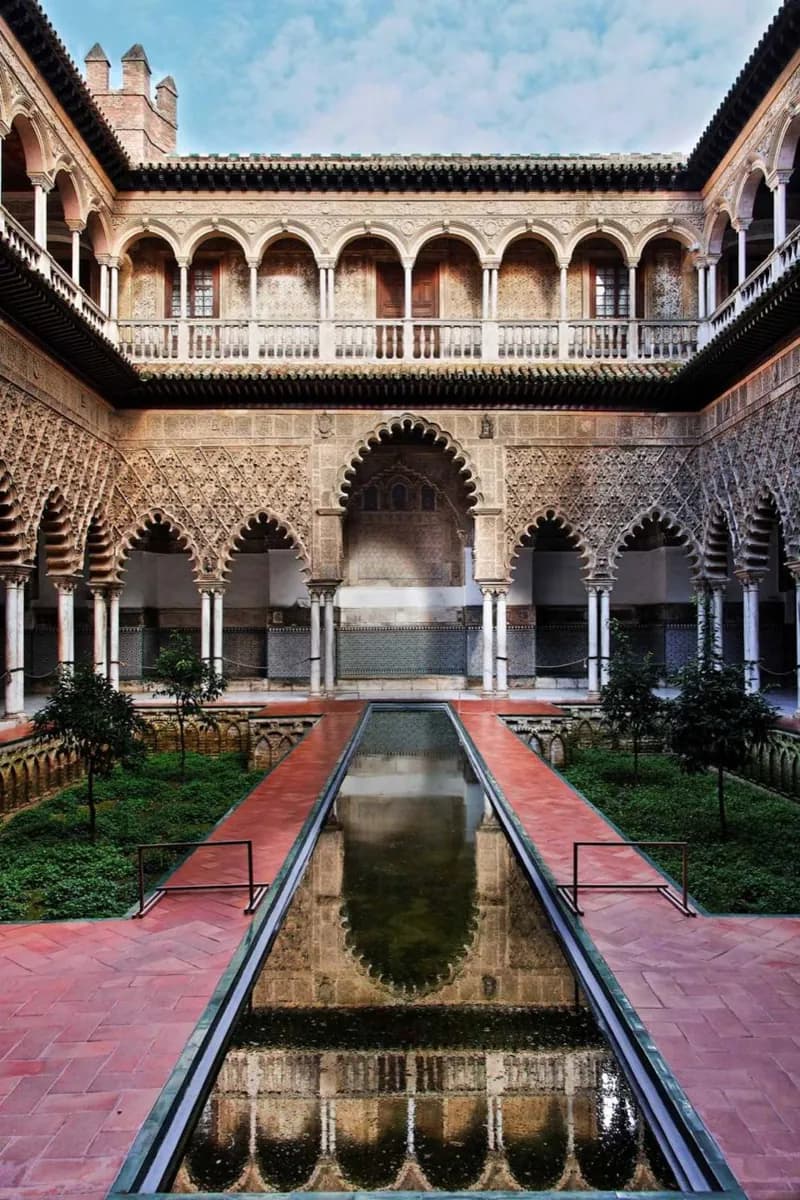
The Alcázar of Seville ("Alcázares Reales de Sevilla" or "Royal Alcazars of Seville") is a royal palace in Seville, Spain, originally a Moorish fort. The Almohades were the first to build a palace, which was called Al-Muwarak, on the site of the modern day Alcázar. The palace is one of the best remaining examples of mudéjar architecture. Subsequent monarchs have added their own additions to the Alcázar. The upper levels of the Alcázar are still used by the royal family as the official Seville residence and are administered by the Patrimonio Nacional. Patio de las Doncellas The name, meaning "The Courtyard of the Maidens", refers to the legend that the Moors demanded 100 virgins every year as tribute from Christian kingdoms in Iberia. The story of the tribute may have been used as a myth to bolster the Reconquista movement, but it may have had some truth to it in the sexual abuse of Christian women by powerful Moors. The lower level of the Patio was built for King Peter I and includes inscriptions describing Peter as a "sultan".
Useful to know
- Check the official visitor calendar and reserve ahead when timed entry matters.
- Combine it with nearby stops to avoid crossing the city twice in the strongest afternoon heat.
Your next visit
Estimated · Declared scenario and planning estimates; no live opening, weather, queue or booking service.
Outdoor visit · 30–45 min
World planning estimate; admission, opening, visit duration and access need checking.