
Why go
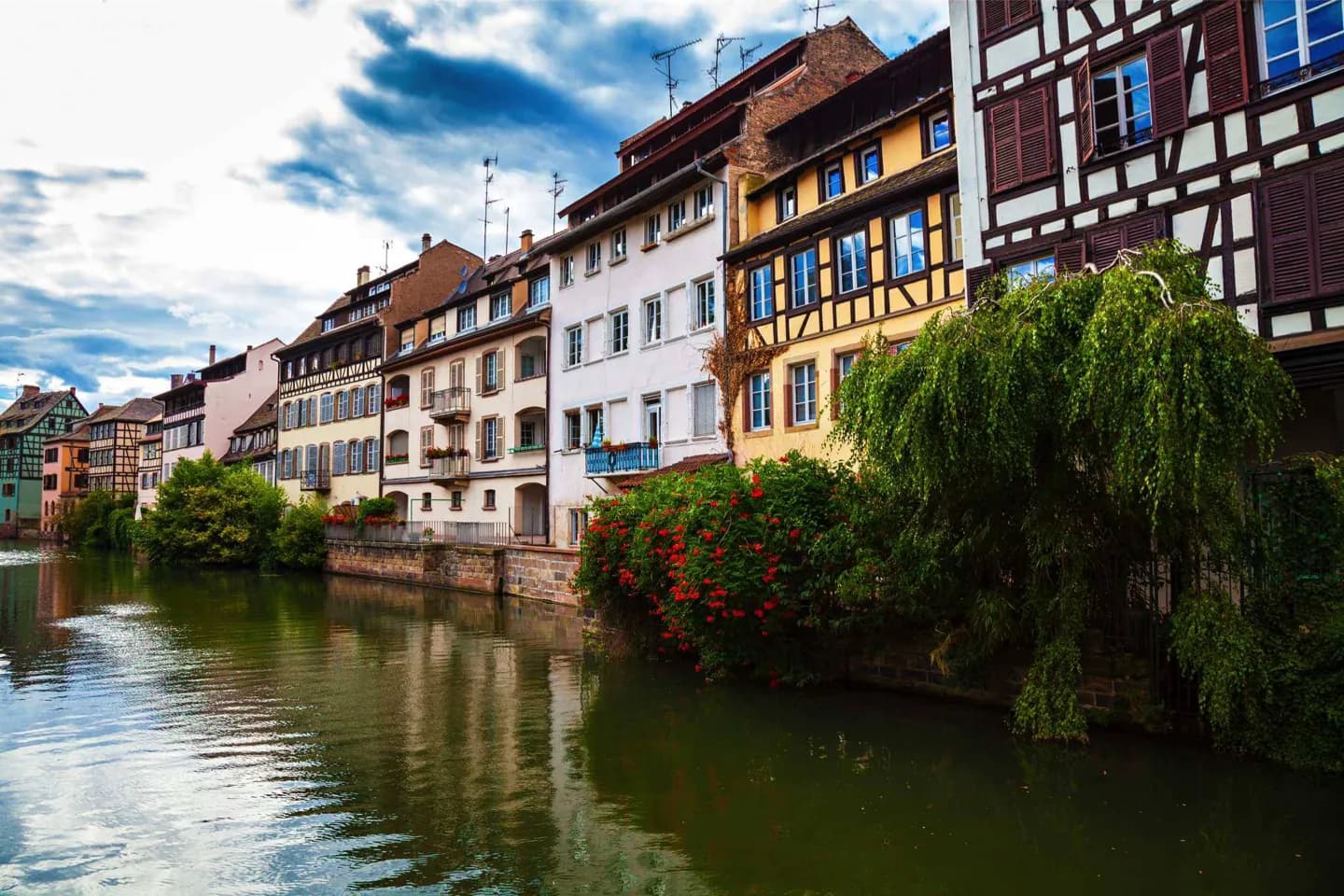
Here the Ill divides into channels around a compact group of old streets. Timbered houses, steep roofs and water-level views make the city’s working past easier to picture than on the grand squares. The payoff lies in moving between bridges and banks, not reaching one precise viewpoint.
What to look for
- Canals thread between rows of timbered houses.
- Steep-roofed former tanners’ houses recall an older working district.
- The approach to the Ponts Couverts opens wider water views.
The full story
La Petite France occupies a small western part of Grande-Île where the Ill breaks into several channels. That geography shaped a working neighbourhood: water was close at hand, and the tall roofs and timbered houses associated with trades such as tanning still define the view. The district’s appeal now comes from the close spacing of houses, bridges and water, but the same details also tell you why this quarter developed here. Look at the rooflines as well as the façades, then cross to another bank to see how the scene changes over a few steps. The lanes lead naturally toward the Ponts Couverts and Barrage Vauban, where the enclosed canal views open into the city’s former defensive landscape. It is a place to read on foot. A photograph from one bridge catches only a fraction of its structure and history.
Useful to know
- Follow the public streets and canal banks rather than a single map pin.
- Combine the walk with the Ponts Couverts or Barrage Vauban.
Your next visit
Estimated · Declared scenario and planning estimates; no live opening, weather, queue or booking service.
Outdoor visit · 35–70 min
World planning estimate; admission, opening, visit duration and access need checking.