
Why go
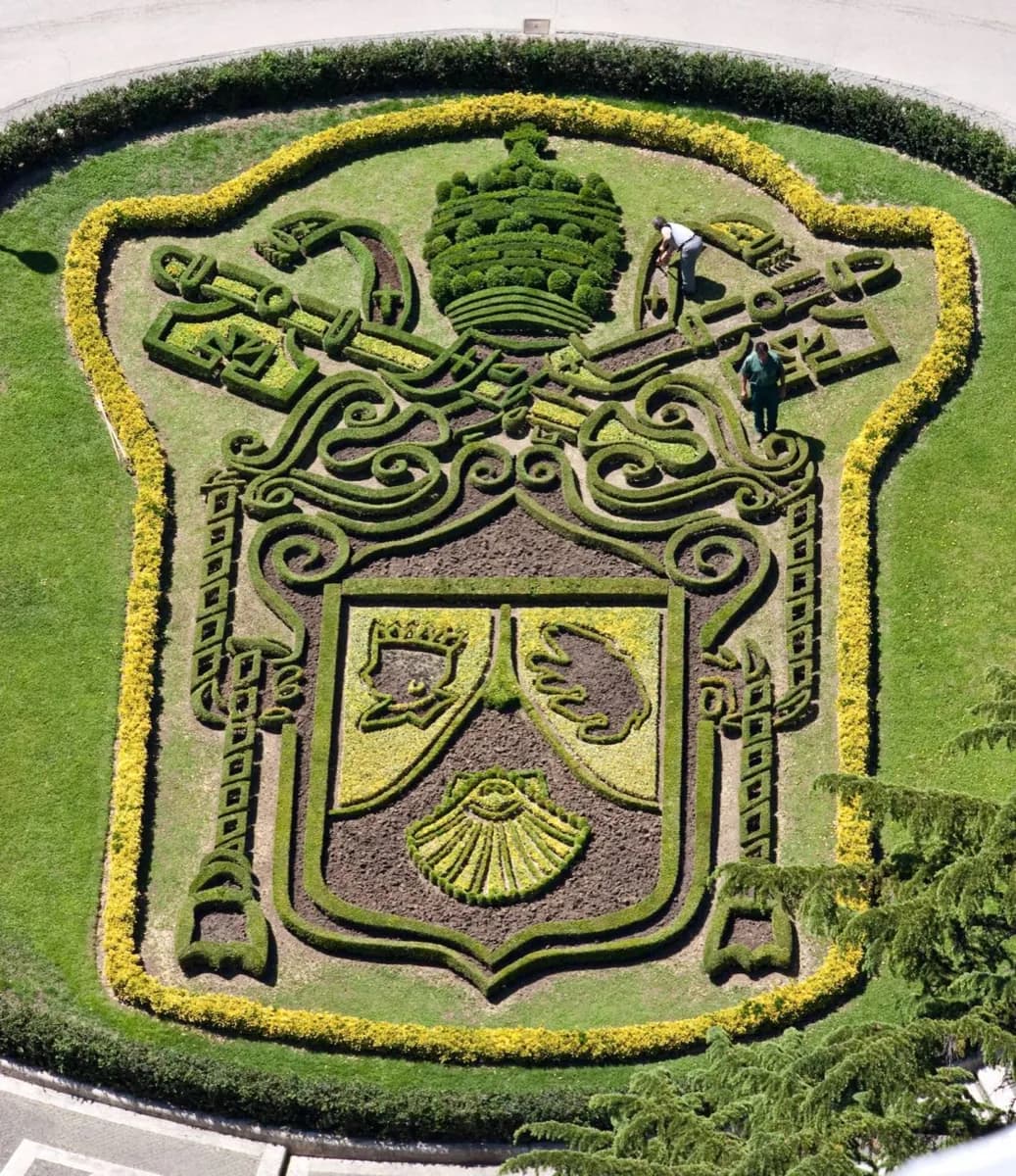
The Gardens reveal the grounds beyond the square, basilica and museum galleries. They appeal especially to visitors interested in how planted spaces, fountains and papal buildings share this small state. A view back toward St. Peter’s dome helps connect the secluded landscape with the public landmarks outside it.
What to look for
- Old trees and varied planting give the grounds a different character from the paved square.
- Fountains punctuate the garden landscape.
- Views toward St. Peter’s dome link the grounds to the basilica.
The full story
The Gardens occupy a different kind of Vatican space from the public square and the museum galleries. The grounds developed beside papal residences and working buildings. Medieval orchards and vineyards lay north of the Apostolic Palace, and Renaissance work later reshaped the area. In the sixteenth century, Pope Pius IV commissioned Villa Pia; later fountains joined the landscape. Trees, formal planting and water features sit within a state whose best-known views are usually stone façades and painted interiors. From parts of the grounds, St. Peter’s dome comes back into view, tying the secluded setting to the basilica beyond it. A Gardens visit follows an organized route, so what you see depends on the tour selected. After the Museums or St. Peter’s Square, the grounds show another side of Vatican City.
Useful to know
- Compare the official walking and open-bus tour formats before deciding how to see the grounds.
- Use the official Gardens booking information to confirm the route and departure for your date.
- If you need a barrier-free route, check the dedicated accessible visit before booking.
Your next visit
Estimated · Declared scenario and planning estimates; no live opening, weather, queue or booking service.
Outdoor visit · 30–45 min
World planning estimate; admission, opening, visit duration and access need checking.