
Why go
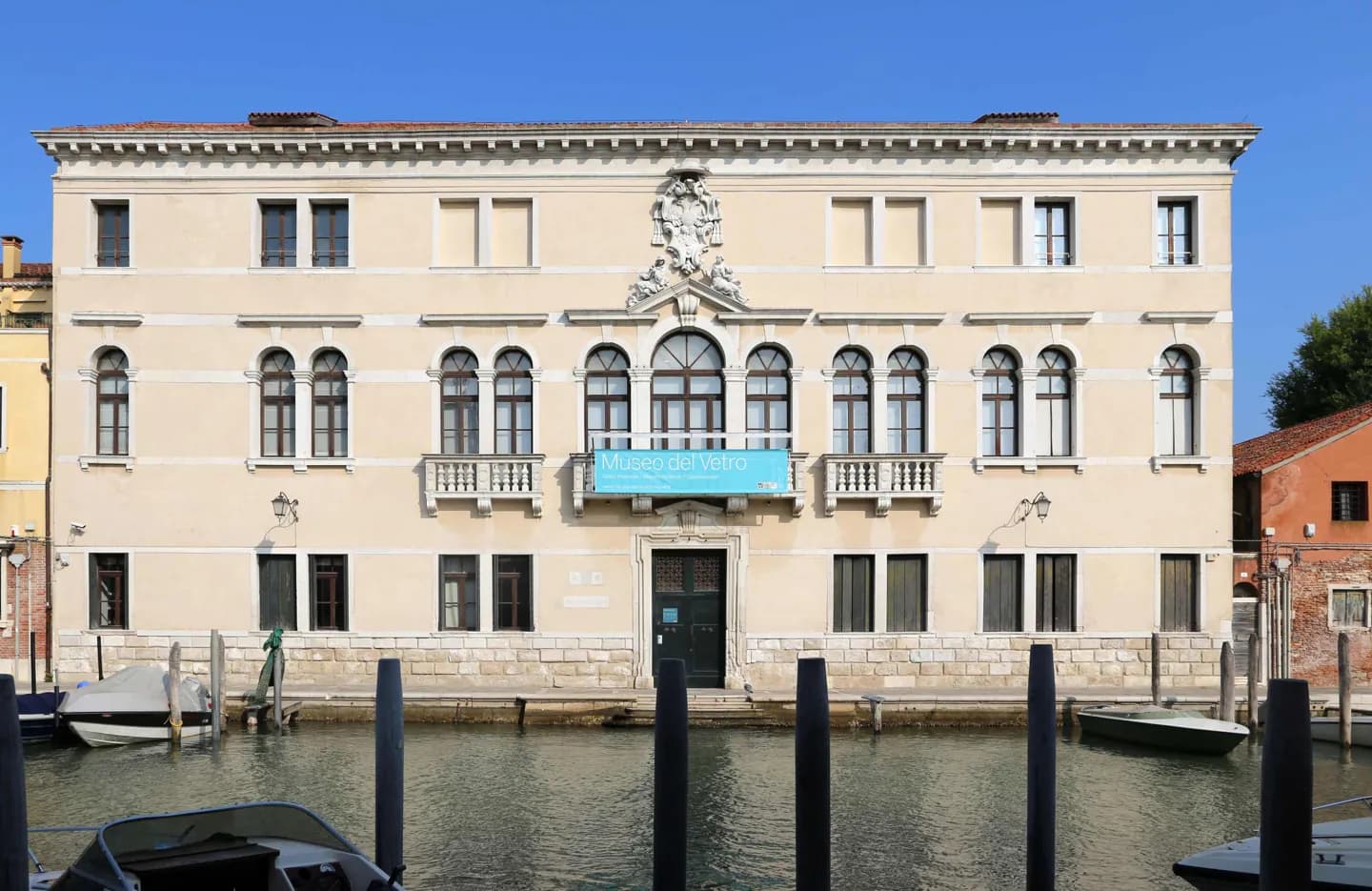
The collection lets finished glass be compared across periods instead of seeing only a live technique or contemporary merchandise. Its palace setting adds the history of the bishops of Torcello to Murano's craft story. This is the main indoor choice when the development of glass matters more than watching a furnace demonstration.
What to look for
- The collection ranges from ancient glass to twentieth-century work.
- Works associated with Barovier & Toso form part of the collection.
- Palazzo Giustinian was a residence of the bishops of Torcello.
The full story
Palazzo Giustinian on Murano began as a Gothic patrician residence before becoming associated with the bishops of Torcello. Bishop Marco Giustinian occupied and acquired it, then donated the property to the diocese. The palace preserved that religious connection before its later museum use. The Glass Museum later gave the palace a civic role devoted to the island's best-known craft. Its historical range brings ancient objects into conversation with much later Murano production. Works by established glassmaking firms and designs associated with Carlo Scarpa extend that story into modern experimentation. The setting thus joins two histories that need not be obvious from the exhibits alone: a palace used by a religious institution and a collection documenting material skill across centuries. The museum supplies the longer view that a workshop demonstration cannot provide by itself.
Useful to know
- Pair the collection with a workshop only when comparing historical objects and current technique is the main aim.
- Use the Museo water-bus landing when checking the museum's location on Murano.
Your next visit
Estimated · Declared scenario and planning estimates; no live opening, weather, queue or booking service.
Indoor visit · 45–90 min
World planning estimate; admission, opening, visit duration and access need checking.