
Why go
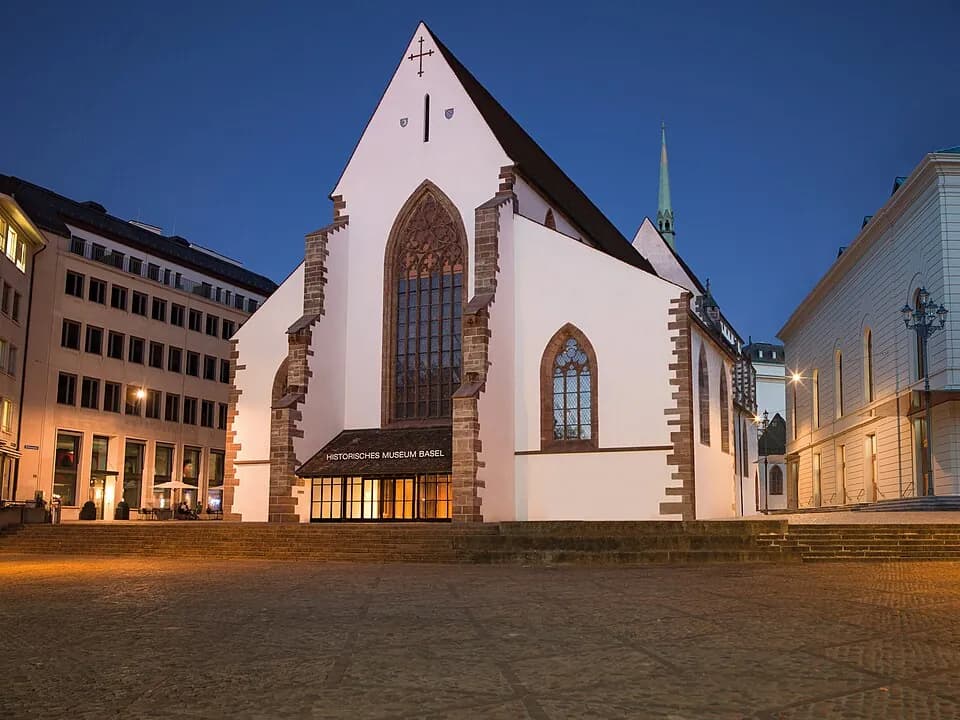
The church setting makes Basel's medieval and early modern objects feel close to the city that produced them. Cathedral treasures, tapestries and fragments of the Dance of Death give concrete entry points into religious life and visual culture; other museum sites cover domestic interiors and music.
What to look for
- Cultural-history displays inside the former Barfüsserkirche
- Cathedral treasure and historic tapestries
- Fragments associated with Basel's Dance of Death
The full story
Basel Historical Museum draws on civic collecting traditions that reach back to the Amerbach family and other early modern collectors. Its central display is housed in Barfüsserkirche, a former church where objects of religious, artistic and everyday life can be read against a historic interior. The collection is especially strong in the late Middle Ages through the Baroque period. Cathedral treasure, Basel and Strasbourg tapestries, fragments of the city's Dance of Death, and material associated with Erasmus show different sides of Basel's cultural history. The wider institution is spread across more than one address. Haus zum Kirschgarten explores domestic life, while the Music Museum deals with instruments and musical culture. Treating Barfüsserkirche as one branch gives the visit a clear focus.
Useful to know
- Use Barfüsserkirche as the central historical-museum visit; Haus zum Kirschgarten and the Music Museum are separate sites.
- Check each branch's own visitor information before building a multi-site museum day.
Your next visit
Estimated · Declared scenario and planning estimates; no live opening, weather, queue or booking service.
Outdoor visit · 30–45 min
World planning estimate; admission, opening, visit duration and access need checking.