
Why go
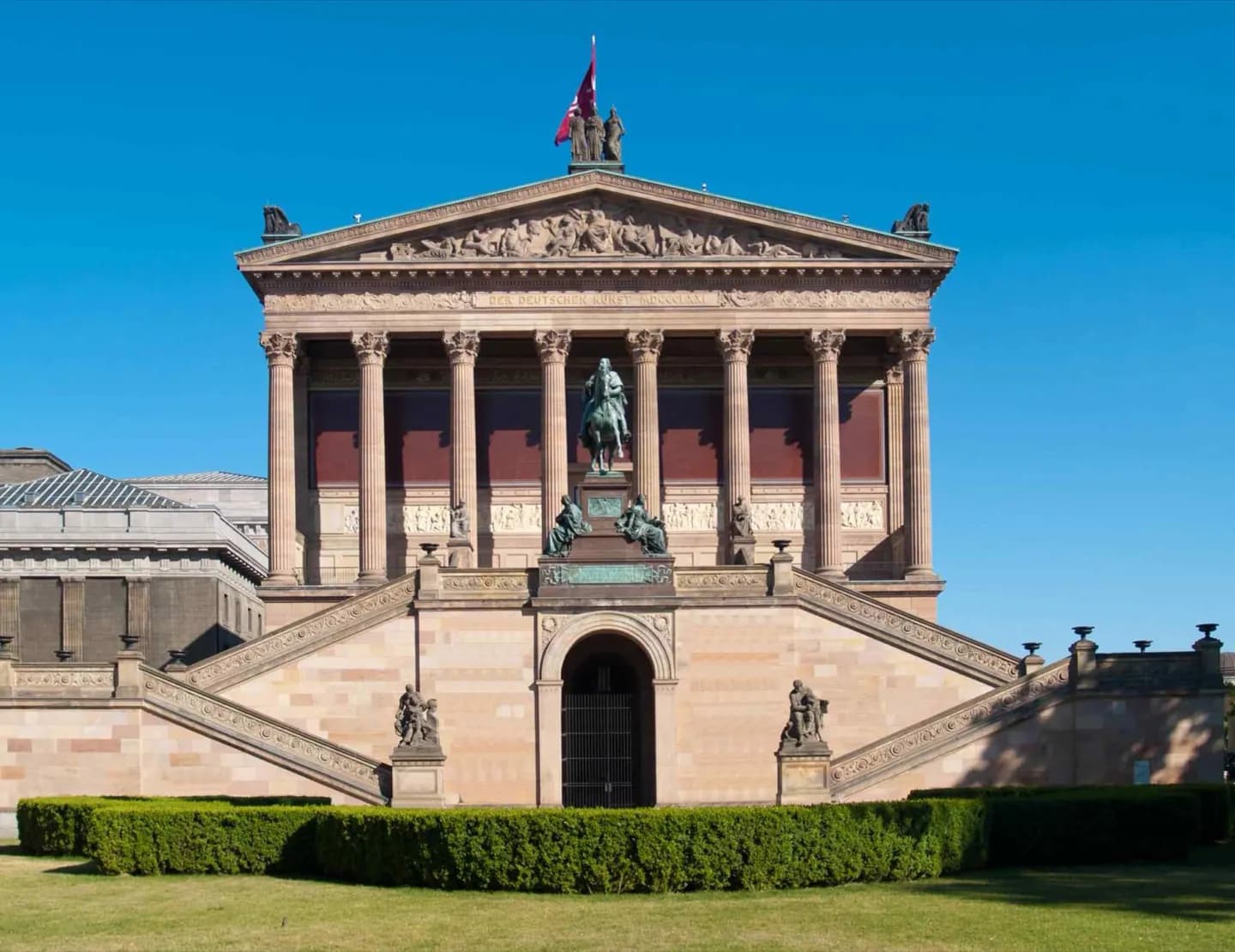
Its collection connects German Romanticism, French Impressionism and the art of the long 19th century. It is the original building of the National Gallery, whose holdings are now housed in several additional buildings. It is situated on Museum Island, a UNESCO-designated World Heritage Site.
What to look for
- The temple-like gallery presents 19th-century painting and sculpture in the Museum Island ensemble.
- Its collection connects German Romanticism, French Impressionism and the art of the long 19th century.
The full story
The idea gained momentum during the 1830s, but without an actual building. In 1841 the first real plans were created. These plans never made it out of the planning stages, but finally in 1861 the National Gallery was founded, after banker Johann Heinrich Wagener donated 262 paintings by both German and foreign artists. This donation formed the basis of the current collection. The collection was first known as Wagenersche und Nationalgalerie (Wagener and National Gallery) and was housed in the buildings of the Akademie der Künste. The current building, shaped like a Roman temple with an appended apse, was designed by Friedrich August Stüler and after his death, realised in detail under Carl Busse. Building and related developments Friedrich August Stüler began working on a design for the building in 1863, based on a sketch by King Frederick William IV of Prussia.
Useful to know
- Verify current opening hours, closures and timed-entry rules on the official visitor page before setting out.
- Allow extra time for security or ticketing when the visit includes an interior collection or viewing platform.
Your next visit
Estimated · Declared scenario and planning estimates; no live opening, weather, queue or booking service.
Indoor visit · 45–75 min
Ticket, current opening and queue need checking; normally closed on Mondays.
Outdoor visit · 15–20 min
View from the public approach. No museum entry or terrace access promised.