
Why go
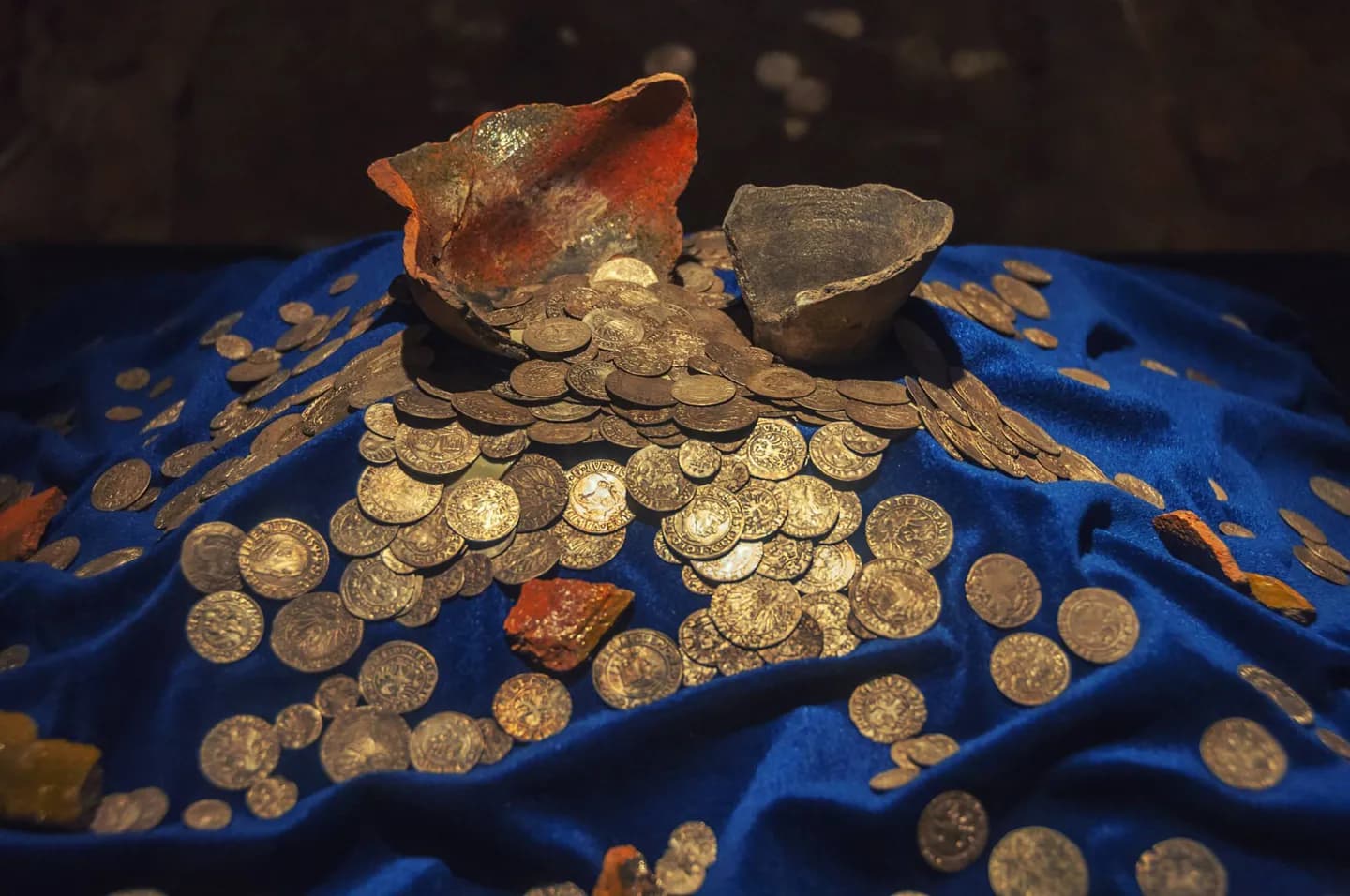
The building once produced the objects it now helps explain. Looking at currency here connects the small details of coins with the larger story of how Colombia made and used money. The setting adds a second subject: a working mint repeatedly adapted for new machinery.
What to look for
- The numismatic displays trace Colombian economic history through currency.
- The stone entrance records the mint's reopening in 1756.
- The colonial cloister preserves the architectural setting of the former mint.
The full story
The mint began with a royal commission brought to Bogotá by Alonso Turrillo de Yebra in 1621. He rented a low house in La Candelaria and started producing coins by hand. That modest workshop became a building shaped by changes in coin-making itself. Under Fernando VI, the premises expanded to accommodate machinery that produced more regular, circular pieces. Viceroy Solís reopened the enlarged mint in 1756; the date on its stone entrance connects the museum's architecture to that change in production. Later alterations continued to reshape the property. Restoration of the colonial cloister began in the 1970s and ended in 1982. The building therefore offers more than a period backdrop for the collection: its enlarged and restored spaces reflect successive uses of the same site. Look between the currency displays and the architecture to follow both histories.
Useful to know
- Allow one to two hours for the mint rather than treating it as a passage to Museo Botero.
- Combine the currency displays with the neighbouring Museo Botero for a contrast between economic history and art.
Your next visit
Estimated · Declared scenario and planning estimates; no live opening, weather, queue or booking service.
Indoor visit · 30–45 min
World planning estimate; admission, opening, visit duration and access need checking.