
Why go
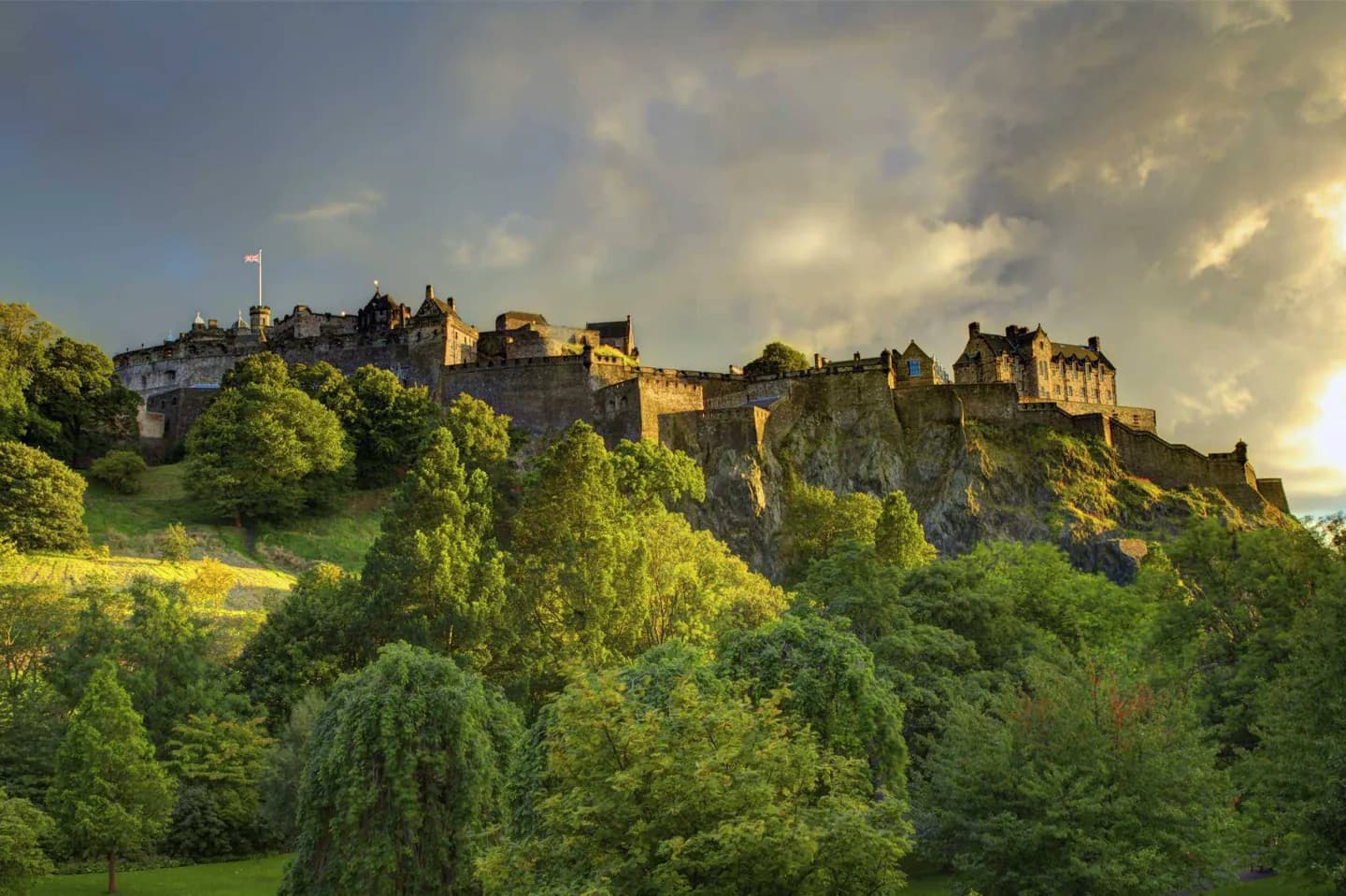
The Castle backdrop makes this more than a break from shopping. The Scott Monument marks the eastern gardens, while the Ross Fountain gives the western gardens a distinct focal point. Exploring both sides reveals how Edinburgh turned a former loch into a public landscape filled with memorials.
What to look for
- The Scott Monument rises above the eastern gardens.
- Ross Fountain includes figures representing science, the arts, poetry and industry.
- The gardens occupy the former Nor Loch valley below the Castle.
The full story
Princes Street Gardens emerged in the 1820s after the long draining of the Nor Loch and the development of the New Town. The valley that had separated the old ridge from the new streets became a landscaped public setting beneath the Castle. That change explains the unusual relationship between the gardens, the open side of Princes Street and the buildings above them. Memorials give the landscape much of its detail. The Gothic Scott Monument honours the novelist Sir Walter Scott in the eastern gardens. Other statues commemorate figures from literature, exploration, medicine and reform. The western gardens include the Scottish American War Memorial, a floral clock and the Ross Fountain. The fountain’s decorative figures include mermaids and personifications of science, the arts, poetry and industry. Its ironwork offers a different kind of spectacle from the Castle above. Walking through the gardens reveals a landscape shaped both for recreation and for remembering Edinburgh’s cultural and civic history.
Useful to know
- Use the Mound to connect the eastern and western garden areas with the galleries.
- Check Council or event information before making a time-sensitive garden visit.
Your next visit
Estimated · Declared scenario and planning estimates; no live opening, weather, queue or booking service.
Outdoor visit · 20–60 min
World planning estimate; admission, opening, visit duration and access need checking.