
Why go
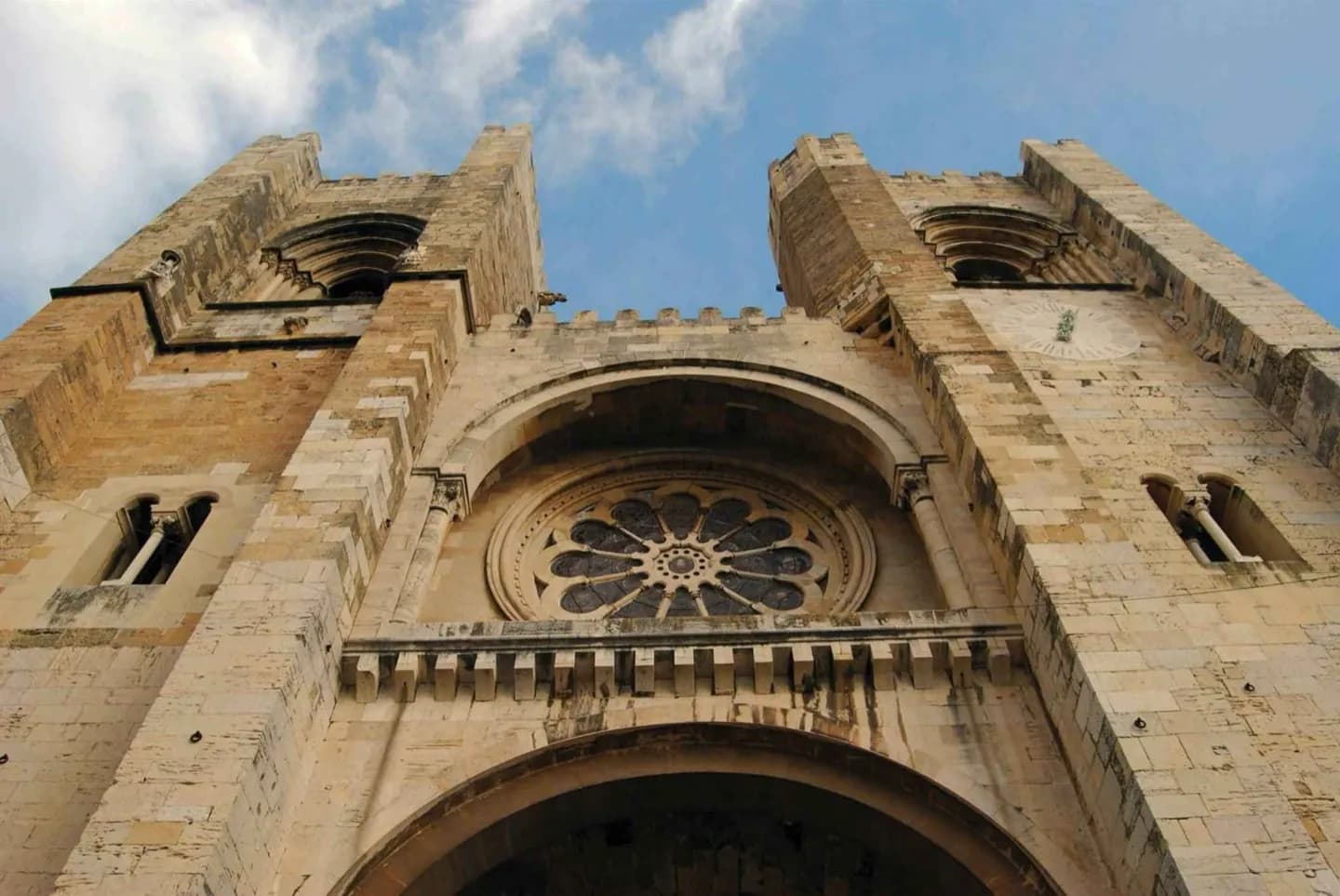
More than eight centuries of rebuilding are visible in one compact landmark at the edge of Alfama. The heavy Romanesque structure, Gothic cloister, later chapels and excavated courtyard make the cathedral a useful introduction to Lisbon’s survival and reinvention after repeated earthquakes.
What to look for
- The Romanesque west front and thick walls give the cathedral a fortified appearance.
- The Gothic cloister surrounds archaeological traces from Roman, Islamic and medieval Lisbon.
- The balcony opens views across the old city toward the Tagus.
The full story
Construction of Sé de Lisboa began after Afonso Henriques captured Lisbon in 1147. The first cathedral rose in a late Romanesque style and later received the relics of Saint Vincent, the city’s patron. King Dinis added a Gothic cloister near the end of the 13th century, and Afonso IV reshaped the main chapel as a royal pantheon. Earthquakes repeatedly altered the building, most dramatically in 1755, when the Gothic chapel, royal tombs and several cloister chapels were destroyed. Reconstruction and a major early-20th-century campaign produced the mixture seen today rather than restoring one pure period. Archaeology in the cloister courtyard adds an even longer sequence, with traces associated with Roman, Islamic and medieval occupation. The cathedral is therefore best read as a record of the city’s successive communities and rebuilding choices, not simply as its oldest surviving church.
Useful to know
- Check the season-specific official timetable before visiting; the published schedule changes across the year.
- Combine the cathedral with Igreja de Santo António next door, then continue uphill through Alfama.
- Prioritize the cloister and balcony if you want more than a brief look at the main church.
Your next visit
Estimated · Declared scenario and planning estimates; no live opening, weather, queue or booking service.
Outdoor visit · 30–45 min
World planning estimate; admission, opening, visit duration and access need checking.