
Why go
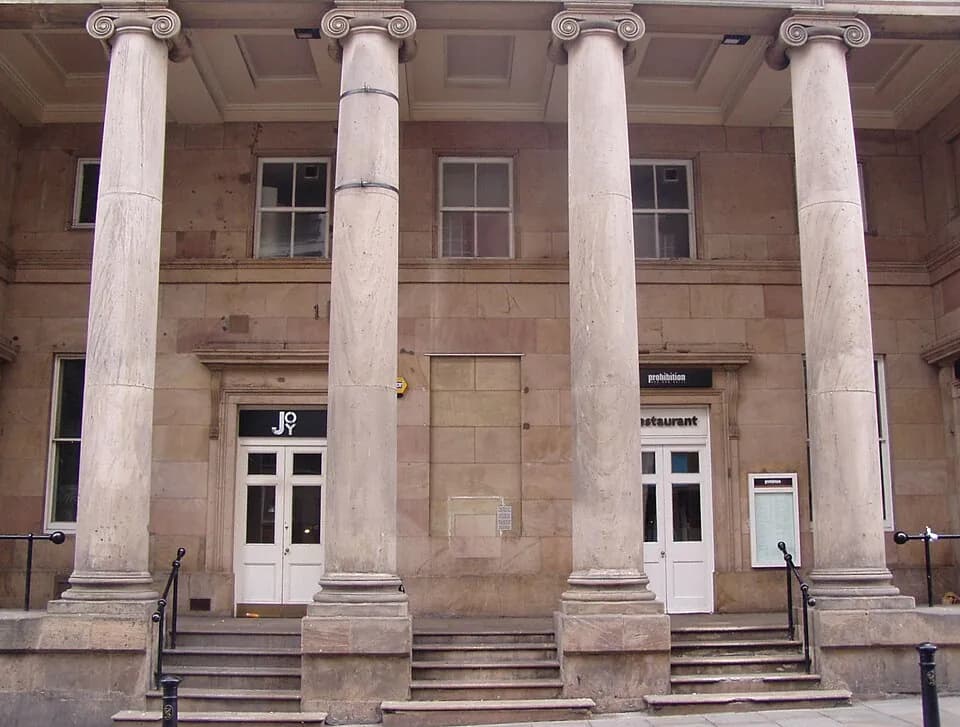
The recessed portico and Ionic columns give a visible clue to Liverpool's early culture of private reading and debate. A campaign saved the building from demolition after its original uses faded. Look closely at the Church Street facade while exploring Bold Street, but do not base your plans on entering the whole building.
What to look for
- Ionic columns frame a recessed portico facing Church Street.
- A pediment crowns the neoclassical frontage.
- The building stands where Bold Street meets Church Street.
The full story
The Lyceum was completed in 1802 to house a Liverpool subscription library and news room. Its origins lay in a reading circle that had grown through the later eighteenth century, eventually needing a purpose-built home. The classical facade gave that intellectual society a public face at the meeting of Bold Street and Church Street. Over time the building also served as a club, before those original functions faded. Proposals to demolish it met opposition, and the structure survived through a succession of later uses. That survival is the reason it remains worth a pause today. Look at the Ionic columns and deep entrance recess from Church Street, then consider how a building made for reading and conversation became part of the city's commercial street scene. The interior has changed and routine whole-building visiting is not established, so the architecture visible from the pavement is the dependable experience.
Useful to know
- View the Church Street frontage during a Bold Street walk.
- Check a current tenant or event notice before expecting interior access.
Your next visit
Estimated · Declared scenario and planning estimates; no live opening, weather, queue or booking service.
Outdoor visit · 30–45 min
World planning estimate; admission, opening, visit duration and access need checking.