
Why go
This is a museum day for curious adults and older children, especially when the weather makes a long outdoor walk less appealing. The Ashmolean gives the morning a broad start; Blackwell’s offers a flexible bookshop pause before the smaller History of Science Museum. Continue north to the University Museum of Natural History and enter the Pitt Rivers Museum through it. The final pair can absorb a large part of the afternoon, so keep Blackwell’s optional and leave room for a slower look at the displays that catch your eye. Check each museum’s opening day and any current gallery restrictions before setting out.
The route, stop by stop
World itinerary estimate: 250–455 min
Times are planning estimates. Unknown visit durations start at an editable 30 minutes; access is checked separately.
- 01
Main stop · 75–105 min
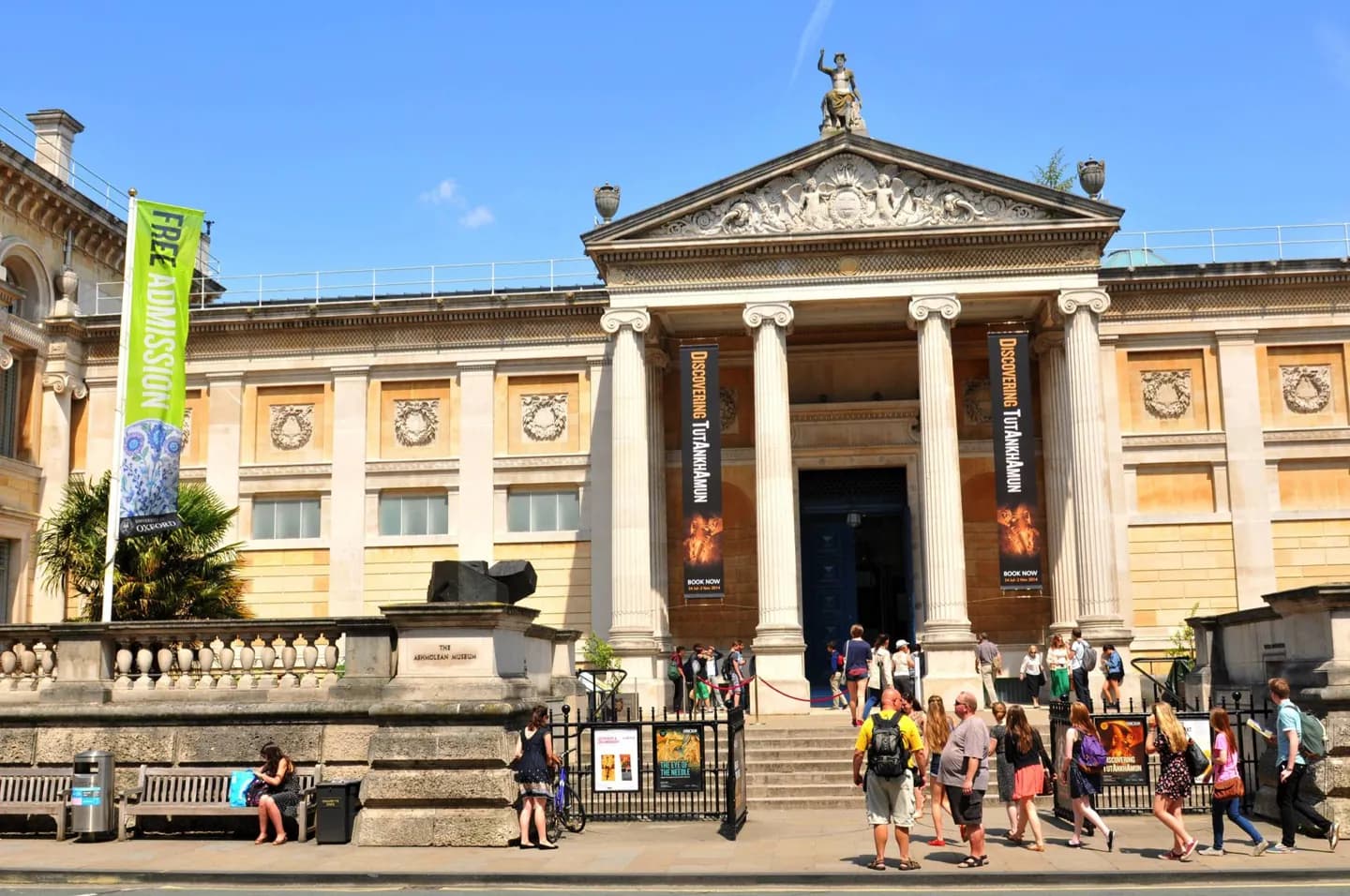
Ashmolean Museum
Oxford's Ashmolean brings art and archaeology together on Beaumont Street. Its broad collections reward a focused museum visit, especially if you choose a few galleries rather than rushing every floor.
Explore Walk · 6 min · Estimated
02Optional · 20–35 min
Blackwell’s Bookshop, Broad Street
The original Broad Street Blackwell’s is a literary browsing stop opposite Oxford’s university landmarks, with far more depth than its narrow frontage suggests.
ExploreWalk · 2 min · Estimated
03Main stop · 35–55 min
History of Science Museum
A compact Broad Street museum of scientific instruments, set inside a seventeenth-century building built for a collection. Come for astrolabes, clocks and Einstein's preserved blackboard.
ExploreWalk · 9 min · Estimated
04Main stop · 60–85 min
Oxford University Museum of Natural History
Natural history specimens fill a glass-roofed Gothic hall on Parks Road. The building and its dodo remains reward a focused visit, and the adjoining Pitt Rivers Museum makes an easy continuation.
ExploreWalk · 2 min · Estimated
05Main stop · 60–85 min
Pitt Rivers Museum
An anthropology and archaeology museum packed with objects grouped by use rather than place or date. Enter through the Natural History Museum and leave time to compare the dense cases.
Explore