
Why go
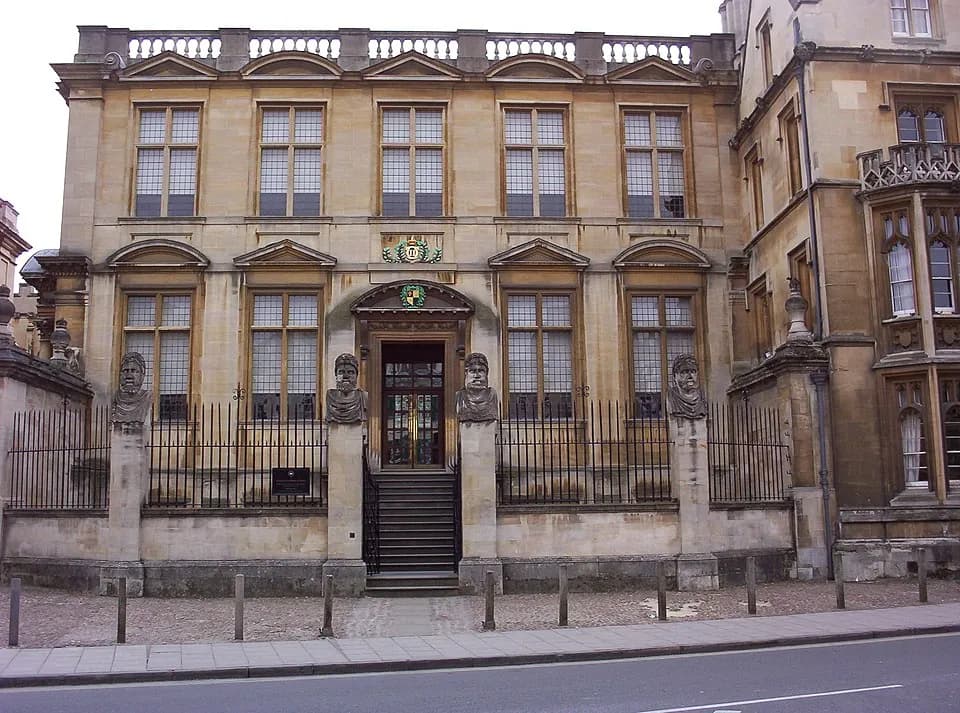
The instruments show how people measured the sky, kept time and investigated nature before modern electronics. The setting matters too: the former Old Ashmolean was built in 1683 for Elias Ashmole's collection, so the rooms form part of the story rather than a neutral display space.
What to look for
- Einstein's blackboard preserves writing from his 1931 Oxford lectures.
- Astrolabes, quadrants and sundials reveal different ways of measuring the heavens.
- The Beeson Room displays historic clocks, including lantern and longcase examples.
The full story
The building opened in 1683 to house Elias Ashmole's collection. Its purpose was unusually ambitious: visitors could encounter objects, lectures and experiments devoted to understanding nature in one place. The old building later became distinct from the Ashmolean Museum's newer home, and the scientific collections developed their own identity. A major addition came in 1924 with Lewis Evans's instruments. That history helps explain why the displays range across astronomy, navigation, optics and timekeeping rather than following one branch of science. Einstein's blackboard offers a much later moment in the same story. Used during his Oxford lectures in May 1931, it turns an abstract scientific argument into marks left on a physical object. Look from the blackboard to the older instruments and you can see different generations of researchers trying to make observations and calculations visible.
Useful to know
- Pair this Broad Street stop with the nearby Sheldonian Theatre if its visitor access suits your day.
- Check the museum's current access information if you need the basement lift.
Your next visit
Estimated · Declared scenario and planning estimates; no live opening, weather, queue or booking service.
Outdoor visit · 30–45 min
World planning estimate; admission, opening, visit duration and access need checking.