
Why go
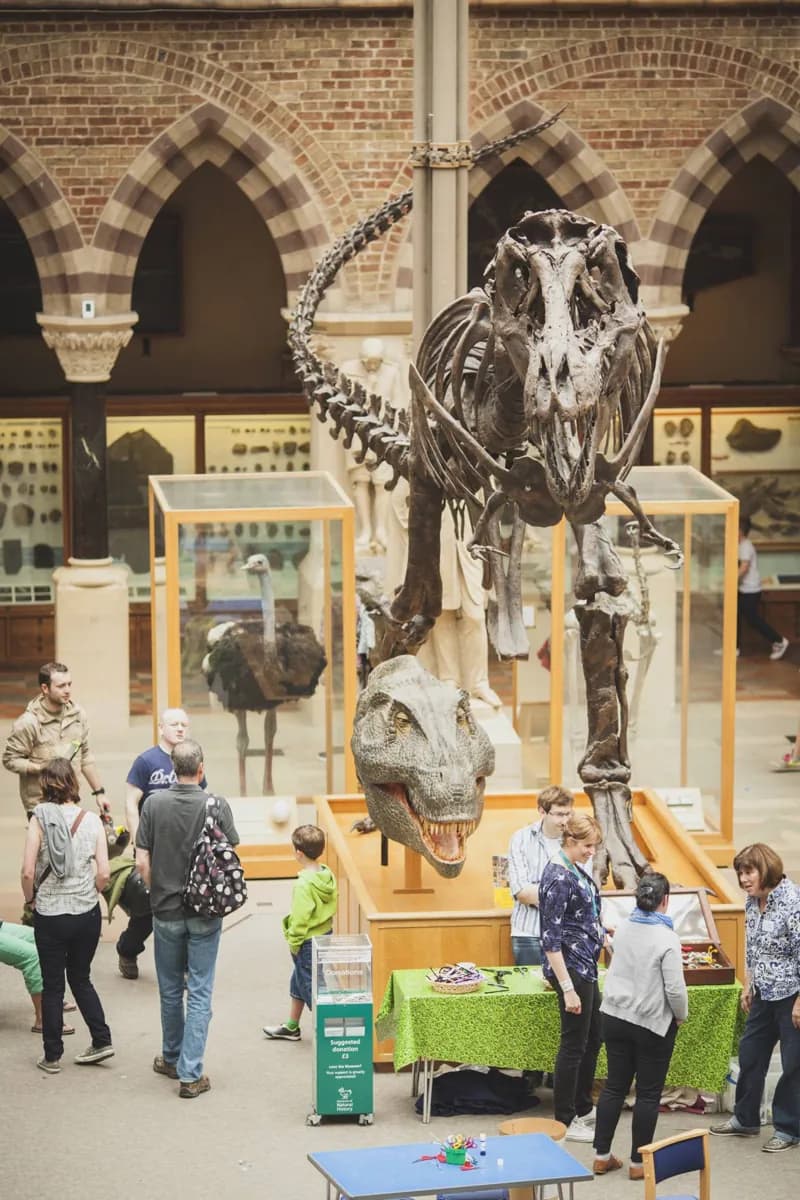
The museum brings Oxford's natural history collections into one striking court, where the iron structure and stonework are as worth looking at as the specimens. Its dodo head and foot are unusually complete surviving remains of a single bird, giving a tangible point of contact with extinction.
What to look for
- Look up at the glass roof and cast-iron supports above the central court.
- The dodo display includes a head and foot from one bird, alongside a historic painting.
- The adjoining Pitt Rivers Museum is reached through this museum.
The full story
Oxford's teaching specimens and science departments were once dispersed among its colleges. In the mid-nineteenth century, Henry Acland pressed for a single museum where natural science could be taught and encountered together. Architects Thomas Newenham Deane and Benjamin Woodward designed a Gothic building organised around a broad, glass-covered court. Its iron columns and open floor make the structure legible as you move among the specimens. The museum also has a place in the history of scientific debate: the 1860 discussion of Darwin's theory of evolution took place here. The surviving dodo remains draw attention for a different reason. Complete-looking dodo skeletons elsewhere can combine bones from several birds, while Oxford holds a head and foot from the same individual. That distinction makes the display less a generic emblem of extinction and more a rare surviving piece of one animal.
Useful to know
- Enter Pitt Rivers through the Natural History Museum if you plan to visit both.
- Allow extra time for the building itself; its architecture is a substantial part of the visit.
Your next visit
Estimated · Declared scenario and planning estimates; no live opening, weather, queue or booking service.
Outdoor visit · 30–45 min
World planning estimate; admission, opening, visit duration and access need checking.