
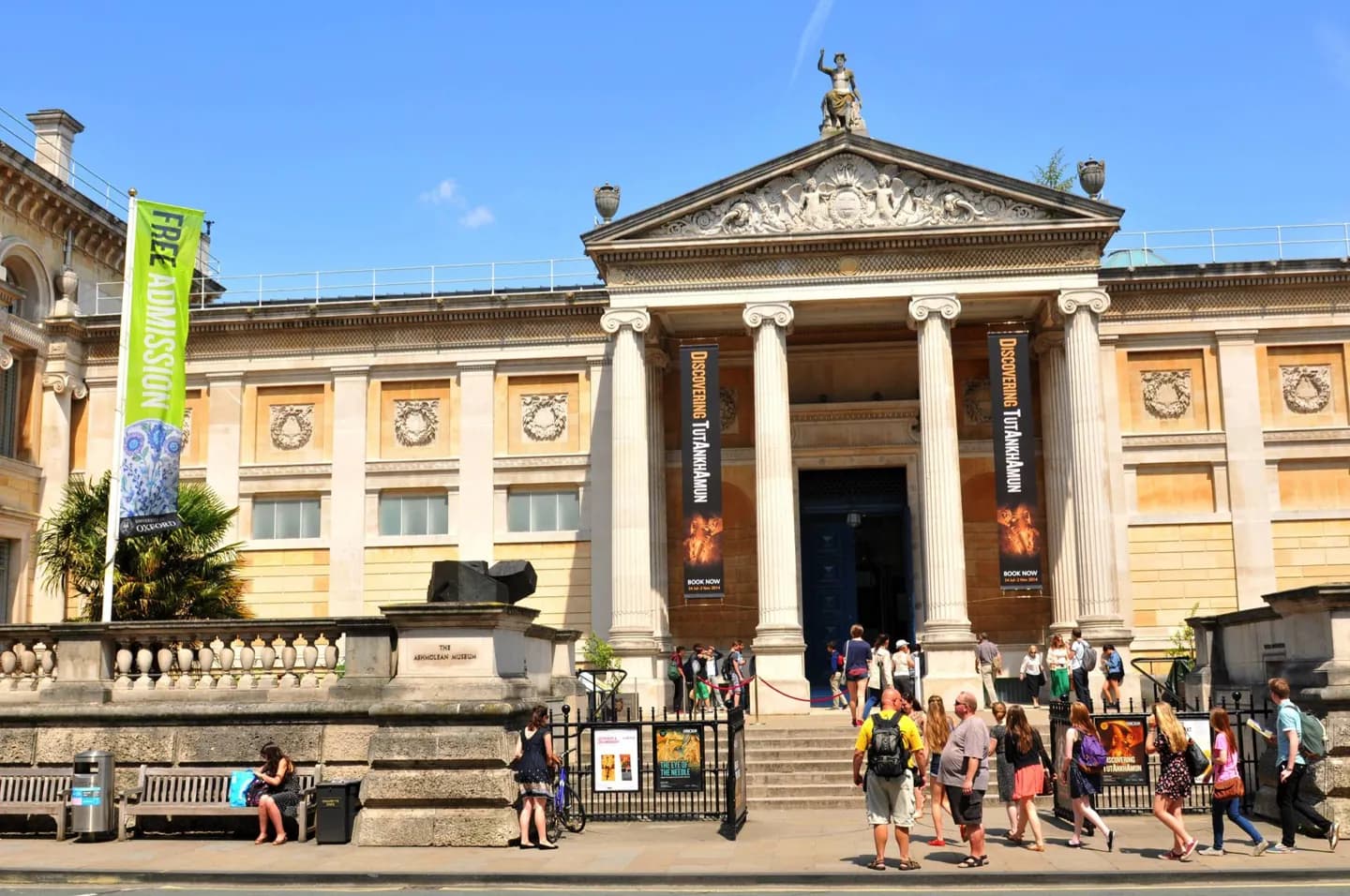
Why go
The museum traces a striking range from ancient objects to European painting, with Egyptian and Nubian galleries among its major strengths. Its origins in Elias Ashmole's seventeenth-century collection add another layer: you are seeing how Oxford's habit of collecting and studying objects grew into a modern public museum. Pick one or two themes for a manageable visit.
What to look for
- Egyptian and Nubian galleries bring ancient objects into focus.
- Art and archaeology share the museum, making cross-period comparisons possible.
- The classical Beaumont Street building dates from the nineteenth century.
The full story
The Ashmolean grew from objects donated to the University of Oxford by Elias Ashmole in the late seventeenth century, including material associated with the collectors John Tradescant and his son. It opened in 1683 in a building on Broad Street, a very different setting from the museum visitors know today. As Oxford's collections and disciplines developed, specimens and other material moved to specialist institutions. The present Beaumont Street museum, designed by Charles Cockerell in the nineteenth century, became the setting for extensive art and archaeology collections. Later redesign expanded the display space and brought more objects out for visitors, including material in the Egyptian and Nubian galleries. This history helps explain the museum's range: it began with a cabinet of curiosities and developed into separate ways of studying cultures, periods and objects. A visit works best when you follow a particular question across galleries, rather than treating the building as one continuous chronological display.
Useful to know
- Choose a few galleries before entering; the collections spread across several floors.
- Check special exhibition details separately from general museum admission.
Your next visit
Estimated · Declared scenario and planning estimates; no live opening, weather, queue or booking service.
Outdoor visit · 10–15 min
Public-space walk and exterior observation only; no interior, garden, tower or ticketed admission included. Durations and walking are estimates. Check temporary restrictions and park or market opening times.
Outdoor visit · 30–45 min
World planning estimate; admission, opening, visit duration and access need checking.