
Why go
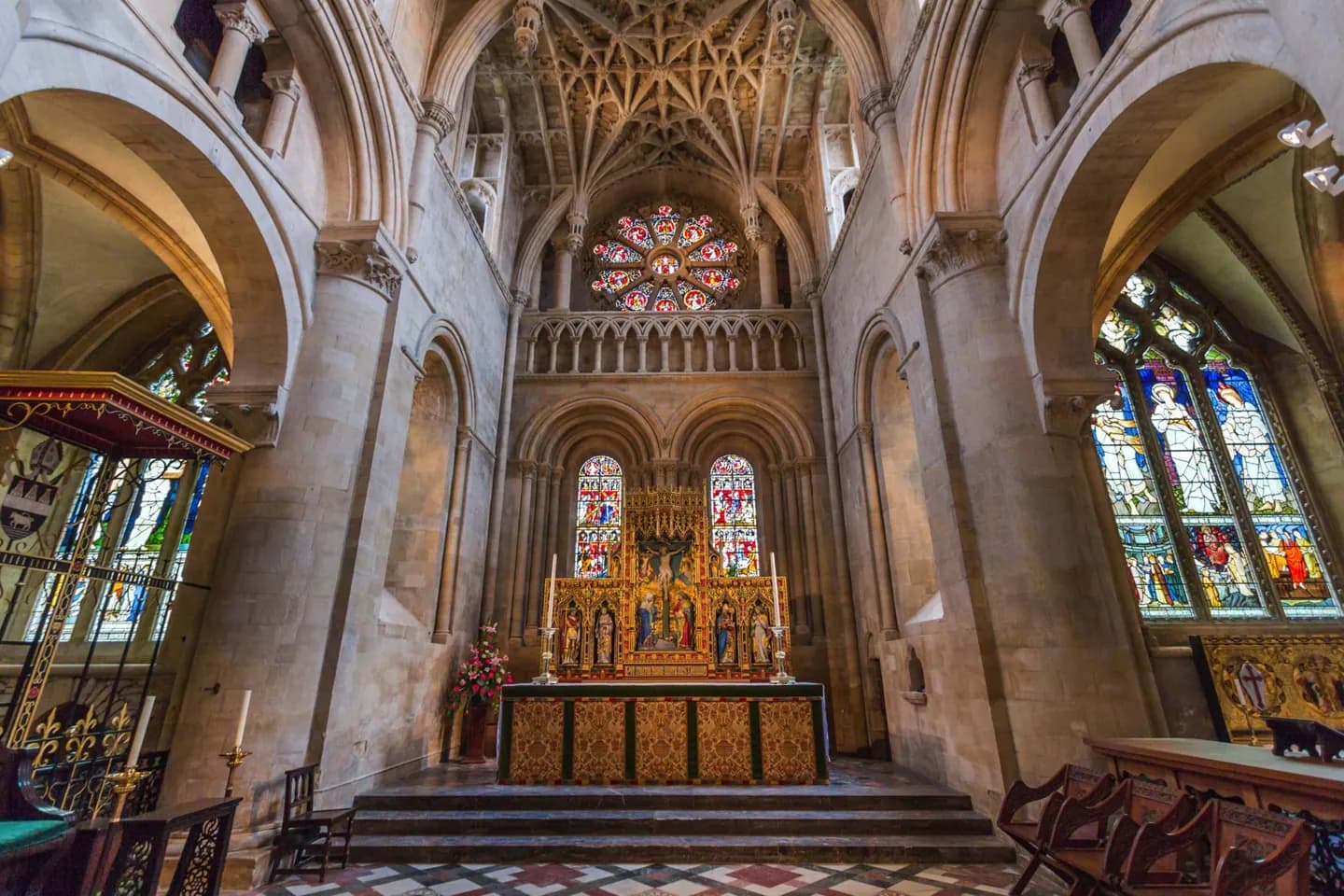
The cathedral explains why Christ Church is more than a grand college. Its church grew from St Frideswide's Priory, then became the seat of Oxford's diocese under Henry VIII while retaining its place in college life. Look for the Norman fabric and later Gothic details, and allow for worship to take priority over sightseeing access.
What to look for
- Norman work survives in the nave, choir, transepts and central tower.
- A large rose window adds a later layer to the medieval interior.
- The building serves both the diocese and Christ Church college.
The full story
The cathedral began as the church of St Frideswide's Priory, giving the site a religious history older than the college around it. Cardinal Wolsey took over the priory precinct for his college project in the 1520s. After Wolsey's fall, Henry VIII refounded the institution and in 1546 made the church the cathedral of the new Oxford diocese. It remained the chapel of Christ Church as well, a dual role that still shapes how the building is used. Inside, Norman work in the nave, choir, transepts and tower meets later Gothic additions, including a rose window. The building therefore rewards more than a quick glance at its size or title: it holds the transition from medieval priory to Tudor college and cathedral in one place. Worship and college life continue alongside visits, so the church should be understood as an active space within Christ Church rather than a detached sightseeing annex.
Useful to know
- Plan the cathedral with a Christ Church visit rather than as a separate tower or street stop.
- Check the cathedral's sightseeing access and known closures before booking; worship can affect entry.
Your next visit
Estimated · Declared scenario and planning estimates; no live opening, weather, queue or booking service.
Outdoor visit · 30–45 min
World planning estimate; admission, opening, visit duration and access need checking.