
Why go
Understanding the university as a network makes a walk through central Oxford more rewarding. A college quad, the University Church and Radcliffe Square tell different parts of its story; no single entrance gives access to all three. Pick individual sites for their architecture or history, then check each institution's visitor information before setting out.
The full story
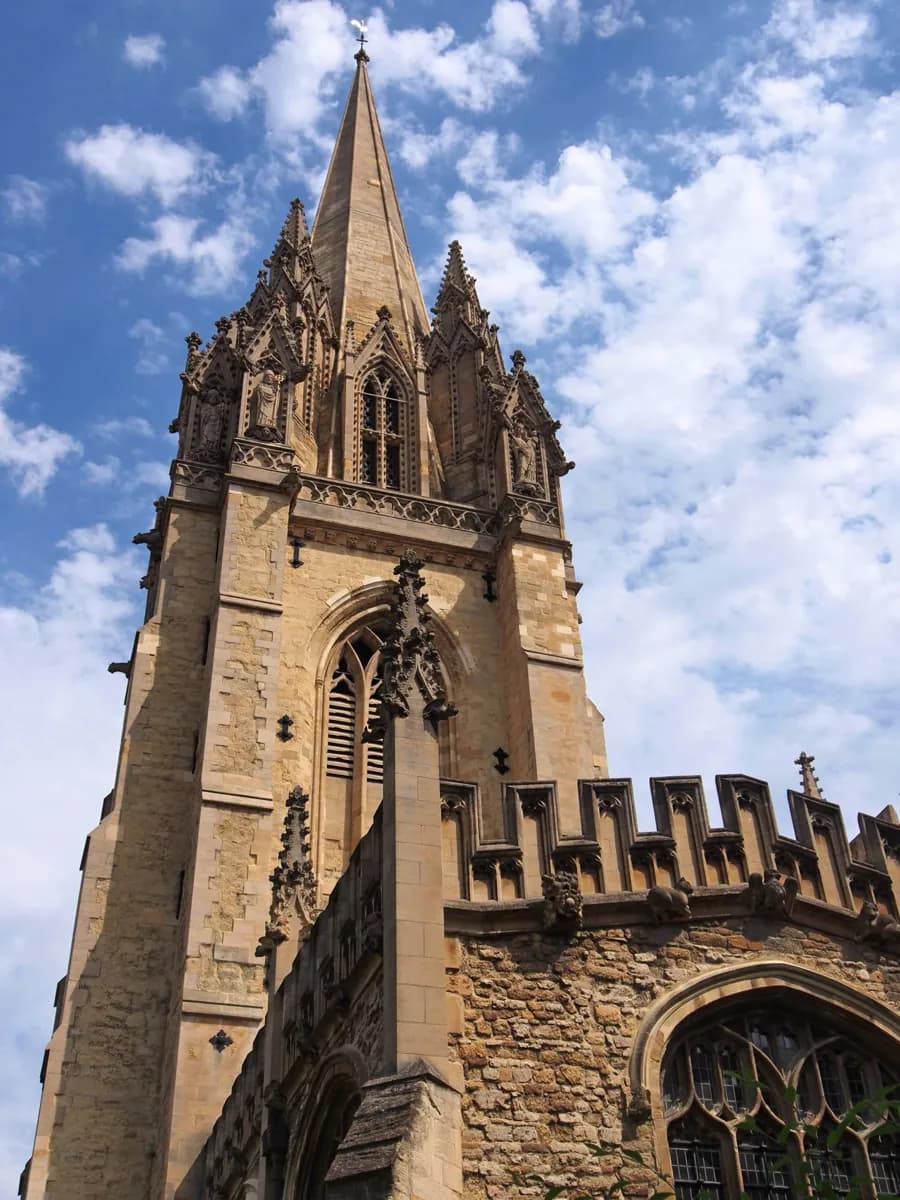
Teaching in Oxford is recorded as far back as 1096, but there is no known foundation date for the university. Its colleges developed as separate communities rather than buildings on one campus. Each college governs its own membership and daily life, while university departments and faculties provide lectures, classes and laboratory work. Undergraduate study has traditionally centred on small tutorials within colleges. This structure explains what a visitor sees on foot: college gates open onto distinct quads, chapels and halls, while shared university buildings stand among them. The University Church of St Mary the Virgin played a central role in early university government and teaching. Radcliffe Square brings later library architecture into the same compact area. A visit therefore works best as a selection of individual places, with the streets between them forming part of the experience. The college beside a landmark may be a separate institution with separate access.
Useful to know
- Choose specific colleges or university sites before planning a visit; the university has no single visitor entrance.
- Check each site's official visitor information, as access arrangements differ between colleges and buildings.