
Why go
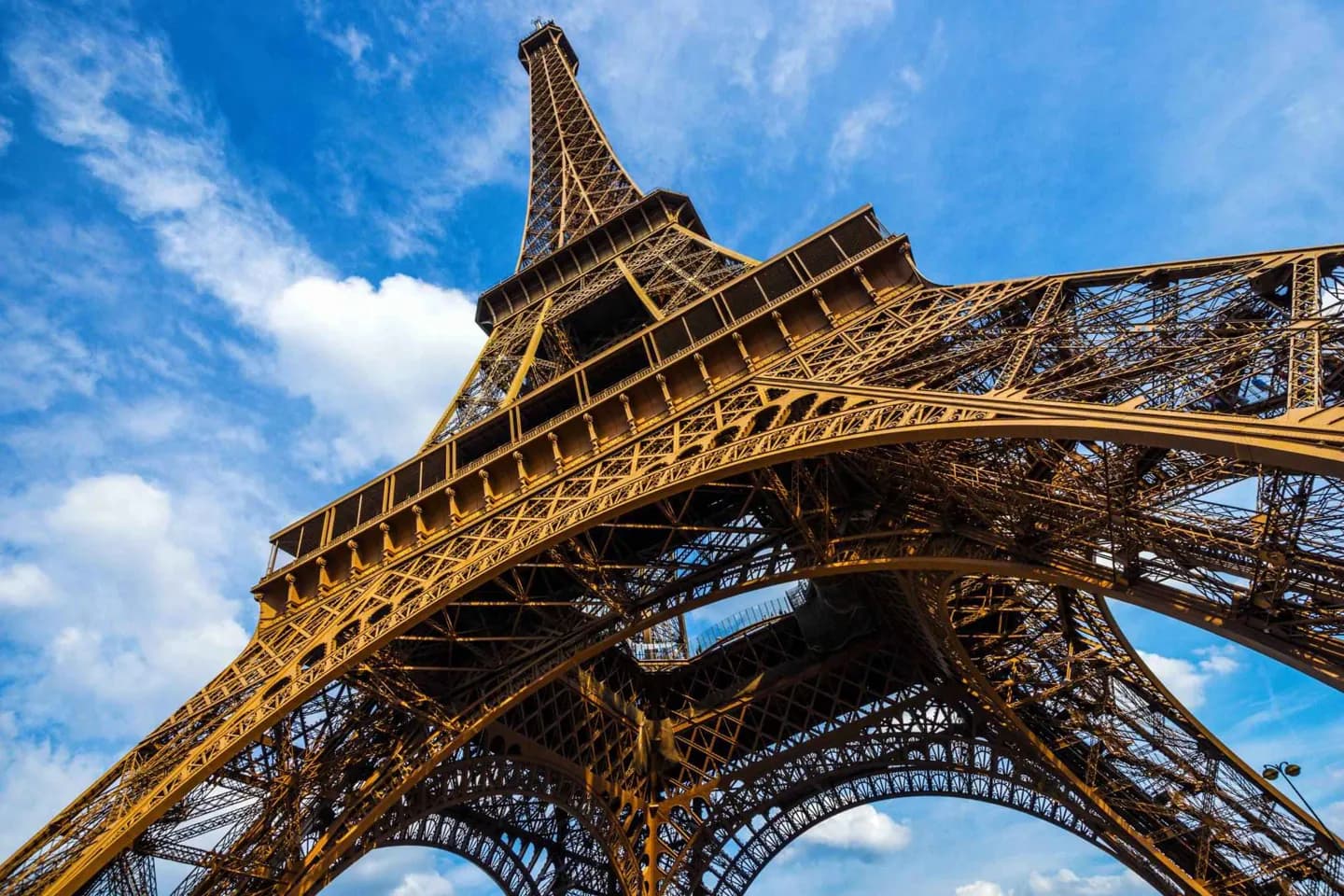
The reward is the contrast between a citywide panorama and the structure carrying you above it. From the Champ de Mars, the four spreading legs make the engineering easy to read. On the visitor levels, the lattice becomes the frame around the view rather than the distant subject of it.
What to look for
- Four spreading iron legs meet above the square base.
- The open lattice exposes the structure instead of hiding it behind walls.
The full story
Built between 1887 and 1889 as the entrance to the World’s Fair, the tower came from Gustave Eiffel’s company. Its industrial form provoked criticism from leading French artists and intellectuals before becoming an emblem of Paris. That reversal gives the bare metal a different meaning: the feature once attacked was precisely what made the building recognizable. During construction, it overtook the Washington Monument as the world’s tallest human-made structure. It held that position until the Chrysler Building was completed in New York in 1930. Broadcasting later added another purpose to the upper structure. Looking upward from the ground, notice how the tower narrows through successive platforms. The broad foundation and tapering profile express the engineering of height much more directly than a conventional stone monument would.
Useful to know
- Pair the tower with Trocadéro across the Seine to compare a close view with the full silhouette.
Your next visit
Estimated · Declared scenario and planning estimates; no live opening, weather, queue or booking service.
Outdoor visit · 30–45 min
World planning estimate; admission, opening, visit duration and access need checking.