
Why go
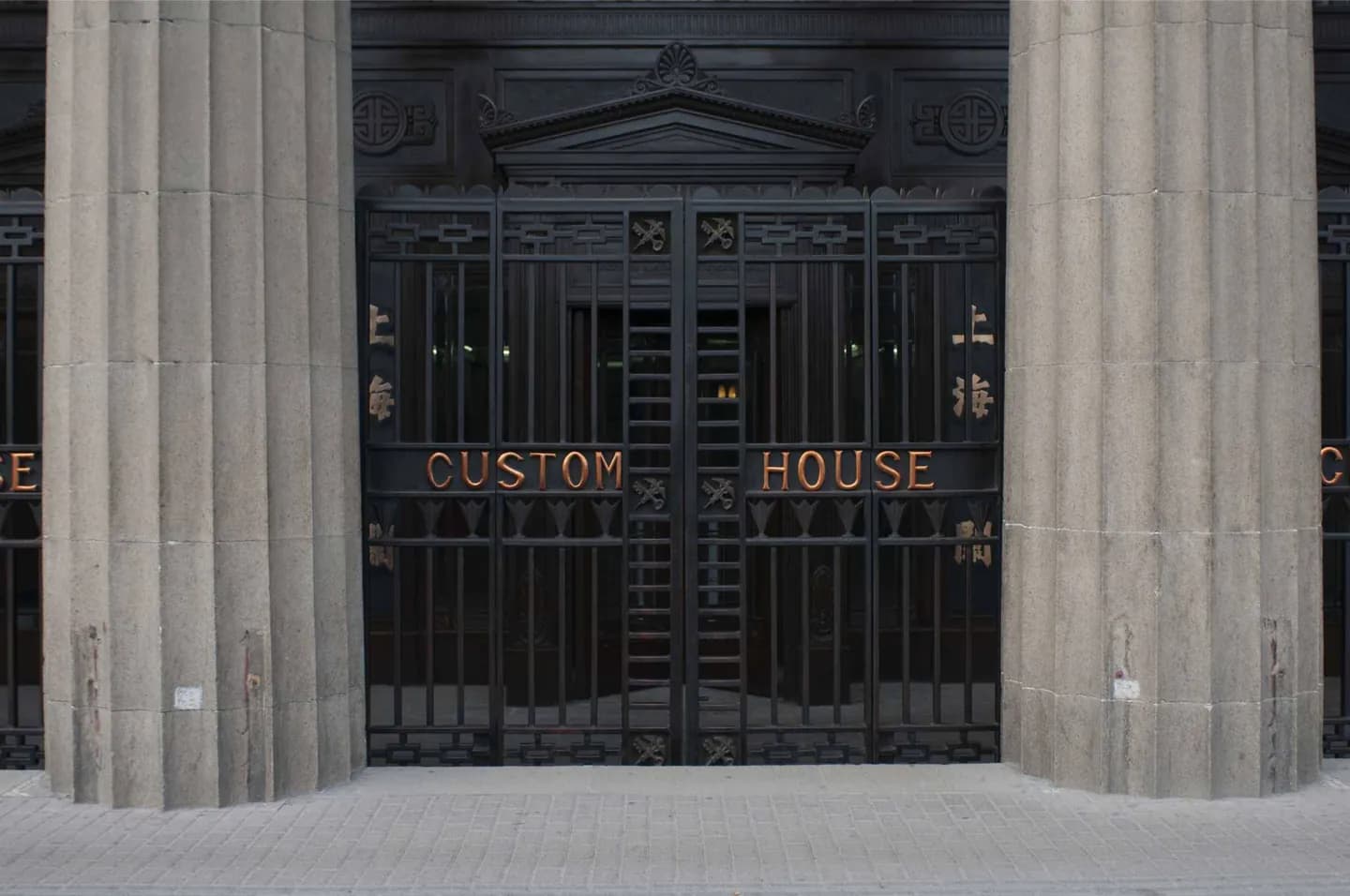
Its tower and thick entrance columns turn an administrative building into a waterfront landmark. Look at the clock’s scale against the lower historic facades, then compare the restrained entrance with the bank next door. Together, the two buildings make the old port’s customs and financial functions visible from the street.
What to look for
- A 79.2-meter clock tower above the riverfront
- A clock face about 5.4 meters wide
- Thick neoclassical columns at the main entrance
The full story
Completed in 1927, the Customs House was designed as a working part of Shanghai’s port. Its reinforced-concrete structure contains a taller eastern section facing the Huangpu and a lower western section toward Sichuan Road. Granite gives the river-facing side a substantial finish, while the entrance follows a Greek-inspired classical vocabulary. The clock and bell mechanisms connect the building to British engineering traditions, including the design of Big Ben’s mechanisms. More importantly for a waterfront walk, the bell made customs administration part of the city’s daily soundscape. The main hall also marks another civic role: a light column identifies what was once treated as Shanghai’s geographic zero point. These associations explain why the tower carries meaning beyond its height. It links river trade, public timekeeping and the measurement of the city itself.
Useful to know
- Pair the facade with the neighboring HSBC building in one stop.
- Listen for the tower bell while walking the waterfront.
- Check announced public programs before expecting access to the main hall.
Your next visit
Estimated · Declared scenario and planning estimates; no live opening, weather, queue or booking service.
Outdoor visit · 30–45 min
World planning estimate; admission, opening, visit duration and access need checking.